
Escalating Hormuz crisis: Boris Johnson sees India as key to US exit strategy in Iran
While emphasizing that Iran must never be allowed to develop nuclear weapons or finance regional proxy networks, he noted that Washington’s current approach has produced a geopolitical deadlock.
- Aug 23, 2026,
- Updated Aug 23, 2026 2:47 PM IST
Navigating an escalating conflict, questioning intelligence briefings, and confronting a closed Strait of Hormuz, Washington now finds itself locked in a costly Middle East stalemate.
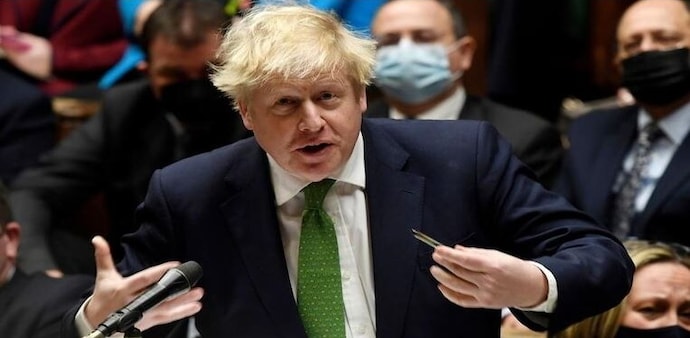
Speaking at the Economic Times World Leaders Forum in New Delhi, former British Prime Minister Boris Johnson warned that the United States had walked into an "obvious, obvious trap" in Iran, cautioning that air campaigns alone cannot deliver regime change.
He urged swift, coordinated diplomatic action between India, the US, and the UK to establish an exit strategy, stabilise energy markets, and secure vital maritime trade routes.
Johnson challenged the assumptions behind the military offensive, arguing that lasting political transformation in Tehran must originate from within.
While emphasizing that Iran must never be allowed to develop nuclear weapons or finance regional proxy networks, he noted that Washington’s current approach has produced a geopolitical deadlock. A synchronised diplomatic initiative leveraging India's expanding global influence alongside Washington and London offers the most viable path toward de-escalation.
The former UK Prime Minister called on the three nations to maintain continuous high-level consultation, develop robust alternative trade corridors, and pursue a structured diplomatic settlement with Tehran.
Shifting focus to the war in Ukraine, Johnson dismissed assertions of an inevitable Russian victory, declaring that Russian President Vladimir Putin is "fated to lose."
Acknowledging New Delhi's long-standing diplomatic and economic ties with Moscow, Johnson stressed that bringing an end to the conflict will require sustained diplomatic pressure on Russia from major international stakeholders, with India playing a decisive role.
Navigating an escalating conflict, questioning intelligence briefings, and confronting a closed Strait of Hormuz, Washington now finds itself locked in a costly Middle East stalemate.
Speaking at the Economic Times World Leaders Forum in New Delhi, former British Prime Minister Boris Johnson warned that the United States had walked into an "obvious, obvious trap" in Iran, cautioning that air campaigns alone cannot deliver regime change.
He urged swift, coordinated diplomatic action between India, the US, and the UK to establish an exit strategy, stabilise energy markets, and secure vital maritime trade routes.
Johnson challenged the assumptions behind the military offensive, arguing that lasting political transformation in Tehran must originate from within.
While emphasizing that Iran must never be allowed to develop nuclear weapons or finance regional proxy networks, he noted that Washington’s current approach has produced a geopolitical deadlock. A synchronised diplomatic initiative leveraging India's expanding global influence alongside Washington and London offers the most viable path toward de-escalation.
The former UK Prime Minister called on the three nations to maintain continuous high-level consultation, develop robust alternative trade corridors, and pursue a structured diplomatic settlement with Tehran.
Shifting focus to the war in Ukraine, Johnson dismissed assertions of an inevitable Russian victory, declaring that Russian President Vladimir Putin is "fated to lose."
Acknowledging New Delhi's long-standing diplomatic and economic ties with Moscow, Johnson stressed that bringing an end to the conflict will require sustained diplomatic pressure on Russia from major international stakeholders, with India playing a decisive role.