
Estonia defense minister resigns over €70 million failed Ukraine deal with India-linked firm
The botched operation involved Datasel SRL, an Italian-registered firm bought earlier in 2024 by India’s Neco Defense Munitions. The company had no prior track record of selling artillery shells.
- Sep 4, 2026,
- Updated Sep 4, 2026 7:42 AM IST
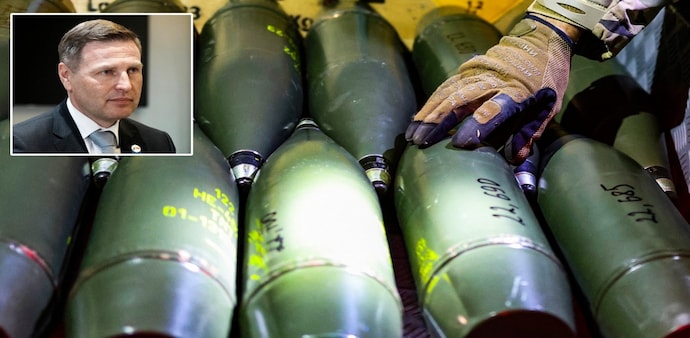
A €70 million (a little over ₹769 crore) deal to supply Ukraine with critical artillery shells ended in zero deliveries, a high-stakes legal battle, and the resignation of Estonian Defense Minister Hanno Pevkur.
Pevkur, who has led the ministry since 2022, stepped down on September 3 to take political responsibility after an audit by Estonia's National Audit Office exposed severe flaws in the procurement process. The botched operation involved Datasel SRL, an Italian-registered firm bought earlier in 2024 by India’s Neco Defense Munitions. The company had no prior track record of selling artillery shells.
"Estonian security is not a one-man project. It is our joint responsibility. That is why I must take political responsibility for the entire defense field today and pass on the baton of the minister of defense to the prime minister at a suitable time," Pevkur said in a social media post.
€70M deal papered in advance payments
The saga began in August 2024, when Estonia's Centre for Defense Investments (RKIK) signed an initial contract with Datasel SRL and transferred an upfront payment of about €15 million. A second deal followed in October with an advance payment of over €10 million, accompanied by additional contracts through the end of the year that ultimately pushed total advance payments to roughly €70 million.
The procurement relied on funding from the EU's European Peace Facility, with the intention of delivering shells to Kyiv within months to alleviate severe frontline shortages.
However, deliveries suffered repeated delays due to production issues. When shipments finally arrived in 2025, Estonian media outlet Eesti Ekspress reported that the ammunition failed to meet required quality standards. RKIK subsequently terminated the contracts last autumn and demanded a full refund of its advance payments.
Elmar Vaher, director general of the Centre for Defense Investments, acknowledged the error in hindsight. "In my opinion, we should not have signed a contract with them," Vaher told Eesti Ekspress. "If I start building a house and hire a company that has never built houses before, there is a doubt that the house will not be finished."
Suppliers blame lapsed EU funds
Jayaswal NECO and Datasel have forcefully rejected all allegations of wrongdoing. The companies argue that the dispute stems from changes in European regulations and funding arrangements rather than any failures in the quality of the ammunition.
Datasel has filed a counterclaim against the Estonian government, seeking damages running into tens of millions of euros over what it describes as the premature termination of the contract. The dispute has now moved to international arbitration at the European Arbitration and Mediation Centre in Strasbourg, France.
"Datasel is the party that has suffered losses in connection with these supply contracts," the company told Eesti Ekspress through its lawyer. "The actions of the Estonian Center for Defense Investments, particularly the reasons given for the extraordinary termination of the contracts, are contradictory and illogical."
Company executives clarified that Datasel had delivered and invoiced goods worth €58 million after receiving €59 million in advance payments, while RKIK has valued the overall procurement at €70 million. According to the company, these goods had been inspected by Estonian officials before the government halted the contract.
Datasel further claimed that Estonia canceled the agreement after stating that "EU funds had lapsed," leaving a large quantity of completed inventory unused. "Eventually, Datasel was given to understand that the RKIK was unable to accept the remaining goods," the firm stated, adding that it remains willing to complete the contract if RKIK fulfills its own obligations.
Audit triggers political fallout
The lid was blown off on August 28 after a report from Estonia's National Audit Office, which highlighted mismanaged defense funds and asset accounting within the ministry. The watchdog warned that if the EU funding cannot be recovered, Estonian taxpayers could be left paying the €70 million bill directly from the state budget.
The European Commission has since engaged Estonian authorities, with spokesperson Christian Wigand noting that Brussels maintains safeguards and recovery procedures to protect EU taxpayer money.
Addressing the audit findings, Pevkur noted that while a minister does not directly manage contract negotiations or count inventory, political accountability remains paramount.
Maintaining a firm stance on his tenure, Pevkur defended Estonia's broader defense trajectory and its heightened spending since Russia's full-scale invasion of Ukraine in 2022. "Estonia is better protected than ever before," Pevkur wrote on Facebook, emphasising that continued military support for Ukraine remains essential to securing Estonia's own borders.
Estonian Prime Minister Kristen Michal stated he saw no personal fault on Pevkur's part, though he acknowledged the necessity of political accountability.
A €70 million (a little over ₹769 crore) deal to supply Ukraine with critical artillery shells ended in zero deliveries, a high-stakes legal battle, and the resignation of Estonian Defense Minister Hanno Pevkur.
Pevkur, who has led the ministry since 2022, stepped down on September 3 to take political responsibility after an audit by Estonia's National Audit Office exposed severe flaws in the procurement process. The botched operation involved Datasel SRL, an Italian-registered firm bought earlier in 2024 by India’s Neco Defense Munitions. The company had no prior track record of selling artillery shells.
"Estonian security is not a one-man project. It is our joint responsibility. That is why I must take political responsibility for the entire defense field today and pass on the baton of the minister of defense to the prime minister at a suitable time," Pevkur said in a social media post.
€70M deal papered in advance payments
The saga began in August 2024, when Estonia's Centre for Defense Investments (RKIK) signed an initial contract with Datasel SRL and transferred an upfront payment of about €15 million. A second deal followed in October with an advance payment of over €10 million, accompanied by additional contracts through the end of the year that ultimately pushed total advance payments to roughly €70 million.
The procurement relied on funding from the EU's European Peace Facility, with the intention of delivering shells to Kyiv within months to alleviate severe frontline shortages.
However, deliveries suffered repeated delays due to production issues. When shipments finally arrived in 2025, Estonian media outlet Eesti Ekspress reported that the ammunition failed to meet required quality standards. RKIK subsequently terminated the contracts last autumn and demanded a full refund of its advance payments.
Elmar Vaher, director general of the Centre for Defense Investments, acknowledged the error in hindsight. "In my opinion, we should not have signed a contract with them," Vaher told Eesti Ekspress. "If I start building a house and hire a company that has never built houses before, there is a doubt that the house will not be finished."
Suppliers blame lapsed EU funds
Jayaswal NECO and Datasel have forcefully rejected all allegations of wrongdoing. The companies argue that the dispute stems from changes in European regulations and funding arrangements rather than any failures in the quality of the ammunition.
Datasel has filed a counterclaim against the Estonian government, seeking damages running into tens of millions of euros over what it describes as the premature termination of the contract. The dispute has now moved to international arbitration at the European Arbitration and Mediation Centre in Strasbourg, France.
"Datasel is the party that has suffered losses in connection with these supply contracts," the company told Eesti Ekspress through its lawyer. "The actions of the Estonian Center for Defense Investments, particularly the reasons given for the extraordinary termination of the contracts, are contradictory and illogical."
Company executives clarified that Datasel had delivered and invoiced goods worth €58 million after receiving €59 million in advance payments, while RKIK has valued the overall procurement at €70 million. According to the company, these goods had been inspected by Estonian officials before the government halted the contract.
Datasel further claimed that Estonia canceled the agreement after stating that "EU funds had lapsed," leaving a large quantity of completed inventory unused. "Eventually, Datasel was given to understand that the RKIK was unable to accept the remaining goods," the firm stated, adding that it remains willing to complete the contract if RKIK fulfills its own obligations.
Audit triggers political fallout
The lid was blown off on August 28 after a report from Estonia's National Audit Office, which highlighted mismanaged defense funds and asset accounting within the ministry. The watchdog warned that if the EU funding cannot be recovered, Estonian taxpayers could be left paying the €70 million bill directly from the state budget.
The European Commission has since engaged Estonian authorities, with spokesperson Christian Wigand noting that Brussels maintains safeguards and recovery procedures to protect EU taxpayer money.
Addressing the audit findings, Pevkur noted that while a minister does not directly manage contract negotiations or count inventory, political accountability remains paramount.
Maintaining a firm stance on his tenure, Pevkur defended Estonia's broader defense trajectory and its heightened spending since Russia's full-scale invasion of Ukraine in 2022. "Estonia is better protected than ever before," Pevkur wrote on Facebook, emphasising that continued military support for Ukraine remains essential to securing Estonia's own borders.
Estonian Prime Minister Kristen Michal stated he saw no personal fault on Pevkur's part, though he acknowledged the necessity of political accountability.