
Europe's heatwave exposing history: Nazi ships, mammoth bones & a 1937 shipwreck emerge as water levels fall
The extraordinary discoveries come as prolonged heat and drought grip large parts of Central and Eastern Europe, causing severe declines in river levels, disrupting shipping, tourism and even electricity generation in several countries.
- Aug 2, 2026,
- Updated Aug 2, 2026 6:08 PM IST
An unforgiving heatwave sweeping across Europe is doing more than drying rivers and disrupting daily life — it is uncovering relics hidden beneath the waters for decades, and in some cases, thousands of years.
As the Danube River falls to some of its lowest levels in decades, World War II-era Nazi warships, a long-lost cargo vessel, and what appear to be ancient mammoth remains have resurfaced, turning the drought into an unexpected archaeological and historical event.
The extraordinary discoveries come as prolonged heat and drought grip large parts of Central and Eastern Europe, causing severe declines in river levels, disrupting shipping, tourism and even electricity generation in several countries.
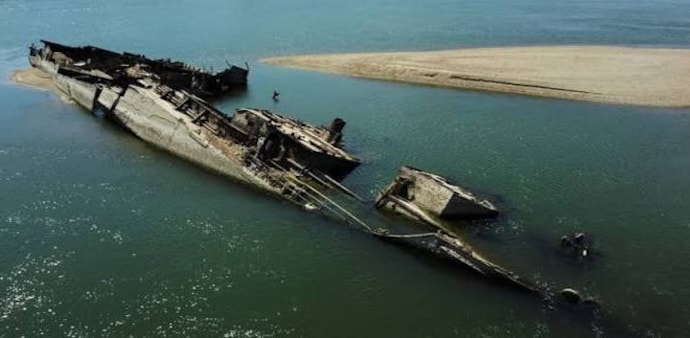
Nazi warships emerge from the Danube
Near the Serbian town of Prahovo, receding waters have exposed several German military vessels deliberately scuttled by retreating Nazi forces in 1944. Many of these wrecks are believed to still contain unexploded ammunition and explosives, making them a continuing safety hazard for both navigation and salvage operations.
The exposed ships are part of a much larger underwater graveyard in the Danube. European authorities have been working for years to remove some of these wrecks because they obstruct commercial shipping and pose environmental and safety risks. Experts have warned that recovering the vessels is particularly challenging due to the possibility of live munitions remaining onboard.
A cargo ship lost in 1937 returns to daylight
The falling water levels also revealed the wreck of the Fulton, a coal-carrying cargo ship that sank in 1937 near Opatovac in Croatia. Normally hidden beneath the river, the vessel has become visible once again as drought continues to lower the Danube.
The ship serves as another reminder of how dramatically Europe's waterways have changed during this year's prolonged dry spell.
Mammoth remains surprise scientists
Perhaps the most remarkable discovery lies further downstream in Bulgaria, where a resident spotted what experts believe are the remains of an ancient mammoth on the exposed riverbed near the village of Ryahovo.
Specialists from the Regional History Museum in Ruse identified a lower jaw, two tusks and possibly a rib. The bones are being examined to determine their precise age and origin. Museum officials say the area was once believed to have been marshland where the animal may have died thousands of years ago.
Researchers have described the find as scientifically valuable, offering another glimpse into the region's prehistoric past.
Climate extremes are rewriting Europe's landscape
The discoveries highlight the far-reaching effects of Europe's ongoing heatwave. Across the continent, unusually high temperatures and limited rainfall have driven rivers including the Danube and Rhine to exceptionally low levels.
Beyond revealing hidden historical artefacts, the shrinking waterways are affecting freight transport, river cruises and tourism. In some regions, low river levels have also complicated power generation by reducing the availability of cooling water for nuclear facilities. Scientists have long warned that more frequent and intense heatwaves driven by climate change would reshape Europe's landscapes.
An unforgiving heatwave sweeping across Europe is doing more than drying rivers and disrupting daily life — it is uncovering relics hidden beneath the waters for decades, and in some cases, thousands of years.
As the Danube River falls to some of its lowest levels in decades, World War II-era Nazi warships, a long-lost cargo vessel, and what appear to be ancient mammoth remains have resurfaced, turning the drought into an unexpected archaeological and historical event.
The extraordinary discoveries come as prolonged heat and drought grip large parts of Central and Eastern Europe, causing severe declines in river levels, disrupting shipping, tourism and even electricity generation in several countries.
Nazi warships emerge from the Danube
Near the Serbian town of Prahovo, receding waters have exposed several German military vessels deliberately scuttled by retreating Nazi forces in 1944. Many of these wrecks are believed to still contain unexploded ammunition and explosives, making them a continuing safety hazard for both navigation and salvage operations.
The exposed ships are part of a much larger underwater graveyard in the Danube. European authorities have been working for years to remove some of these wrecks because they obstruct commercial shipping and pose environmental and safety risks. Experts have warned that recovering the vessels is particularly challenging due to the possibility of live munitions remaining onboard.
A cargo ship lost in 1937 returns to daylight
The falling water levels also revealed the wreck of the Fulton, a coal-carrying cargo ship that sank in 1937 near Opatovac in Croatia. Normally hidden beneath the river, the vessel has become visible once again as drought continues to lower the Danube.
The ship serves as another reminder of how dramatically Europe's waterways have changed during this year's prolonged dry spell.
Mammoth remains surprise scientists
Perhaps the most remarkable discovery lies further downstream in Bulgaria, where a resident spotted what experts believe are the remains of an ancient mammoth on the exposed riverbed near the village of Ryahovo.
Specialists from the Regional History Museum in Ruse identified a lower jaw, two tusks and possibly a rib. The bones are being examined to determine their precise age and origin. Museum officials say the area was once believed to have been marshland where the animal may have died thousands of years ago.
Researchers have described the find as scientifically valuable, offering another glimpse into the region's prehistoric past.
Climate extremes are rewriting Europe's landscape
The discoveries highlight the far-reaching effects of Europe's ongoing heatwave. Across the continent, unusually high temperatures and limited rainfall have driven rivers including the Danube and Rhine to exceptionally low levels.
Beyond revealing hidden historical artefacts, the shrinking waterways are affecting freight transport, river cruises and tourism. In some regions, low river levels have also complicated power generation by reducing the availability of cooling water for nuclear facilities. Scientists have long warned that more frequent and intense heatwaves driven by climate change would reshape Europe's landscapes.