
French fuel crisis deepens as one in nine stations run out of stock, diesel prices at record high
The supply pinch accompanies a sharp increase at the pump. Diesel prices averaged past €2.39 per litre, breaking previous national price records. High-end grades at over 700 stations nationwide have exceeded €2.50 per litre, with dozens of locations pushing past €2.70 per litre.
- Sep 20, 2026,
- Updated Sep 20, 2026 8:47 AM IST
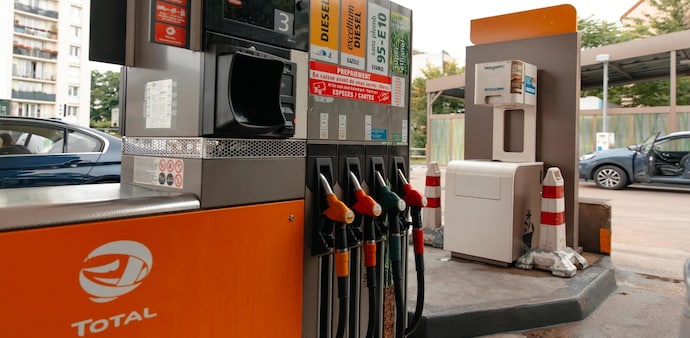
Fuel shortages are spreading across France, with new government data showing roughly 11 percent of service stations nationwide — one in every nine — are struggling to keep at least one type of petrol or diesel in stock.
The supply squeeze has worsened over recent days, rising from 9 percent mid-week to 11 percent as motorists flock to pumps amid soaring fuel prices and ongoing regional disruptions. Regional disparities are widening dramatically, with Grand Est reporting shortages at 16 percent of its stations, followed by Centre-Val de Loire and Occitanie at 14 percent, and Pays de la Loire at 13 percent.
Industry analysts warn that the situation on the ground may be more severe than official figures indicate. Under government tracking methodologies, a service station is registered as facing a petrol shortage only when every single petrol grade it stocks is completely depleted. A station out of SP95 but still stocking SP98 or SP95-E10 is not factored into the national shortage count.
Soaring prices & Unprecedented cost pressures
The supply pinch accompanies a sharp increase at the pump. Diesel prices averaged past €2.39 per litre, breaking previous national price records. High-end grades at over 700 stations nationwide have exceeded €2.50 per litre, with dozens of locations pushing past €2.70 per litre.
On international benchmark markets, European diesel surged past $200 per barrel, with retail-equivalent costs exceeding $300 per barrel when factoring in local taxes.
French officials insist the broader crisis is primarily logistical rather than a total collapse of crude supply. However, global shipping tensions involving critical transit corridors — alongside refinery maintenance schedules and localised distribution bottlenecks — have heavily strained domestic distribution.
Saudi cutoffs intensify European supply strain
The European energy crunch worsened significantly after Saudi Aramco informed at least two major European refiners that they will receive no crude oil deliveries under term contracts in October following an attack on its East-West pipeline.
The cutoff compounds existing supply bottlenecks across the continent, where Russia has extended restrictions on its diesel exports and Middle Eastern product exports remain strictly constrained.
Macron pushes G7 for emergency reserve release
Facing escalating supply disruptions, French President Emmanuel Macron announced plans to convene G7 leaders to coordinate international stock levels, export capacities, and production limits. Macron is urging G7 nations to authorize another coordinated release of emergency strategic oil stocks to stabilize energy markets.
Unlike the United States Strategic Petroleum Reserve, European emergency reserves hold significant volumes of refined products, including finished diesel and gasoline. This distinction offers European policymakers a targeted mechanism to inject refined fuel directly into a starved market.
In response to the mounting pressure, French Prime Minister Sébastien Lecornu instructed ministers to prepare extended, targeted financial assistance through the end of the year. The proposed measures aim to shield heavily impacted sectors, including fishermen, farmers, and public works operators, from crippling transport costs.
In addition to emergency reserves, French authorities are working to secure alternative contracts for diesel, jet fuel, and natural gas over the coming months while adjusting domestic refinery schedules to maximize fuel output.
Fuel shortages are spreading across France, with new government data showing roughly 11 percent of service stations nationwide — one in every nine — are struggling to keep at least one type of petrol or diesel in stock.
The supply squeeze has worsened over recent days, rising from 9 percent mid-week to 11 percent as motorists flock to pumps amid soaring fuel prices and ongoing regional disruptions. Regional disparities are widening dramatically, with Grand Est reporting shortages at 16 percent of its stations, followed by Centre-Val de Loire and Occitanie at 14 percent, and Pays de la Loire at 13 percent.
Industry analysts warn that the situation on the ground may be more severe than official figures indicate. Under government tracking methodologies, a service station is registered as facing a petrol shortage only when every single petrol grade it stocks is completely depleted. A station out of SP95 but still stocking SP98 or SP95-E10 is not factored into the national shortage count.
Soaring prices & Unprecedented cost pressures
The supply pinch accompanies a sharp increase at the pump. Diesel prices averaged past €2.39 per litre, breaking previous national price records. High-end grades at over 700 stations nationwide have exceeded €2.50 per litre, with dozens of locations pushing past €2.70 per litre.
On international benchmark markets, European diesel surged past $200 per barrel, with retail-equivalent costs exceeding $300 per barrel when factoring in local taxes.
French officials insist the broader crisis is primarily logistical rather than a total collapse of crude supply. However, global shipping tensions involving critical transit corridors — alongside refinery maintenance schedules and localised distribution bottlenecks — have heavily strained domestic distribution.
Saudi cutoffs intensify European supply strain
The European energy crunch worsened significantly after Saudi Aramco informed at least two major European refiners that they will receive no crude oil deliveries under term contracts in October following an attack on its East-West pipeline.
The cutoff compounds existing supply bottlenecks across the continent, where Russia has extended restrictions on its diesel exports and Middle Eastern product exports remain strictly constrained.
Macron pushes G7 for emergency reserve release
Facing escalating supply disruptions, French President Emmanuel Macron announced plans to convene G7 leaders to coordinate international stock levels, export capacities, and production limits. Macron is urging G7 nations to authorize another coordinated release of emergency strategic oil stocks to stabilize energy markets.
Unlike the United States Strategic Petroleum Reserve, European emergency reserves hold significant volumes of refined products, including finished diesel and gasoline. This distinction offers European policymakers a targeted mechanism to inject refined fuel directly into a starved market.
In response to the mounting pressure, French Prime Minister Sébastien Lecornu instructed ministers to prepare extended, targeted financial assistance through the end of the year. The proposed measures aim to shield heavily impacted sectors, including fishermen, farmers, and public works operators, from crippling transport costs.
In addition to emergency reserves, French authorities are working to secure alternative contracts for diesel, jet fuel, and natural gas over the coming months while adjusting domestic refinery schedules to maximize fuel output.