
From diesel to data: Russia in talks with US to power data centers with nuclear energy
President Vladimir Putin’s investment envoy Kirill Dmitriev said that preliminary talks include facilities that could leverage electricity generated by Russian nuclear power plants, including small modular nuclear reactors, to meet the skyrocketing energy demands of modern data infrastructure.
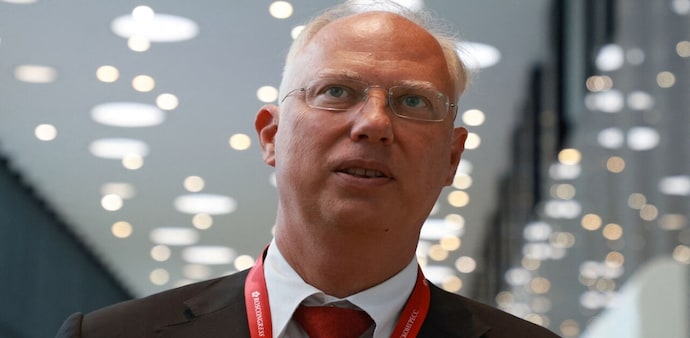
- Oct 18, 2026,
- Updated Oct 18, 2026 8:09 AM IST
Moscow and Washington are in discussions over potential joint data center projects powered by Russian nuclear energy, President Vladimir Putin’s investment envoy Kirill Dmitriev announced.
The proposal comes on the heels of a recently struck bilateral diesel agreement and marks an unexpected push by Moscow to deepen economic ties with the United States.
Speaking on October 17, Dmitriev revealed that preliminary talks include facilities that could leverage electricity generated by Russian nuclear power plants, including small modular nuclear reactors, to meet the skyrocketing energy demands of modern data infrastructure.
"Russia and the United States will soon announce new joint initiatives beyond a recently agreed diesel deal," Dmitriev said. He noted that both sides are exploring "joint work on Russian and American data centers, some of which could run on small nuclear power plants," and expressed optimism that these initiatives could be launched before the conclusion of Moscow's special military operation in Ukraine.
Despite the ambitious scope of the discussions, substantial legislative and geopolitical hurdles remain. Dmitriev acknowledged that stringent US sanctions pose a major obstacle to execution.
He explicitly criticised the Lindsey O Graham Sanctioning Russia and Iran Act of 2026 — signed into law by US President Donald Trump last month to curb Russian energy revenues through heavy tariffs and trade restrictions — calling the measure "misguided".
Neither Washington nor US technology firms have formally verified the scope or viability of the proposed nuclear-backed data center ventures.
Recently, President Donald Trump signed an executive order waiving key sanctions, tariffs, and trade restrictions under the Lindsey O. Graham Sanctioning Russia and Iran Act of 2026. The law had provided for up to 100% tariffs on major global buyers of Russian energy, but the administration cited US national security and economic interests in waiving those penalties.
The United States reached an agreement with Moscow to secure over 300,000 tonnes of Russian diesel for domestic and global markets aimed at curbing elevated fuel prices. Following the agreement, the US Treasury Department issued a temporary general license authorizing transactions involving Russian diesel — including imports into the US — through April 2027.
Moscow and Washington are in discussions over potential joint data center projects powered by Russian nuclear energy, President Vladimir Putin’s investment envoy Kirill Dmitriev announced.
The proposal comes on the heels of a recently struck bilateral diesel agreement and marks an unexpected push by Moscow to deepen economic ties with the United States.
Speaking on October 17, Dmitriev revealed that preliminary talks include facilities that could leverage electricity generated by Russian nuclear power plants, including small modular nuclear reactors, to meet the skyrocketing energy demands of modern data infrastructure.
"Russia and the United States will soon announce new joint initiatives beyond a recently agreed diesel deal," Dmitriev said. He noted that both sides are exploring "joint work on Russian and American data centers, some of which could run on small nuclear power plants," and expressed optimism that these initiatives could be launched before the conclusion of Moscow's special military operation in Ukraine.
Despite the ambitious scope of the discussions, substantial legislative and geopolitical hurdles remain. Dmitriev acknowledged that stringent US sanctions pose a major obstacle to execution.
He explicitly criticised the Lindsey O Graham Sanctioning Russia and Iran Act of 2026 — signed into law by US President Donald Trump last month to curb Russian energy revenues through heavy tariffs and trade restrictions — calling the measure "misguided".
Neither Washington nor US technology firms have formally verified the scope or viability of the proposed nuclear-backed data center ventures.
Recently, President Donald Trump signed an executive order waiving key sanctions, tariffs, and trade restrictions under the Lindsey O. Graham Sanctioning Russia and Iran Act of 2026. The law had provided for up to 100% tariffs on major global buyers of Russian energy, but the administration cited US national security and economic interests in waiving those penalties.
The United States reached an agreement with Moscow to secure over 300,000 tonnes of Russian diesel for domestic and global markets aimed at curbing elevated fuel prices. Following the agreement, the US Treasury Department issued a temporary general license authorizing transactions involving Russian diesel — including imports into the US — through April 2027.