
Greenland is losing ice at a rapid pace. Could its meltwater be supercharging Europe’s heatwaves?
Recent modelling work has also highlighted the connection between Greenland freshwater and Atlantic circulation. Researchers have found that realistic Greenland meltwater forcing can weaken the Atlantic Meridional Overturning Circulation, or AMOC, in climate simulations.
- Aug 23, 2026,
- Updated Aug 23, 2026 9:02 PM IST
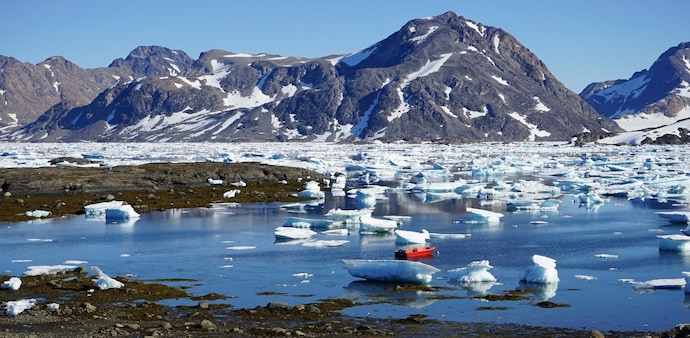
Greenland is melting. Its freshwater is pouring into the North Atlantic, altering a region that plays a crucial role in Europe’s weather. Now, scientists say this seemingly distant change could be helping set the stage for longer and more intense heatwaves across Europe.
The finding adds a new dimension to the climate story: Greenland’s ice loss may not only raise sea levels, but could also influence the atmospheric patterns that determine whether Europe gets relief from extreme heat — or remains trapped under it.
How Greenland’s meltwater impacts weather
As Greenland loses ice, freshwater flows into the North Atlantic. Unlike salty seawater, this meltwater is relatively fresh and less dense. Large quantities of it can alter the structure and circulation of the ocean.
The study suggests that this influx of cold freshwater can cool parts of the North Atlantic. That cooling, in turn, affects the atmosphere above the ocean.
Researchers describe the process as an atmospheric connection: changes in the North Atlantic can influence the position and shape of the jet stream thousands of kilometres away.
The result can be a more wavy jet stream, with high-pressure systems becoming established over Europe. Such persistent high-pressure ridges suppress cloud formation and rainfall while allowing hot air to build up and remain trapped over the region. That creates the recipe for prolonged heatwaves.
Why a colder Atlantic can mean hotter Europe
At first glance, a cooling North Atlantic contributing to European heat sounds counterintuitive. But the key is not simply the temperature of the ocean. It is how changes in the ocean influence atmospheric circulation.
The North Atlantic is a major engine of Earth’s climate system. Its temperature patterns and currents help determine where air masses travel and how weather systems develop.
A sufficiently strong change in the region can therefore alter the jet stream’s path. Instead of moving relatively straight from west to east, the jet stream can develop large north-south meanders.
When a ridge becomes established over Europe, hot air can remain in place for days or even weeks.
Recent modelling work has also highlighted the connection between Greenland freshwater and Atlantic circulation. Researchers have found that realistic Greenland meltwater forcing can weaken the Atlantic Meridional Overturning Circulation, or AMOC, in climate simulations.
The atmospheric consequences are more uncertain, but the findings underline how sensitive the wider climate system is to changes around Greenland and the North Atlantic.
Warning for climate models
One of the most significant implications of the research is that climate models could potentially be missing part of the mechanism.
If Greenland’s accelerating ice loss changes atmospheric circulation in ways that favour European heatwaves, projections based on models that do not adequately capture these freshwater-ocean-atmosphere interactions could underestimate some future extremes.
This does not mean every European heatwave is caused by Greenland meltwater. Nor does it overturn the overwhelming evidence that greenhouse-gas-driven warming is increasing the likelihood and severity of extreme heat.
Instead, the research points to an additional regional mechanism that can operate on top of the warming trend.
Other recent research has also shown that Greenland’s freshwater input can influence atmospheric circulation far beyond the North Atlantic, demonstrating the potential for changes around the ice sheet to have effects thousands of kilometres away.
Europe is already a heatwave hotspot
The finding comes as Europe continues to experience increasingly severe summer heat.
The continent is warming faster than the global average and has repeatedly experienced record-breaking heatwaves in recent years. Extreme temperatures have also been accompanied by unusually warm seas around parts of Europe.
The distinction is important. Greenland meltwater is not an alternative explanation for climate change; it is potentially one of the mechanisms through which a warming planet can alter regional weather patterns.
Human-caused global warming remains the primary driver behind the rise in extreme heat. But changes in ocean circulation and atmospheric patterns can determine where that heat becomes concentrated and how long it persists.
What happens if Greenland keeps melting?
The concern is that Greenland’s ice loss is not a one-off event. Continued warming means continued pressure on the ice sheet, increasing the amount of freshwater entering the North Atlantic.
Scientists are still working to establish exactly how large the resulting atmospheric effect could be and how it will interact with other factors, including greenhouse-gas warming, sea-surface temperatures and natural climate variability.
There is also uncertainty over the strength of the AMOC response. Some modelling studies suggest Greenland meltwater can contribute to weakening the circulation, while the broader impact remains an active area of research.
Greenland is melting. Its freshwater is pouring into the North Atlantic, altering a region that plays a crucial role in Europe’s weather. Now, scientists say this seemingly distant change could be helping set the stage for longer and more intense heatwaves across Europe.
The finding adds a new dimension to the climate story: Greenland’s ice loss may not only raise sea levels, but could also influence the atmospheric patterns that determine whether Europe gets relief from extreme heat — or remains trapped under it.
How Greenland’s meltwater impacts weather
As Greenland loses ice, freshwater flows into the North Atlantic. Unlike salty seawater, this meltwater is relatively fresh and less dense. Large quantities of it can alter the structure and circulation of the ocean.
The study suggests that this influx of cold freshwater can cool parts of the North Atlantic. That cooling, in turn, affects the atmosphere above the ocean.
Researchers describe the process as an atmospheric connection: changes in the North Atlantic can influence the position and shape of the jet stream thousands of kilometres away.
The result can be a more wavy jet stream, with high-pressure systems becoming established over Europe. Such persistent high-pressure ridges suppress cloud formation and rainfall while allowing hot air to build up and remain trapped over the region. That creates the recipe for prolonged heatwaves.
Why a colder Atlantic can mean hotter Europe
At first glance, a cooling North Atlantic contributing to European heat sounds counterintuitive. But the key is not simply the temperature of the ocean. It is how changes in the ocean influence atmospheric circulation.
The North Atlantic is a major engine of Earth’s climate system. Its temperature patterns and currents help determine where air masses travel and how weather systems develop.
A sufficiently strong change in the region can therefore alter the jet stream’s path. Instead of moving relatively straight from west to east, the jet stream can develop large north-south meanders.
When a ridge becomes established over Europe, hot air can remain in place for days or even weeks.
Recent modelling work has also highlighted the connection between Greenland freshwater and Atlantic circulation. Researchers have found that realistic Greenland meltwater forcing can weaken the Atlantic Meridional Overturning Circulation, or AMOC, in climate simulations.
The atmospheric consequences are more uncertain, but the findings underline how sensitive the wider climate system is to changes around Greenland and the North Atlantic.
Warning for climate models
One of the most significant implications of the research is that climate models could potentially be missing part of the mechanism.
If Greenland’s accelerating ice loss changes atmospheric circulation in ways that favour European heatwaves, projections based on models that do not adequately capture these freshwater-ocean-atmosphere interactions could underestimate some future extremes.
This does not mean every European heatwave is caused by Greenland meltwater. Nor does it overturn the overwhelming evidence that greenhouse-gas-driven warming is increasing the likelihood and severity of extreme heat.
Instead, the research points to an additional regional mechanism that can operate on top of the warming trend.
Other recent research has also shown that Greenland’s freshwater input can influence atmospheric circulation far beyond the North Atlantic, demonstrating the potential for changes around the ice sheet to have effects thousands of kilometres away.
Europe is already a heatwave hotspot
The finding comes as Europe continues to experience increasingly severe summer heat.
The continent is warming faster than the global average and has repeatedly experienced record-breaking heatwaves in recent years. Extreme temperatures have also been accompanied by unusually warm seas around parts of Europe.
The distinction is important. Greenland meltwater is not an alternative explanation for climate change; it is potentially one of the mechanisms through which a warming planet can alter regional weather patterns.
Human-caused global warming remains the primary driver behind the rise in extreme heat. But changes in ocean circulation and atmospheric patterns can determine where that heat becomes concentrated and how long it persists.
What happens if Greenland keeps melting?
The concern is that Greenland’s ice loss is not a one-off event. Continued warming means continued pressure on the ice sheet, increasing the amount of freshwater entering the North Atlantic.
Scientists are still working to establish exactly how large the resulting atmospheric effect could be and how it will interact with other factors, including greenhouse-gas warming, sea-surface temperatures and natural climate variability.
There is also uncertainty over the strength of the AMOC response. Some modelling studies suggest Greenland meltwater can contribute to weakening the circulation, while the broader impact remains an active area of research.