
'Hormuz will never be...': Qatar Energy chief dismisses Bessent's 'worthless in 2 years' claim
The rebuttal comes after Bessent remarked on the sidelines of a Group of 20 meeting on Sept 1 that the crucial passage would lose its geopolitical and economic importance as nations construct bypass routes.
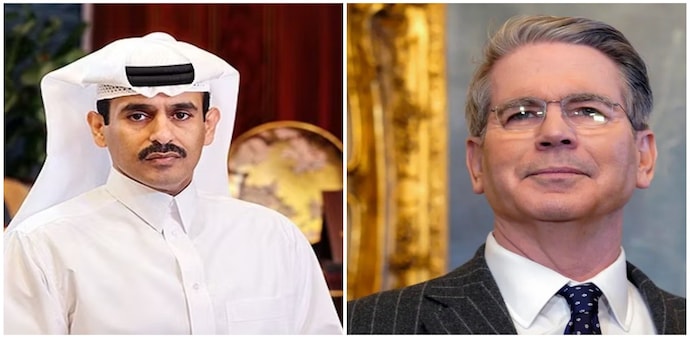
- Sep 21, 2026,
- Updated Sep 21, 2026 8:12 AM IST
Dismissing claims that one of the world's most critical maritime chokepoints is heading toward irrelevance, Qatari Energy Minister Saad Al-Kaabi pushed back sharply against assertions by US Treasury Secretary Scott Bessent that the Strait of Hormuz will become worthless within two years.
Speaking on Sunday at the Qatar Economic Forum in New York City, Al-Kaabi, who also serves as chief executive officer of QatarEnergy, flatly rejected the notion that bypassing infrastructure would render the waterway obsolete.
MUST READ | Hormuz crisis exposed world's energy weak spots: Why the next shock could hurt more
“I mean, maybe this is his view. I think this is completely wrong,” Al-Kaabi said. “If you look at what the trade that we have through the Hormuz Strait, it cannot be obsolete. If this is brought up again, I can repeat it to anybody that I don't think this is ever going to be obsolete.”
The rebuttal comes after Bessent remarked on the sidelines of a Group of 20 meeting on Sept 1 that the crucial passage — a major bottleneck for international energy shipments that has seen significant disruption amid the Iran war — would lose its geopolitical and economic importance as nations construct bypass routes.
“In two years, the Strait of Hormuz will be like a worthless piece of water,” Bessent had said.
DON'T MISS | West Asia crisis threatens energy supplies: Experts urge India to diversify oil, gas routes
However, Qatari officials contend that the waterway's role extends far beyond oil and gas transit. Echoing Al-Kaabi's stance, Qatar’s Minister of Commerce and Industry, Sheikh Faisal Al-Thani, emphasised the enduring reliance on maritime corridors.
“The reality of things is that 90 per cent of all shipping happens through the sea,” Sheikh Faisal said. “It's a question of diversification.”
While neighboring Gulf nations accelerate efforts to circumvent the corridor — with Saudi Arabia expanding Red Sea port capacity and the United Arab Emirates pursuing a multibillion-dollar “Zero Hormuz” strategy — Qatar remains committed to its current maritime routes. Al-Kaabi confirmed that Doha has no intentions of building alternative overland pipelines.
DO CHECKOUT | West Asia tensions: Iran hands 7 terms to US via Qatar, warns of all-out war if Trump rejects deal
“We have decided not to do pipelines, and I think the decision in Qatar was based on commercial and technical, and we are only going to be using the straits,” Al-Kaabi added.
Dismissing claims that one of the world's most critical maritime chokepoints is heading toward irrelevance, Qatari Energy Minister Saad Al-Kaabi pushed back sharply against assertions by US Treasury Secretary Scott Bessent that the Strait of Hormuz will become worthless within two years.
Speaking on Sunday at the Qatar Economic Forum in New York City, Al-Kaabi, who also serves as chief executive officer of QatarEnergy, flatly rejected the notion that bypassing infrastructure would render the waterway obsolete.
MUST READ | Hormuz crisis exposed world's energy weak spots: Why the next shock could hurt more
“I mean, maybe this is his view. I think this is completely wrong,” Al-Kaabi said. “If you look at what the trade that we have through the Hormuz Strait, it cannot be obsolete. If this is brought up again, I can repeat it to anybody that I don't think this is ever going to be obsolete.”
The rebuttal comes after Bessent remarked on the sidelines of a Group of 20 meeting on Sept 1 that the crucial passage — a major bottleneck for international energy shipments that has seen significant disruption amid the Iran war — would lose its geopolitical and economic importance as nations construct bypass routes.
“In two years, the Strait of Hormuz will be like a worthless piece of water,” Bessent had said.
DON'T MISS | West Asia crisis threatens energy supplies: Experts urge India to diversify oil, gas routes
However, Qatari officials contend that the waterway's role extends far beyond oil and gas transit. Echoing Al-Kaabi's stance, Qatar’s Minister of Commerce and Industry, Sheikh Faisal Al-Thani, emphasised the enduring reliance on maritime corridors.
“The reality of things is that 90 per cent of all shipping happens through the sea,” Sheikh Faisal said. “It's a question of diversification.”
While neighboring Gulf nations accelerate efforts to circumvent the corridor — with Saudi Arabia expanding Red Sea port capacity and the United Arab Emirates pursuing a multibillion-dollar “Zero Hormuz” strategy — Qatar remains committed to its current maritime routes. Al-Kaabi confirmed that Doha has no intentions of building alternative overland pipelines.
DO CHECKOUT | West Asia tensions: Iran hands 7 terms to US via Qatar, warns of all-out war if Trump rejects deal
“We have decided not to do pipelines, and I think the decision in Qatar was based on commercial and technical, and we are only going to be using the straits,” Al-Kaabi added.