
‘I’m not MAGA’: Elon Musk says he regrets $500 million midterm push after Democratic sweep
Musk explained that his primary objective in backing Republican candidates was to preserve political checks and balances by keeping the Senate under GOP control, thereby preventing either party from securing a "supermajority".
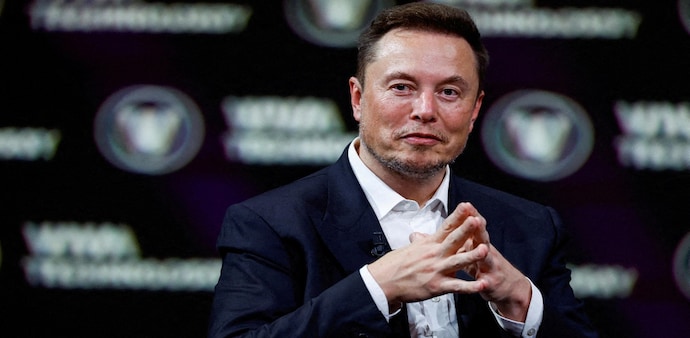
- Nov 19, 2026,
- Updated Nov 19, 2026 11:48 AM IST
Tech billionaire Elon Musk said he feels "pretty foolish" for spending nearly $500 million on the 2026 US midterm elections, following significant Democratic victories that saw the party flip control of both chambers of Congress and win the Texas governor's race.
Speaking virtually from China during The New York Times DealBook Summit on Wednesday evening, November 18, 2026, Musk reflected on the limited impact of his political contributions — reported to be between $442 million and $474 million — in an interview with columnist Andrew Ross Sorkin.
"I feel pretty foolish about having spent so much money and not seeing much for it, or maybe it would have been much worse without that," Musk said during the event. "But it certainly shows that, you know, American elections are not just about money. You know, obviously you can put a lot of money into an election and have an effect that is relatively minor, and I think that was the case here. So probably if I could rewind the clock, I would have spent less money."
Musk explained that his primary objective in backing Republican candidates was to preserve political checks and balances by keeping the Senate under GOP control, thereby preventing either party from securing a "supermajority" or holding both chambers of Congress alongside the White House in 2029.
Rejecting the 'MAGA' label
In the wake of the Republican losses, Musk sought to distance himself from the "Make America Great Again" (MAGA) movement, representing a notable shift from his 2024 campaign appearances in which he referred to himself as "dark gothic MAGA."
During the summit, Musk questioned what the label meant and rejected it outright. "I'm not MAGA," Musk said, characterising himself as "ideologically quite moderate" without "extreme political views." He said that he does not subscribe to "blind adherence to a set of policies by the Republican Party" and added that he sees "positives and negatives in both parties."
Texas politics & Investigation pushback
Musk also weighed in on the shifting political landscape in his home state of Texas, where Democrat Gina Hinojosa defeated incumbent Republican Governor Greg Abbott. Offering rare praise for a Democratic victor, Musk described Hinojosa as a moderate, telling Sorkin, "Things will be fine in Texas with Gina as governor."
However, Musk pushed back strongly against Texas Democratic State Representative Gene Wu, who has called for a federal or congressional investigation into Musk's business operations in Texas as well as his decisions regarding Starlink in Ukraine. Musk dismissed the calls for an inquiry, having previously criticized Wu's push for an investigation without citing a specific crime as a "Stalin-era" tactic.
Starlink controversy in Ukraine
The summit also featured discussion surrounding SpaceX's Starlink satellite network and its role in the conflict in Ukraine. Earlier at the event, Canadian Prime Minister Mark Carney separately characterized Kyiv's reliance on the satellite system as a "vulnerability."
Addressing ongoing disputes with Ukrainian officials over access restrictions to the network, Musk defended SpaceX's policies, maintaining that Starlink is designed to provide communications infrastructure rather than facilitate offensive military strikes.