
India’s energy lifeline runs through the Indian Ocean: Why this maritime corridor matters
India’s energy lifeline runs through the Indian Ocean: Why this maritime corridor matters
The Indian Ocean has emerged as a critical artery for global energy trade, carrying around 80% of the world’s seaborne oil flows. For India, the basin is even more crucial, with about 90% of its oil imports transiting the region.
Business Today Desk
- Sep 6, 2026,
- Updated Sep 6, 2026 7:43 AM IST
India’s energy security is closely tied to the Indian Ocean, one of the world’s most important maritime corridors. A new MUFG report highlights the basin’s outsized role in global oil flows, noting that around 80% of global seaborne oil traverses the Indian Ocean, while the waterway is the primary transit route for more than 90% of India’s oil imports.
Advertisement
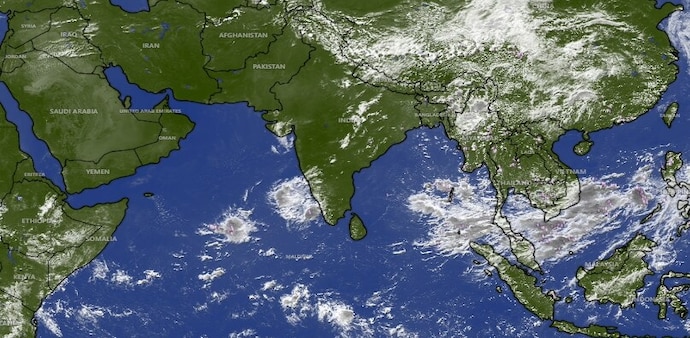
The Indian Ocean is the world’s third-largest ocean, covering about 27 million square miles and accounting for roughly 20% of the world’s ocean surface. It is also the only ocean bounded by land to the north, giving it a distinctive geographic position between major energy-producing regions and some of the world’s largest consumers.
India at the centre
The basin has an especially strong connection to India. Nearly 3 billion people live in countries bordering the Indian Ocean, with India alone accounting for around half of the basin’s population, according to MUFG. The ocean also accounts for an estimated 11-15% of global GDP and carries roughly one-third of global bulk cargo.
MUST READ: UN adopts Equal Earth map: All about Africa’s true size, Mercator distortions and what changes now
Advertisement
For India, however, the strategic significance goes beyond trade. The Indian Ocean is a critical transit route for imported crude oil, linking the country to global energy markets. MUFG estimates that more than 90% of India's oil imports pass through the basin, making maritime stability an important component of the country's energy security.
The scale of dependence is even clearer in the broader Asian context. The Indian Ocean is the primary transit point for more than 85% of China’s oil imports and around 90% of India’s, underlining its importance to two of Asia’s largest energy-consuming economies.
ALSO READ: Crude oil could crash to $40 after Iran war ends, says US Treasury Secy Scott Bessent
Advertisement
Strategic competition intensifies
The economic importance of the Indian Ocean has also produced a dense network of strategic and economic partnerships. The report identifies the Quad — India, the US, Japan and Australia — as a framework for cooperation on security, supply chains, technology and infrastructure. Other initiatives include IORA, BIMSTEC, AUKUS, the Indo-Pacific Economic Framework and the India-Middle East-Europe Economic Corridor (IMEC).
The region also intersects with the energy-exporting Gulf. The GCC's six members control some of the world's largest energy exports, creating an important link between the Persian Gulf, Indian Ocean shipping routes and Asian energy demand.
For India, therefore, the Indian Ocean is more than a geographic expanse. It is a critical artery connecting the country's economy with global energy supplies. As maritime trade, supply chains and geopolitical competition increasingly converge at sea, the stability of this corridor becomes an increasingly important part of India's economic and energy-security equation.
DO READ: China’s oil use drops sharply: Expert says EV shift is changing global energy demand
India’s energy security is closely tied to the Indian Ocean, one of the world’s most important maritime corridors. A new MUFG report highlights the basin’s outsized role in global oil flows, noting that around 80% of global seaborne oil traverses the Indian Ocean, while the waterway is the primary transit route for more than 90% of India’s oil imports.
Advertisement
The Indian Ocean is the world’s third-largest ocean, covering about 27 million square miles and accounting for roughly 20% of the world’s ocean surface. It is also the only ocean bounded by land to the north, giving it a distinctive geographic position between major energy-producing regions and some of the world’s largest consumers.
India at the centre
The basin has an especially strong connection to India. Nearly 3 billion people live in countries bordering the Indian Ocean, with India alone accounting for around half of the basin’s population, according to MUFG. The ocean also accounts for an estimated 11-15% of global GDP and carries roughly one-third of global bulk cargo.
MUST READ: UN adopts Equal Earth map: All about Africa’s true size, Mercator distortions and what changes now
Advertisement
For India, however, the strategic significance goes beyond trade. The Indian Ocean is a critical transit route for imported crude oil, linking the country to global energy markets. MUFG estimates that more than 90% of India's oil imports pass through the basin, making maritime stability an important component of the country's energy security.
The scale of dependence is even clearer in the broader Asian context. The Indian Ocean is the primary transit point for more than 85% of China’s oil imports and around 90% of India’s, underlining its importance to two of Asia’s largest energy-consuming economies.
ALSO READ: Crude oil could crash to $40 after Iran war ends, says US Treasury Secy Scott Bessent
Advertisement
Strategic competition intensifies
The economic importance of the Indian Ocean has also produced a dense network of strategic and economic partnerships. The report identifies the Quad — India, the US, Japan and Australia — as a framework for cooperation on security, supply chains, technology and infrastructure. Other initiatives include IORA, BIMSTEC, AUKUS, the Indo-Pacific Economic Framework and the India-Middle East-Europe Economic Corridor (IMEC).
The region also intersects with the energy-exporting Gulf. The GCC's six members control some of the world's largest energy exports, creating an important link between the Persian Gulf, Indian Ocean shipping routes and Asian energy demand.
For India, therefore, the Indian Ocean is more than a geographic expanse. It is a critical artery connecting the country's economy with global energy supplies. As maritime trade, supply chains and geopolitical competition increasingly converge at sea, the stability of this corridor becomes an increasingly important part of India's economic and energy-security equation.
DO READ: China’s oil use drops sharply: Expert says EV shift is changing global energy demand
Read more!