
Is Asia facing 1997 again? HSBC's chief economist warns AI demand is the new vulnerability
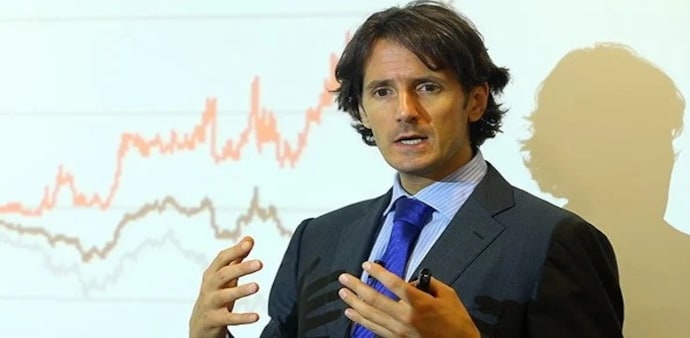
HSBC Chief Economist Frederick Neumann mapped out the striking parallels between today’s macroeconomic setup and the conditions that triggered regional economic collapse nearly three decades ago.
- Sep 7, 2026,
- Updated Sep 7, 2026 6:33 AM IST
Surging US Treasury yields, a battered Japanese yen, and unbridled tech optimism — the financial landscape driving Asian markets today bears an uncomfortable resemblance to the prelude of the catastrophic 1997 Asian Financial Crisis.
In an August 31 note, HSBC Chief Economist Frederick Neumann mapped out the striking parallels between today’s macroeconomic setup and the conditions that triggered regional economic collapse nearly three decades ago.
Yet, as global markets weigh the warning signs, Neumann argues that Asia's ultimate threat has shifted from fragile banking systems to an absolute reliance on American appetite for artificial intelligence hardware, according to a CNBC report.
Neumann highlights that the historical similarities are hard to ignore. Before the 1997 meltdown, the US 10-year Treasury yield surged from around 5% in October 1993 to nearly 8% in November 1994, remaining near 7% by April 1997. Today, yields have spiked roughly 80 basis points since February to around 4.79% — a dramatic climb from the historic 0.5% low seen in August 2020.
Currency swings offer a second warning light. Between April 1995 and April 1997, the Japanese yen plummeted roughly 55% against the dollar, sliding from 80 to 130. In the current cycle, the yen suffered a 57% drop from nearly 103 per dollar in January 2021 to a low of 163 in July, prompting rare joint intervention by Washington and Tokyo to stabilise it near 160, as per the CNBC report.
Overlaid across both eras is speculative tech enthusiasm: where the mid-1990s were gripped by the dawn of the internet, today’s market momentum is anchored in the AI boom. Despite the mirror images, Neumann stressed that the structural differences between 1997 and today "outweigh the similarities."
In the 1990s, Asian nations were capital importers relying on foreign savings to fund domestic investment, running heavy current account deficits with fragile banking frameworks. When borrowing costs spiked, foreign capital fled overnight, destroying currency pegs and triggering widespread bank failures from Thailand to South Korea.
Today, those same economies are net capital exporters holding vast foreign exchange reserves, making them far more resilient to sudden dollar liquidity squeezes.
Instead, Asia faces a new, stealthier vulnerability. Growth across major regional manufacturing hubs — including South Korea, Japan, Taiwan, and Singapore — is heavily reliant on electronics and semiconductor exports bound for US tech giants spending aggressively on AI infrastructure, the CNBC report added.
“Instead of a financial vulnerability as in the 1990s, Asia now faces a demand vulnerability,” Neumann said.
If elevated US Treasury yields and climbing borrowing costs force American hyperscalers to dial back data center spending, or if yen volatility destabilises broader funding markets, Asia’s export engines could take a direct, immediate hit, the report added. The fallout would not arrive through panic on bank trading floors, but through a quiet, sharp contraction in order books across the region's top chipmakers.
Surging US Treasury yields, a battered Japanese yen, and unbridled tech optimism — the financial landscape driving Asian markets today bears an uncomfortable resemblance to the prelude of the catastrophic 1997 Asian Financial Crisis.
In an August 31 note, HSBC Chief Economist Frederick Neumann mapped out the striking parallels between today’s macroeconomic setup and the conditions that triggered regional economic collapse nearly three decades ago.
Yet, as global markets weigh the warning signs, Neumann argues that Asia's ultimate threat has shifted from fragile banking systems to an absolute reliance on American appetite for artificial intelligence hardware, according to a CNBC report.
Neumann highlights that the historical similarities are hard to ignore. Before the 1997 meltdown, the US 10-year Treasury yield surged from around 5% in October 1993 to nearly 8% in November 1994, remaining near 7% by April 1997. Today, yields have spiked roughly 80 basis points since February to around 4.79% — a dramatic climb from the historic 0.5% low seen in August 2020.
Currency swings offer a second warning light. Between April 1995 and April 1997, the Japanese yen plummeted roughly 55% against the dollar, sliding from 80 to 130. In the current cycle, the yen suffered a 57% drop from nearly 103 per dollar in January 2021 to a low of 163 in July, prompting rare joint intervention by Washington and Tokyo to stabilise it near 160, as per the CNBC report.
Overlaid across both eras is speculative tech enthusiasm: where the mid-1990s were gripped by the dawn of the internet, today’s market momentum is anchored in the AI boom. Despite the mirror images, Neumann stressed that the structural differences between 1997 and today "outweigh the similarities."
In the 1990s, Asian nations were capital importers relying on foreign savings to fund domestic investment, running heavy current account deficits with fragile banking frameworks. When borrowing costs spiked, foreign capital fled overnight, destroying currency pegs and triggering widespread bank failures from Thailand to South Korea.
Today, those same economies are net capital exporters holding vast foreign exchange reserves, making them far more resilient to sudden dollar liquidity squeezes.
Instead, Asia faces a new, stealthier vulnerability. Growth across major regional manufacturing hubs — including South Korea, Japan, Taiwan, and Singapore — is heavily reliant on electronics and semiconductor exports bound for US tech giants spending aggressively on AI infrastructure, the CNBC report added.
“Instead of a financial vulnerability as in the 1990s, Asia now faces a demand vulnerability,” Neumann said.
If elevated US Treasury yields and climbing borrowing costs force American hyperscalers to dial back data center spending, or if yen volatility destabilises broader funding markets, Asia’s export engines could take a direct, immediate hit, the report added. The fallout would not arrive through panic on bank trading floors, but through a quiet, sharp contraction in order books across the region's top chipmakers.