
Lahore AQI hits 263: Pakistan blames India's Diwali fireworks for toxic air
Lahore recorded an Air Quality Index (AQI) of 263, classified as “very unhealthy”, in the ranking published by Swiss air-quality monitoring group IQAir
- Nov 12, 2026,
- Updated Nov 12, 2026 3:20 AM IST
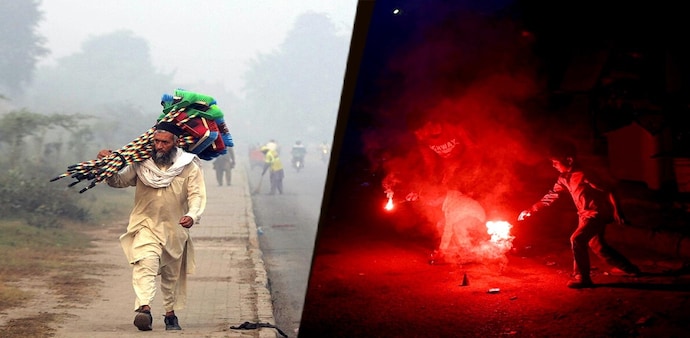
Pakistan has blamed pollution drifting from neighbouring India following Diwali celebrations for Lahore's deteriorating air quality. The Pakistani city ranked as the world's most polluted major city for the second consecutive day on November 10, according to a Reuters report.
Lahore recorded an Air Quality Index (AQI) of 263, classified as “very unhealthy”, in the ranking published by Swiss air-quality monitoring group IQAir. The concentration of PM2.5, fine particulate matter that can penetrate deep into the lungs, was 37.2 times higher than the World Health Organization's annual guideline.
Marriyum Aurangzeb, Punjab's Environment Protection Minister, attributed the pollution to emissions travelling across the border from India after Diwali celebrations over the weekend. She said light winds had carried polluted air into the region but expected conditions to improve as weather patterns changed.
READ THIS: AQI 299 to 376: What Delhi’s air around Diwali equals in cigarettes, day by day
Air quality also deteriorated across northern India, with Delhi ranking as the world's second-most polluted major city on Tuesday. The national capital recorded an AQI of 188, while Indian government data indicated that firecrackers contributed nearly 55% of Delhi's PM2.5 pollution a day earlier.
Multiple factors contribute to winter smog
Although firecracker emissions have contributed to the post-Diwali pollution spike, several other sources affect air quality across the Indo-Gangetic plains. Vehicle emissions, construction dust and smoke from agricultural residue burning are among the major contributors to winter smog in India and Pakistan.
Low wind speeds and unfavourable weather conditions can trap pollutants close to the ground, allowing harmful particles to accumulate over several days.
ALSO READ: North India gasps: Delhi air improves slightly; NCR, UP remain in toxic grip
Pakistan's latest allegations revive an earlier dispute between the neighbouring countries over cross-border pollution. In 2024, Pakistan blamed crop-residue burning in India's Punjab for worsening air quality. Indian meteorological officials disputed the explanation, saying wind direction at the time indicated that air was moving from Pakistan towards India.
India yet to respond to Pakistan's allegations
India's Ministry of External Affairs had not immediately responded to a request for comment on Pakistan's latest allegations, Reuters reported.