
‘Lower the rate or I’ll stop...’: Donald Trump links US trade deficit to Fed rate cuts
‘Lower the rate or I’ll stop...’: Donald Trump links US trade deficit to Fed rate cuts
China accounted for the biggest US trade deficit last year, at more than $200 billion, followed by Mexico and Vietnam. Overall, the US recorded a trade deficit of about $1.2 trillion with all trading partners last year.
Business Today Desk
- Sep 5, 2026,
- Updated Sep 5, 2026 8:11 AM IST
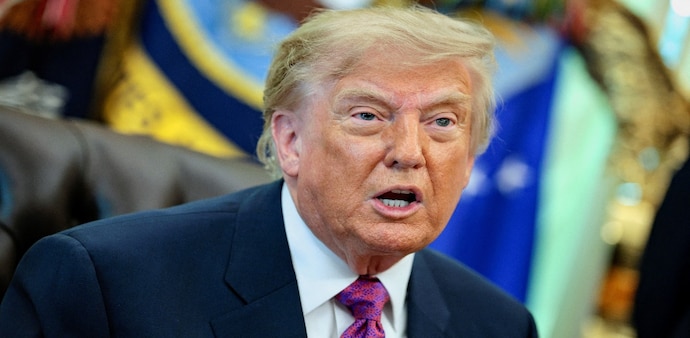
US President Donald Trump has escalated his pressure campaign against the Federal Reserve, threatening to halt trade with countries running trade deficits with the United States unless the central bank lowers interest rates.
In a post on Truth Social on Friday, September 4, Trump wrote: “LOWER THE RATE OR I’LL STOP TRADING WITH COUNTRIES WITH WHICH WE HAVE A DEFICIT.” He argued that high US interest rates put the country at an unfair disadvantage and said the United States should have the lowest borrowing costs in the world.
Advertisement
The threat came hours after a stronger-than-expected US jobs report complicated the case for an immediate rate cut. The US economy added 162,000 jobs in August, well above economists’ expectations of roughly 53,000-55,000. The unemployment rate remained at 4.1%.
The report prompted traders to increase bets that the Federal Reserve could raise rates rather than cut them at its September meeting.
Trump links interest rates to US competitiveness
Trump has repeatedly argued that lower borrowing costs would strengthen the US economy, support growth and improve the country's competitive position.
Following the jobs report, he said strong economic growth should not automatically trigger fears of inflation and criticised the idea that a stronger economy requires tighter monetary policy. He has also argued that the US, as a strong borrower, should be able to operate with significantly lower interest rates.
Advertisement
His latest warning, however, takes the campaign into new territory by connecting monetary policy with international trade.
Rather than threatening another round of tariffs, Trump suggested cutting off trade altogether with countries with which the US runs a deficit. He described such a move as potentially “better than tariffs.”
China, Mexico, Vietnam among major deficit partners
The threat could have broad implications because the United States runs trade deficits with many of its largest trading partners.
China accounted for the biggest US trade deficit last year, at more than $200 billion, followed by Mexico and Vietnam. Overall, the US recorded a trade deficit of about $1.2 trillion with all trading partners last year.
Advertisement
More recent data showed the US goods and services trade deficit widening sharply in July to $88.6 billion, up from $71.2 billion in June and the largest monthly gap since March 2025. The July figures included deficits of $27.5 billion with Mexico, $23.3 billion with Vietnam, $15.2 billion with China and $8.9 billion with the European Union.
The surge in imports has also been linked partly to the rapid buildout of AI data centres. Imports of computers jumped 25% from June to July, while semiconductor imports rose 10% as technology companies continued spending heavily on infrastructure.
Fed faces a difficult decision
Trump's demand comes at an awkward moment for the Federal Reserve. A resilient labour market gives policymakers less reason to rush into a rate cut, while inflation remains a concern.
Markets have therefore shifted toward expecting tighter rather than easier policy following the jobs data. The Fed's next policy meeting is scheduled for September 15-16, with upcoming inflation data likely to play a major role in determining the direction of interest rates.
A move to stop trading with deficit countries would go far beyond conventional tariffs. US businesses depend heavily on imports from countries with which America runs persistent trade deficits, meaning an abrupt disruption could create supply shortages, raise costs and add to inflationary pressures.
US President Donald Trump has escalated his pressure campaign against the Federal Reserve, threatening to halt trade with countries running trade deficits with the United States unless the central bank lowers interest rates.
In a post on Truth Social on Friday, September 4, Trump wrote: “LOWER THE RATE OR I’LL STOP TRADING WITH COUNTRIES WITH WHICH WE HAVE A DEFICIT.” He argued that high US interest rates put the country at an unfair disadvantage and said the United States should have the lowest borrowing costs in the world.
Advertisement
The threat came hours after a stronger-than-expected US jobs report complicated the case for an immediate rate cut. The US economy added 162,000 jobs in August, well above economists’ expectations of roughly 53,000-55,000. The unemployment rate remained at 4.1%.
The report prompted traders to increase bets that the Federal Reserve could raise rates rather than cut them at its September meeting.
Trump links interest rates to US competitiveness
Trump has repeatedly argued that lower borrowing costs would strengthen the US economy, support growth and improve the country's competitive position.
Following the jobs report, he said strong economic growth should not automatically trigger fears of inflation and criticised the idea that a stronger economy requires tighter monetary policy. He has also argued that the US, as a strong borrower, should be able to operate with significantly lower interest rates.
Advertisement
His latest warning, however, takes the campaign into new territory by connecting monetary policy with international trade.
Rather than threatening another round of tariffs, Trump suggested cutting off trade altogether with countries with which the US runs a deficit. He described such a move as potentially “better than tariffs.”
China, Mexico, Vietnam among major deficit partners
The threat could have broad implications because the United States runs trade deficits with many of its largest trading partners.
China accounted for the biggest US trade deficit last year, at more than $200 billion, followed by Mexico and Vietnam. Overall, the US recorded a trade deficit of about $1.2 trillion with all trading partners last year.
Advertisement
More recent data showed the US goods and services trade deficit widening sharply in July to $88.6 billion, up from $71.2 billion in June and the largest monthly gap since March 2025. The July figures included deficits of $27.5 billion with Mexico, $23.3 billion with Vietnam, $15.2 billion with China and $8.9 billion with the European Union.
The surge in imports has also been linked partly to the rapid buildout of AI data centres. Imports of computers jumped 25% from June to July, while semiconductor imports rose 10% as technology companies continued spending heavily on infrastructure.
Fed faces a difficult decision
Trump's demand comes at an awkward moment for the Federal Reserve. A resilient labour market gives policymakers less reason to rush into a rate cut, while inflation remains a concern.
Markets have therefore shifted toward expecting tighter rather than easier policy following the jobs data. The Fed's next policy meeting is scheduled for September 15-16, with upcoming inflation data likely to play a major role in determining the direction of interest rates.
A move to stop trading with deficit countries would go far beyond conventional tariffs. US businesses depend heavily on imports from countries with which America runs persistent trade deficits, meaning an abrupt disruption could create supply shortages, raise costs and add to inflationary pressures.
Read more!