
‘Military action doesn’t seem to be a very necessary thing at this point’: Trump on Iran
Trump said he would hold off on new military strikes against Iran for the time being following appeals from countries in the region, including Qatar's prime minister during talks at the White House.
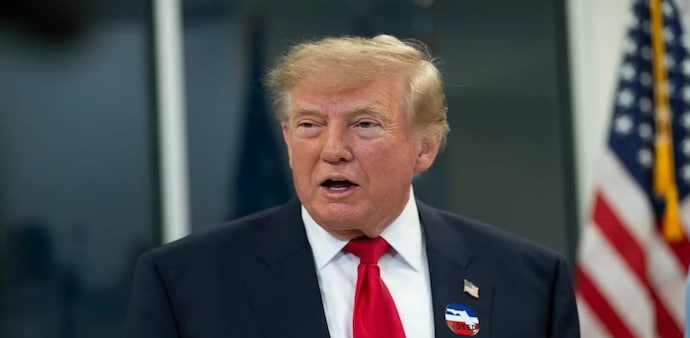
- Nov 10, 2026,
- Updated Nov 10, 2026 8:49 AM IST
US President Donald Trump has said military action against Iran does not appear necessary at this point, signalling a softer stance towards Tehran and easing concerns over further escalation in the Middle East.
"At this point ... taking military action doesn't seem to be a very necessary thing. But we're locked and loaded, ready to go for any reason that changes," Trump told reporters on Monday. He added that he expected the conflict with Tehran to end "fairly soon".
Trump said he would hold off on new military strikes against Iran for the time being following appeals from countries in the region, including Qatar's prime minister during talks at the White House. However, he plans to maintain the US naval blockade in the Strait of Hormuz.
Meanwhile, Brent crude futures fell 70 cents, or 0.75%, to $91.88 a barrel by 0246 GMT on Tuesday, while US West Texas Intermediate (WTI) declined 78 cents, or 0.90%, to $86.07. Both benchmarks had fallen 1% earlier in the session. Brent had settled 5.85% lower in the previous session, after touching its lowest level since August 31.
"The market continues to prioritise President Trump's more conciliatory tone toward Iran since the midterms," said Tim Waterer, chief market analyst at KCM Trade.
Brent has retreated around 22% from its six-month high of $118 touched on October 30. However, concerns over shipping disruptions remain, with Iran continuing to attack vessels transiting the Strait of Hormuz.
Additionally, Iran defended its proposal to restart peace talks within two days, calling it the most reasonable offer on the table. Foreign Ministry spokesman Esmaeil Baghaei questioned whether Tehran's demands for the lifting of US sanctions and the naval blockade before negotiations were unreasonable.
The proposal shortens the timeline from an earlier seven-day offer and calls for Washington to halt hostilities, lift the blockade and waive sanctions before talks begin.
Baghaei also dismissed a US military task force targeting Iran's land trade and said American pressure on Iraq to close most of its borders with Iran should not affect relations between Baghdad and Tehran.
Despite the recent decline, analysts warned that oil prices may struggle to fall below $90 a barrel without more durable signs of de-escalation and a US-Iran agreement.