
‘Muslim NATO’ takes shape? Trump hails ‘big, bold’ Saudi-Türkiye-Pakistan Mecca defence pact
Trump's endorsement is significant because the agreement represents a push by regional powers to strengthen their own defence capabilities at a time when the security environment across the Middle East has become increasingly volatile.
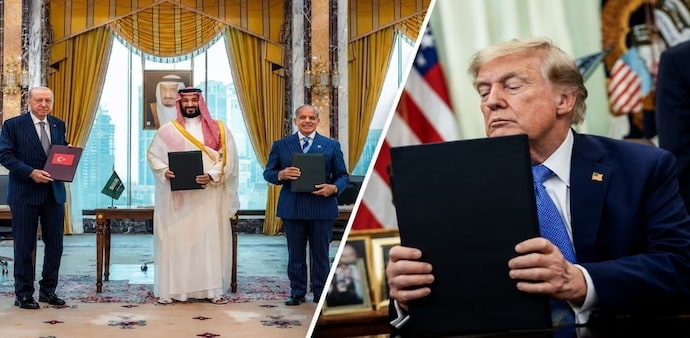
- Aug 17, 2026,
- Updated Aug 17, 2026 4:51 PM IST
US President Donald Trump has welcomed the new defence agreement between Saudi Arabia, Türkiye and Pakistan, calling it a “big, bold and important first step” as regional powers move towards a more independent security architecture amid continuing turmoil in the Middle East.
The Mecca Joint Defence Agreement, signed in Saudi Arabia on August 7, commits the three countries to treating an armed attack on any one member as an attack on all three. The arrangement has drawn comparisons with NATO’s Article 5 collective-defence provision, although the signatories have stressed that it is defensive in nature and does not target any particular country.
Trump hails a new regional security push
In a post on Truth Social, Trump said he was “very happy” to see Saudi Arabia, Türkiye and Pakistan finally sign the agreement. He described it as evidence that countries in the Middle East are coming together and becoming capable of defending themselves “in a more meaningful way”.
“THIS IS A BIG, BOLD, AND IMPORTANT FIRST STEP — WOW!” Trump said while congratulating the leadership of the three countries.
Trump's endorsement is significant because the agreement represents a push by regional powers to strengthen their own defence capabilities at a time when the security environment across the Middle East has become increasingly volatile.
The three countries negotiated the agreement for around a year against the backdrop of escalating regional tensions and the ongoing US-Iran conflict, which has intensified violence across parts of the region, including attacks involving Iran-backed Houthi rebels.
What is the Mecca Joint Defence Agreement?
At its core, the pact establishes a collective-defence principle: an armed attack against one member is to be considered an attack against all three.
The agreement also envisages deeper military coordination, including joint exercises across land, sea, air and cyber domains, as well as cooperation in areas such as unmanned systems, electronic warfare and artificial intelligence.
The countries are also expected to expand defence-industrial cooperation through joint development, production and technology transfer.
However, analysts caution against immediately equating the arrangement with NATO. The agreement currently lacks the institutional depth and clearly defined military commitments of the 32-member Western alliance.
The three countries bring complementary strategic strengths:
- Pakistan contributes a large military, defence expertise and a significant defence-industrial base. It is also the only nuclear-armed Muslim-majority state.
- Türkiye brings NATO membership, one of the largest militaries in the alliance and an increasingly sophisticated domestic defence industry, particularly in drones and other military technologies.
- Saudi Arabia provides enormous financial resources, strategic access to the Gulf and considerable political influence across the Arab world.
Together, the combination gives the agreement weight well beyond a conventional bilateral defence arrangement.
Why is the pact being called 'Muslim NATO'?
The phrase “Muslim NATO” is being used by analysts and commentators to describe the potential strategic significance of the agreement, rather than as its official designation. The collective-defence provision is the main reason for the comparison with NATO. But there are important differences.
The Mecca agreement is currently a three-country arrangement, while NATO has decades-old institutions, integrated command structures, established military planning mechanisms and a much broader membership.
Türkiye's Foreign Minister Hakan Fidan has nevertheless compared the agreement's mutual-defence principle with NATO's Article 5. Turkish officials have also indicated that the arrangement could eventually expand.
Egypt could make the bloc much bigger
One of the most important questions now is whether Egypt could join. Fidan has identified Egypt as a potential future member, raising the possibility of the arrangement evolving into a larger security grouping connecting South Asia, the Gulf, the Red Sea and the Eastern Mediterranean.
Egypt is already part of a four-country consultative framework with Türkiye, Pakistan and Saudi Arabia. The foreign ministers of the four countries have held discussions on regional security, strategic cooperation and efforts to promote peace and stability.
If Cairo eventually joins the defence arrangement, the strategic geography of the bloc would expand considerably.
What does it mean for Iran?
Iran, meanwhile, has sought to play down concerns over the agreement, portraying it as part of a wider shift towards regional countries taking greater responsibility for their own security rather than depending entirely on external powers.
That interpretation is important because the pact could represent not only a military alignment but also a broader push for regional strategic autonomy.
Why India is watching closely
The agreement has particular significance for India because Pakistan is one of its three founding members.
New Delhi is assessing the implications of the pact for national security as well as regional peace and stability. On August 11, the Ministry of External Affairs said India was examining its consequences and reiterated that the country would take all necessary measures to protect its national interests.
For India, the most important concern is not necessarily the possibility of an immediate military confrontation. Rather, the pact could give Pakistan deeper access to Saudi financial resources, Turkish defence technology and broader diplomatic influence.
It also brings Pakistan into a security arrangement that extends beyond South Asia and links its strategic interests more closely with two influential powers spanning the Middle East and Mediterranean.
At the same time, Saudi Arabia remains an important economic and energy partner for India, while Türkiye has substantial commercial and diplomatic links with New Delhi. This makes India's response more complicated than simply viewing the pact through the India-Pakistan lens.
US President Donald Trump has welcomed the new defence agreement between Saudi Arabia, Türkiye and Pakistan, calling it a “big, bold and important first step” as regional powers move towards a more independent security architecture amid continuing turmoil in the Middle East.
The Mecca Joint Defence Agreement, signed in Saudi Arabia on August 7, commits the three countries to treating an armed attack on any one member as an attack on all three. The arrangement has drawn comparisons with NATO’s Article 5 collective-defence provision, although the signatories have stressed that it is defensive in nature and does not target any particular country.
Trump hails a new regional security push
In a post on Truth Social, Trump said he was “very happy” to see Saudi Arabia, Türkiye and Pakistan finally sign the agreement. He described it as evidence that countries in the Middle East are coming together and becoming capable of defending themselves “in a more meaningful way”.
“THIS IS A BIG, BOLD, AND IMPORTANT FIRST STEP — WOW!” Trump said while congratulating the leadership of the three countries.
Trump's endorsement is significant because the agreement represents a push by regional powers to strengthen their own defence capabilities at a time when the security environment across the Middle East has become increasingly volatile.
The three countries negotiated the agreement for around a year against the backdrop of escalating regional tensions and the ongoing US-Iran conflict, which has intensified violence across parts of the region, including attacks involving Iran-backed Houthi rebels.
What is the Mecca Joint Defence Agreement?
At its core, the pact establishes a collective-defence principle: an armed attack against one member is to be considered an attack against all three.
The agreement also envisages deeper military coordination, including joint exercises across land, sea, air and cyber domains, as well as cooperation in areas such as unmanned systems, electronic warfare and artificial intelligence.
The countries are also expected to expand defence-industrial cooperation through joint development, production and technology transfer.
However, analysts caution against immediately equating the arrangement with NATO. The agreement currently lacks the institutional depth and clearly defined military commitments of the 32-member Western alliance.
The three countries bring complementary strategic strengths:
- Pakistan contributes a large military, defence expertise and a significant defence-industrial base. It is also the only nuclear-armed Muslim-majority state.
- Türkiye brings NATO membership, one of the largest militaries in the alliance and an increasingly sophisticated domestic defence industry, particularly in drones and other military technologies.
- Saudi Arabia provides enormous financial resources, strategic access to the Gulf and considerable political influence across the Arab world.
Together, the combination gives the agreement weight well beyond a conventional bilateral defence arrangement.
Why is the pact being called 'Muslim NATO'?
The phrase “Muslim NATO” is being used by analysts and commentators to describe the potential strategic significance of the agreement, rather than as its official designation. The collective-defence provision is the main reason for the comparison with NATO. But there are important differences.
The Mecca agreement is currently a three-country arrangement, while NATO has decades-old institutions, integrated command structures, established military planning mechanisms and a much broader membership.
Türkiye's Foreign Minister Hakan Fidan has nevertheless compared the agreement's mutual-defence principle with NATO's Article 5. Turkish officials have also indicated that the arrangement could eventually expand.
Egypt could make the bloc much bigger
One of the most important questions now is whether Egypt could join. Fidan has identified Egypt as a potential future member, raising the possibility of the arrangement evolving into a larger security grouping connecting South Asia, the Gulf, the Red Sea and the Eastern Mediterranean.
Egypt is already part of a four-country consultative framework with Türkiye, Pakistan and Saudi Arabia. The foreign ministers of the four countries have held discussions on regional security, strategic cooperation and efforts to promote peace and stability.
If Cairo eventually joins the defence arrangement, the strategic geography of the bloc would expand considerably.
What does it mean for Iran?
Iran, meanwhile, has sought to play down concerns over the agreement, portraying it as part of a wider shift towards regional countries taking greater responsibility for their own security rather than depending entirely on external powers.
That interpretation is important because the pact could represent not only a military alignment but also a broader push for regional strategic autonomy.
Why India is watching closely
The agreement has particular significance for India because Pakistan is one of its three founding members.
New Delhi is assessing the implications of the pact for national security as well as regional peace and stability. On August 11, the Ministry of External Affairs said India was examining its consequences and reiterated that the country would take all necessary measures to protect its national interests.
For India, the most important concern is not necessarily the possibility of an immediate military confrontation. Rather, the pact could give Pakistan deeper access to Saudi financial resources, Turkish defence technology and broader diplomatic influence.
It also brings Pakistan into a security arrangement that extends beyond South Asia and links its strategic interests more closely with two influential powers spanning the Middle East and Mediterranean.
At the same time, Saudi Arabia remains an important economic and energy partner for India, while Türkiye has substantial commercial and diplomatic links with New Delhi. This makes India's response more complicated than simply viewing the pact through the India-Pakistan lens.