
Nepal faces years-long rebuild and $5 billion bill after devastating flash floods, says billionaire
Nepal could face a $5 billion reconstruction bill after devastating flash floods destroyed infrastructure across its mountainous border region with China, billionaire Binod Chaudhary told Bloomberg TV. The rebuilding effort could take years as authorities grapple with damaged roads, bridges, power infrastructure and renewed flooding risks.
- Aug 28, 2026,
- Updated Aug 28, 2026 3:39 PM IST
Nepal could face a reconstruction bill of at least $5 billion after devastating flash floods swept through its mountainous border region with China, according to the country’s only billionaire, Binod Chaudhary.
Chaudhary, chairman of Chaudhary Group, told Bloomberg TV that it was too early to determine the full cost of the disaster but said he “wouldn’t be surprised” if the eventual infrastructure rebuilding bill reached $5 billion. The estimate reflects not only the scale of the damage but also the time and resources required to rebuild in Nepal’s difficult Himalayan terrain.
Damage spreads across infrastructure
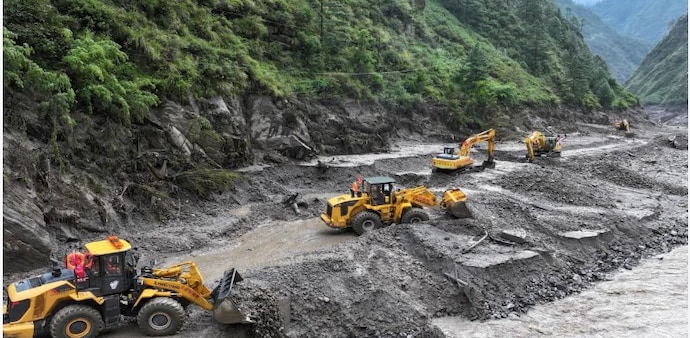
The flash floods struck the Nepal-China border region on August 26, destroying or damaging villages, roads, bridges and power infrastructure. At least 469 people have been confirmed dead, while around 1,000 remain missing across Nepal and Tibet, according to the latest reports. The death toll and number of missing people could change as rescue teams gain access to remote areas.
Nepal’s Finance Minister Swarnim Wagle has separately warned that the disaster could result in losses and damage worth at least several billion dollars. He said preliminary estimates were “quite worrying” and that a clearer assessment could emerge within about a week.
The scale of the destruction has shifted attention from immediate rescue operations to the potentially years-long reconstruction effort. Nepal’s mountainous geography is expected to make the process particularly difficult, with damaged roads and bridges also restricting access for rescue workers, equipment and supplies.
Chaudhary said Nepal had not been prepared for a disaster of this scale, comparable in its demands to the aftermath of the 2015 earthquake.
Relief effort moves towards rebuilding
Chaudhary Group is working with the government, local administration and the army on relief operations, including setting up camps and rehabilitation centres in affected areas, Chaudhary said.
The group intends to move beyond immediate relief towards rebuilding shelters and schools while helping affected communities restart local economic activity.
Chaudhary said his company’s reconstruction spending following the latest disaster would exceed its efforts after the 2015 earthquake. Those reconstruction initiatives, which included shelters, schools and other facilities, took around seven to eight years, he said.
The latest disaster could therefore become another prolonged reconstruction challenge for the country, particularly as damage has been concentrated in some of Nepal’s most difficult-to-access terrain.
ALSO READ: Fresh crisis: Nepal issues flood warning after dam burst in Tibet, halts rescue work
Fresh threat complicates rescue
Rescue operations have also been complicated by renewed flooding risks. Nepal Police warned security personnel, rescue workers and members of the public involved in relief efforts to move to safer locations after reports that a dam in Tibet had burst.
Authorities have also raised concerns about a lake formed by debris from the earlier disaster, warning people in vulnerable areas to move to higher ground.
More than 3,200 people have been airlifted from affected areas, according to the Associated Press. But with rescue teams still working to reach isolated communities, the full economic cost remains uncertain.
For Nepal, the immediate priority remains locating survivors and the missing. The longer-term challenge will be rebuilding roads, bridges, power infrastructure, homes and local economies—and potentially financing a reconstruction programme that could run into billions of dollars.
MUST READ: Nepal may tap India for power imports as glacier collapse hits critical hydro infra: Report
Nepal could face a reconstruction bill of at least $5 billion after devastating flash floods swept through its mountainous border region with China, according to the country’s only billionaire, Binod Chaudhary.
Chaudhary, chairman of Chaudhary Group, told Bloomberg TV that it was too early to determine the full cost of the disaster but said he “wouldn’t be surprised” if the eventual infrastructure rebuilding bill reached $5 billion. The estimate reflects not only the scale of the damage but also the time and resources required to rebuild in Nepal’s difficult Himalayan terrain.
Damage spreads across infrastructure
The flash floods struck the Nepal-China border region on August 26, destroying or damaging villages, roads, bridges and power infrastructure. At least 469 people have been confirmed dead, while around 1,000 remain missing across Nepal and Tibet, according to the latest reports. The death toll and number of missing people could change as rescue teams gain access to remote areas.
Nepal’s Finance Minister Swarnim Wagle has separately warned that the disaster could result in losses and damage worth at least several billion dollars. He said preliminary estimates were “quite worrying” and that a clearer assessment could emerge within about a week.
The scale of the destruction has shifted attention from immediate rescue operations to the potentially years-long reconstruction effort. Nepal’s mountainous geography is expected to make the process particularly difficult, with damaged roads and bridges also restricting access for rescue workers, equipment and supplies.
Chaudhary said Nepal had not been prepared for a disaster of this scale, comparable in its demands to the aftermath of the 2015 earthquake.
Relief effort moves towards rebuilding
Chaudhary Group is working with the government, local administration and the army on relief operations, including setting up camps and rehabilitation centres in affected areas, Chaudhary said.
The group intends to move beyond immediate relief towards rebuilding shelters and schools while helping affected communities restart local economic activity.
Chaudhary said his company’s reconstruction spending following the latest disaster would exceed its efforts after the 2015 earthquake. Those reconstruction initiatives, which included shelters, schools and other facilities, took around seven to eight years, he said.
The latest disaster could therefore become another prolonged reconstruction challenge for the country, particularly as damage has been concentrated in some of Nepal’s most difficult-to-access terrain.
ALSO READ: Fresh crisis: Nepal issues flood warning after dam burst in Tibet, halts rescue work
Fresh threat complicates rescue
Rescue operations have also been complicated by renewed flooding risks. Nepal Police warned security personnel, rescue workers and members of the public involved in relief efforts to move to safer locations after reports that a dam in Tibet had burst.
Authorities have also raised concerns about a lake formed by debris from the earlier disaster, warning people in vulnerable areas to move to higher ground.
More than 3,200 people have been airlifted from affected areas, according to the Associated Press. But with rescue teams still working to reach isolated communities, the full economic cost remains uncertain.
For Nepal, the immediate priority remains locating survivors and the missing. The longer-term challenge will be rebuilding roads, bridges, power infrastructure, homes and local economies—and potentially financing a reconstruction programme that could run into billions of dollars.
MUST READ: Nepal may tap India for power imports as glacier collapse hits critical hydro infra: Report