
Nepal flash flood death toll climbs to 903, over 4,200 people still missing
Nepal flash floods: The authority said 4,247 people remain missing, including 85 security personnel and 320 foreigners.
- Aug 31, 2026,
- Updated Aug 31, 2026 11:44 AM IST
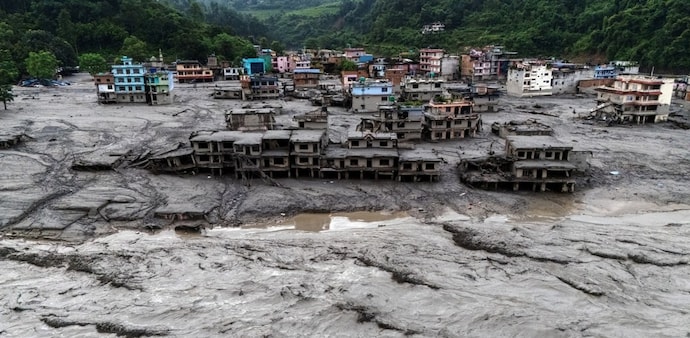
Nepal flash floods: The death toll in Nepal has crossed 900 following last week's devastating floods and mudslides along the Nepal-Tibet border. Authorities on Monday reported 903 deaths, with more than 4,200 people still missing. Rescue teams worked through the night to reach those believed to be trapped inside blocked tunnels at hydropower projects, where at least 933 workers are feared stranded at around six sites.
The disaster occurred on August 26, when a massive torrent of ice, rock, mud and debris swept through towns and villages in northern and central Nepal and across the border into China. Officials said the flooding was likely triggered by a collapse or avalanche of ice and rock near the border, and a glacier collapse has also been blamed. In Tibet, Chinese state media reported 16 deaths and 546 missing people. President Xi Jinping directed authorities to intensify efforts to find the missing and enhance rescue and relief operations.
Bodies have been recovered from all eight affected districts as rescuers race against time on the sixth day of the disaster. The National Disaster Risk Reduction and Management Authority (NDRRMA) reported 272 bodies from Chitwan, 207 from Nawalparasi East, 151 from Nawalparasi West, 95 from Nuwakot, 62 from Gorkha, 55 from Dhading, 37 from Tanahu and 24 from Rasuwa.
The authority said 4,247 people remain missing, including 85 security personnel and 320 foreigners. Nepal's foreign ministry stated that 886 people have been rescued so far and search and rescue efforts continue. It also noted that 400 foreign nationals are among those reported missing.
DON'T MISS | China says it has shared satellite, hydrological and early-warning data with Nepal
Residents in Nepal received fresh flood warnings on their mobile phones as water levels in the Bhotekoshi River rose. The alerts followed information from Chinese authorities about increased water flow upstream, with officials warning of a high risk of flash floods in Nuwakot and Rasuwa districts.
Several countries, including India, China and the Republic of Korea, have sent tunnel rescue teams to assist in evacuating those trapped. Nepal's foreign ministry said its immediate priority is to save lives, locate missing persons, rescue those trapped, provide urgent relief to survivors, and ensure affected Nepali and foreign nationals receive appropriate assistance.
India's ministry of external affairs said on Sunday that 149 Indians had been rescued in Nepal so far. A release dated August 29 stated that 598 Indian nationals have safely crossed into Nepal from China in the last two days, according to local government sources in China. Around 900 Indian nationals remain on the Chinese side but are safe and contactable.
India was among the first major countries to send aid to Nepal after the floods and has delivered more than 68 tonnes of emergency relief supplies on four military flights. India was the first country to physically deliver aid after the disaster.
Nepal flash floods: The death toll in Nepal has crossed 900 following last week's devastating floods and mudslides along the Nepal-Tibet border. Authorities on Monday reported 903 deaths, with more than 4,200 people still missing. Rescue teams worked through the night to reach those believed to be trapped inside blocked tunnels at hydropower projects, where at least 933 workers are feared stranded at around six sites.
The disaster occurred on August 26, when a massive torrent of ice, rock, mud and debris swept through towns and villages in northern and central Nepal and across the border into China. Officials said the flooding was likely triggered by a collapse or avalanche of ice and rock near the border, and a glacier collapse has also been blamed. In Tibet, Chinese state media reported 16 deaths and 546 missing people. President Xi Jinping directed authorities to intensify efforts to find the missing and enhance rescue and relief operations.
Bodies have been recovered from all eight affected districts as rescuers race against time on the sixth day of the disaster. The National Disaster Risk Reduction and Management Authority (NDRRMA) reported 272 bodies from Chitwan, 207 from Nawalparasi East, 151 from Nawalparasi West, 95 from Nuwakot, 62 from Gorkha, 55 from Dhading, 37 from Tanahu and 24 from Rasuwa.
The authority said 4,247 people remain missing, including 85 security personnel and 320 foreigners. Nepal's foreign ministry stated that 886 people have been rescued so far and search and rescue efforts continue. It also noted that 400 foreign nationals are among those reported missing.
DON'T MISS | China says it has shared satellite, hydrological and early-warning data with Nepal
Residents in Nepal received fresh flood warnings on their mobile phones as water levels in the Bhotekoshi River rose. The alerts followed information from Chinese authorities about increased water flow upstream, with officials warning of a high risk of flash floods in Nuwakot and Rasuwa districts.
Several countries, including India, China and the Republic of Korea, have sent tunnel rescue teams to assist in evacuating those trapped. Nepal's foreign ministry said its immediate priority is to save lives, locate missing persons, rescue those trapped, provide urgent relief to survivors, and ensure affected Nepali and foreign nationals receive appropriate assistance.
India's ministry of external affairs said on Sunday that 149 Indians had been rescued in Nepal so far. A release dated August 29 stated that 598 Indian nationals have safely crossed into Nepal from China in the last two days, according to local government sources in China. Around 900 Indian nationals remain on the Chinese side but are safe and contactable.
India was among the first major countries to send aid to Nepal after the floods and has delivered more than 68 tonnes of emergency relief supplies on four military flights. India was the first country to physically deliver aid after the disaster.