
Nepal flash floods: Death toll hits 626, rescuers reach Gyriong checkpoint where Sadhguru team was stranded
Flash floods triggered by a glacial collapse tore through central Nepal and destroyed the Gyirong immigration centre. With hundreds dead and thousands missing, families await word as fears of another flood persist.
- Aug 29, 2026,
- Updated Aug 29, 2026 12:30 PM IST
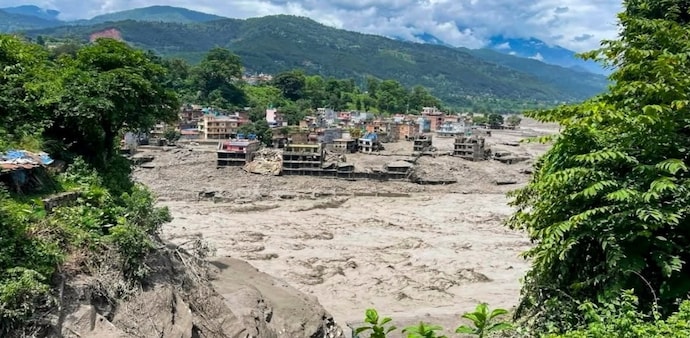
Nepal is reeling from grief and destruction after flash floods tore through Rasuwa and other parts of central Nepal on Wednesday, leaving behind ruined settlements, broken roads and bridges, and a long list of missing people. The floods were triggered by an ice-and-rock avalanche caused by a glacial collapse near the China border, setting off one of the country’s worst disasters since the 2015 earthquakes.
According to Nepal Police, 626 people have been killed and more than 2,400 remain unaccounted for. The flooding swept away homes, vehicles, bridges and hydropower infrastructure, while fresh fears of more flooding have prompted authorities to ask people and rescue workers in the Bhotekoshi and Trishuli areas to stay alert and move to safer locations if needed.
Border crossing reduced to ruins
Four days after the flash flood swept through the Nepal-Tibet border region, Chinese rescuers reached the Gyirong immigration centre, which was swallowed by a massive wall of water and mud. An 80-member team of spiritual leader Sadhguru's Isha Foundation was at the immigration centre when tragedy struck.
The 21-member rescue team, accompanied by a search dog, had to cross mountains and valleys and use ropes to move through forests and cliffs after much of the road to Gyirong was destroyed.
What they found was complete devastation. "There was no road. It was all virgin forest and sheer cliffs," rescue worker Zou Mingqi said. "At the complex, as far as the eye could see, there was nothing but ruins," he said.
Indian pilgrims among those at the site
Several Indian pilgrims were present at the border crossing, either on their way to Tibet for the Kailash Mansarovar yatra or returning after completing the pilgrimage. The Gyirong border port connects Tibet and Nepal, and every traveller bound for Mount Kailash and Lake Mansarovar must clear immigration there. Though there are checkpoints at Khasa and Korala, Gyirong is the most widely used route.
According to a report in The New York Times, at least 130 people were near or at the immigration centre when the floods struck. The largest group, comprising 80 people, was from Sadhguru’s Isha Foundation. In a video released earlier this week, a tearful Sadhguru said the group, made up of 46 women and 34 men from 19 countries, had reached the immigration checkpoint minutes before the tragedy.
"Literally, the entire group was there at the building... This is a terrible and extraordinary event," Sadhguru said, as people could be heard weeping around him. He added: "The same building where we were for the immigration just a week ago... that entire building is washed away."
Families wait for word
Another group of more than 50 Indian pilgrims had left for the border checkpoint before the flooding, the report said. Friends and relatives of the tour’s coordinator, Syed Umar Farooq, said they had not been able to contact anyone in the group since the disaster. Another 40 travellers from Himalayan Glacier, a US-based tour company, had also planned to cross into Tibet through the same checkpoint. The company’s chief executive, Sagar Pandey, told The New York Times that he had not heard from anyone in that group since Wednesday.
Rakesh Nayak, a 45-year-old software engineer from Karnataka who has been working in Australia for the past 10 years, was also among those present at the immigration centre. "He was inside the office when the floods came. After that, there has been no communication," Nayak’s father said. Deepak and Madhu Ahuja, an Indian-origin couple living in Texas, were also on a group pilgrimage to Kailash when the flood struck. Their daughters believe they were inside the immigration office at Gyirong. "We all immediately started calling our parents. No answer," one of the sisters told the BBC.
Visuals capture the scale of the flood
Some of the most dramatic footage from the disaster came from CCTV cameras in the Gyirong port region. The visuals showed a sudden rush of water and mud surging over the multi-storey immigration office as people nearby tried to escape.
The Ministry of External Affairs said on Friday that nearly 320 Indians remain missing in Nepal, while the government has managed to establish contact with around 400 citizens on the Chinese side.
Threat of more flooding remains
As Nepal continues rescue efforts and searches for survivors and the missing, concerns have grown over the formation of a new lake near the affected region. Rescue teams have been put on alert amid fears that the growing lake could burst and trigger another sudden downstream flood.
The disaster has left Nepal facing a massive humanitarian and infrastructure crisis, with hundreds dead, thousands missing, the Gyirong immigration centre reduced to rubble, and authorities warning that the danger may not yet have passed.
Nepal is reeling from grief and destruction after flash floods tore through Rasuwa and other parts of central Nepal on Wednesday, leaving behind ruined settlements, broken roads and bridges, and a long list of missing people. The floods were triggered by an ice-and-rock avalanche caused by a glacial collapse near the China border, setting off one of the country’s worst disasters since the 2015 earthquakes.
According to Nepal Police, 626 people have been killed and more than 2,400 remain unaccounted for. The flooding swept away homes, vehicles, bridges and hydropower infrastructure, while fresh fears of more flooding have prompted authorities to ask people and rescue workers in the Bhotekoshi and Trishuli areas to stay alert and move to safer locations if needed.
Border crossing reduced to ruins
Four days after the flash flood swept through the Nepal-Tibet border region, Chinese rescuers reached the Gyirong immigration centre, which was swallowed by a massive wall of water and mud. An 80-member team of spiritual leader Sadhguru's Isha Foundation was at the immigration centre when tragedy struck.
The 21-member rescue team, accompanied by a search dog, had to cross mountains and valleys and use ropes to move through forests and cliffs after much of the road to Gyirong was destroyed.
What they found was complete devastation. "There was no road. It was all virgin forest and sheer cliffs," rescue worker Zou Mingqi said. "At the complex, as far as the eye could see, there was nothing but ruins," he said.
Indian pilgrims among those at the site
Several Indian pilgrims were present at the border crossing, either on their way to Tibet for the Kailash Mansarovar yatra or returning after completing the pilgrimage. The Gyirong border port connects Tibet and Nepal, and every traveller bound for Mount Kailash and Lake Mansarovar must clear immigration there. Though there are checkpoints at Khasa and Korala, Gyirong is the most widely used route.
According to a report in The New York Times, at least 130 people were near or at the immigration centre when the floods struck. The largest group, comprising 80 people, was from Sadhguru’s Isha Foundation. In a video released earlier this week, a tearful Sadhguru said the group, made up of 46 women and 34 men from 19 countries, had reached the immigration checkpoint minutes before the tragedy.
"Literally, the entire group was there at the building... This is a terrible and extraordinary event," Sadhguru said, as people could be heard weeping around him. He added: "The same building where we were for the immigration just a week ago... that entire building is washed away."
Families wait for word
Another group of more than 50 Indian pilgrims had left for the border checkpoint before the flooding, the report said. Friends and relatives of the tour’s coordinator, Syed Umar Farooq, said they had not been able to contact anyone in the group since the disaster. Another 40 travellers from Himalayan Glacier, a US-based tour company, had also planned to cross into Tibet through the same checkpoint. The company’s chief executive, Sagar Pandey, told The New York Times that he had not heard from anyone in that group since Wednesday.
Rakesh Nayak, a 45-year-old software engineer from Karnataka who has been working in Australia for the past 10 years, was also among those present at the immigration centre. "He was inside the office when the floods came. After that, there has been no communication," Nayak’s father said. Deepak and Madhu Ahuja, an Indian-origin couple living in Texas, were also on a group pilgrimage to Kailash when the flood struck. Their daughters believe they were inside the immigration office at Gyirong. "We all immediately started calling our parents. No answer," one of the sisters told the BBC.
Visuals capture the scale of the flood
Some of the most dramatic footage from the disaster came from CCTV cameras in the Gyirong port region. The visuals showed a sudden rush of water and mud surging over the multi-storey immigration office as people nearby tried to escape.
The Ministry of External Affairs said on Friday that nearly 320 Indians remain missing in Nepal, while the government has managed to establish contact with around 400 citizens on the Chinese side.
Threat of more flooding remains
As Nepal continues rescue efforts and searches for survivors and the missing, concerns have grown over the formation of a new lake near the affected region. Rescue teams have been put on alert amid fears that the growing lake could burst and trigger another sudden downstream flood.
The disaster has left Nepal facing a massive humanitarian and infrastructure crisis, with hundreds dead, thousands missing, the Gyirong immigration centre reduced to rubble, and authorities warning that the danger may not yet have passed.