
Rubio warns ASEAN: Iran controlling Hormuz sets dangerous precedent for the whole world
Speaking at the start of the annual meeting with foreign ministers from the Association of Southeast Asian Nations, Rubio also moved to address concerns within the bloc about Washington's bandwidth given the ongoing war in West Asia
- Jul 22, 2026,
- Updated Jul 22, 2026 3:28 PM IST
US Secretary of State Marco Rubio used a high-stakes diplomatic gathering in Manila on Wednesday to issue a pointed warning about Iran's ambitions in the Strait of Hormuz, telling Asian foreign ministers that any attempt by Tehran to control and charge tolls on the waterway would set a dangerous global precedent.
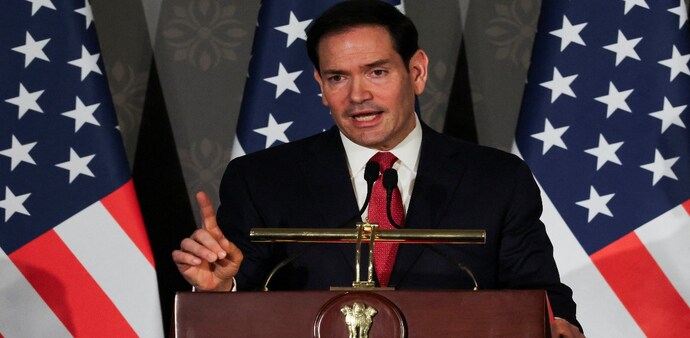
Speaking at the start of the annual meeting with foreign ministers from the Association of Southeast Asian Nations, Rubio also moved to address concerns within the bloc about Washington's bandwidth given the ongoing war in West Asia. "We're with ASEAN 100 per cent," he said.
The Hormuz warning
Rubio drew a direct line from what is happening in the Middle East to what it could mean for other parts of the world, including Southeast Asia. "If we create a precedent in the Middle East where a nation state can decide that they are going to control an international waterway, charge a toll and if you don't pay them, blow up your ships, we have created a very dangerous precedent which will repeat itself in other parts of the world, including in this region," he said.
The remarks came as ASEAN countries have grown increasingly alarmed by the renewed conflict in West Asia and its ripple effects on regional trade and energy supplies.
A packed diplomatic week in Manila
The three-day gathering in the Philippine capital has drawn top diplomats from across the world, including the US, China and Russia, with the South China Sea disputes and the Iran war sitting at the top of the agenda. The territorial disputes in the South China Sea involve China, Taiwan, the Philippines and ASEAN members Vietnam, Malaysia and Brunei.
The Trump administration has repeatedly taken aim at what it describes as China's increasingly aggressive posture in those waters, particularly toward smaller claimant states such as the Philippines, Washington's oldest treaty ally in Asia.
Quad meeting and joint statement
On the sidelines, Rubio met with the foreign ministers of the Quad — the US, Australia, India and Japan. The grouping discussed shared priorities spanning technology, humanitarian assistance, emergency response and maritime security, issuing a joint statement that reaffirmed their commitment to countering China's growing regional influence. "We are united in our conviction that peace and stability in the Indo-Pacific maritime domain underpin the security and prosperity of the region," the ministers said collectively. Rubio later posted on X: "The Quad remains a priority, and we will meet again later this year."
Rubio and Jaishankar: Trade deal in focus
Rubio subsequently held talks with External Affairs Minister S Jaishankar, covering regional matters, the Iran war and the still-pending interim trade agreement aimed at reducing the tariffs President Donald Trump placed on Indian goods. State Department spokesperson Tommy Pigott said the two sides were close to the finish line. "The Secretary and Minister Jaishankar agreed on the importance of finalising the interim trade deal, which is almost complete," Pigott said.
Rubio was also scheduled to meet Chinese Foreign Minister Wang Yi on the sidelines, while newly appointed British Foreign Secretary Ed Miliband was set to arrive in Manila later on Wednesday.
(With inputs from PTI)
US Secretary of State Marco Rubio used a high-stakes diplomatic gathering in Manila on Wednesday to issue a pointed warning about Iran's ambitions in the Strait of Hormuz, telling Asian foreign ministers that any attempt by Tehran to control and charge tolls on the waterway would set a dangerous global precedent.
Speaking at the start of the annual meeting with foreign ministers from the Association of Southeast Asian Nations, Rubio also moved to address concerns within the bloc about Washington's bandwidth given the ongoing war in West Asia. "We're with ASEAN 100 per cent," he said.
The Hormuz warning
Rubio drew a direct line from what is happening in the Middle East to what it could mean for other parts of the world, including Southeast Asia. "If we create a precedent in the Middle East where a nation state can decide that they are going to control an international waterway, charge a toll and if you don't pay them, blow up your ships, we have created a very dangerous precedent which will repeat itself in other parts of the world, including in this region," he said.
The remarks came as ASEAN countries have grown increasingly alarmed by the renewed conflict in West Asia and its ripple effects on regional trade and energy supplies.
A packed diplomatic week in Manila
The three-day gathering in the Philippine capital has drawn top diplomats from across the world, including the US, China and Russia, with the South China Sea disputes and the Iran war sitting at the top of the agenda. The territorial disputes in the South China Sea involve China, Taiwan, the Philippines and ASEAN members Vietnam, Malaysia and Brunei.
The Trump administration has repeatedly taken aim at what it describes as China's increasingly aggressive posture in those waters, particularly toward smaller claimant states such as the Philippines, Washington's oldest treaty ally in Asia.
Quad meeting and joint statement
On the sidelines, Rubio met with the foreign ministers of the Quad — the US, Australia, India and Japan. The grouping discussed shared priorities spanning technology, humanitarian assistance, emergency response and maritime security, issuing a joint statement that reaffirmed their commitment to countering China's growing regional influence. "We are united in our conviction that peace and stability in the Indo-Pacific maritime domain underpin the security and prosperity of the region," the ministers said collectively. Rubio later posted on X: "The Quad remains a priority, and we will meet again later this year."
Rubio and Jaishankar: Trade deal in focus
Rubio subsequently held talks with External Affairs Minister S Jaishankar, covering regional matters, the Iran war and the still-pending interim trade agreement aimed at reducing the tariffs President Donald Trump placed on Indian goods. State Department spokesperson Tommy Pigott said the two sides were close to the finish line. "The Secretary and Minister Jaishankar agreed on the importance of finalising the interim trade deal, which is almost complete," Pigott said.
Rubio was also scheduled to meet Chinese Foreign Minister Wang Yi on the sidelines, while newly appointed British Foreign Secretary Ed Miliband was set to arrive in Manila later on Wednesday.
(With inputs from PTI)