
Speed dropped twice, tail struck runway, four tyres burst: Vietnam Airlines 787 barely gets airborne at Munich
According to a preliminary report by the Civil Aviation Authority of Vietnam, the aircraft's speed stopped increasing for approximately two seconds when it was roughly halfway down runway 26
- Aug 19, 2026,
- Updated Aug 19, 2026 3:47 PM IST
A Vietnam Airlines Boeing 787-9 lifted off from Munich's runway 26L on August 15 with just 91 metres of tarmac remaining, after its speed dropped twice during the takeoff roll and the pilots concluded there was no longer enough distance to safely abort. What followed was a two-hour ordeal that ended with four burst tyres, a tail strike, a fuel dump over Bavaria and 287 people being told to brace for landing.
All 271 passengers and 16 crew members were safe. The aircraft, registered VN-A867, remains grounded at Munich for investigation.
What happened during takeoff
According to a preliminary report by the Civil Aviation Authority of Vietnam, the aircraft's speed stopped increasing for approximately two seconds when it was roughly halfway down runway 26L. The plane then accelerated again and reached V1, the decision speed at which pilots must commit to either continuing or aborting. Shortly after, the crew observed a second unexplained drop in speed.
By that point, aborting was no longer safe. The pilots pushed the engine thrust levers to maximum power, the captain raised the nose, and the Boeing 787 became airborne with 91 metres of runway to spare. Shortly after liftoff, warnings activated indicating a possible tail strike and low tyre pressure. The crew notified air traffic control and turned back toward Munich.
Viral footage from bystanders shows the aircraft accelerating for an unusually long distance before lifting off near the end of the runway, with a trail of dust behind it. Another video captures what appears to be loud tyre noise around the moment of liftoff. Footage from the landing shows heavy smoke around the left main landing gear.
The four Vietnamese pilots on board had a combined 63,938 flight hours, including 19,675 hours on the Boeing 787.
Two hours in the air
The aircraft climbed to approximately 9,000 feet before the crew began dumping fuel from both wings to reduce landing weight. The plane circled near Munich airport for over an hour while passengers watched the fuel jettison process from their windows.
Passenger Nguyen Ninh, travelling from Munich to his hometown of Da Nang via Hanoi, recalled that the takeoff roll had seemed unusually long. He heard a loud noise just as the nose lifted from the runway, Vietnamese state media reported. After the captain announced the aircraft would return due to a technical problem, the mood in the cabin changed — though passengers remained composed.
As the aircraft prepared to land, cabin crew instructed passengers to adopt the brace position. The Boeing 787 made two low-altitude circuits around the airport, allowing air traffic controllers to visually inspect the landing gear from the ground. The aircraft touched down safely on runway 26R at 3:57 pm local time — roughly two hours after departure.
The damage
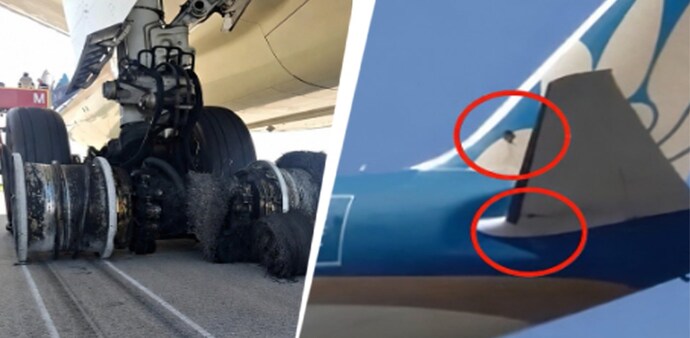
A preliminary inspection found that four of the aircraft's eight main landing gear tyres had burst — three on the left side and one on the right. Inspectors also discovered longitudinal scrape marks on the underside of the rear fuselage and several areas of torn outer skin, confirming that the tail had made contact with the runway during takeoff. No signs of fire or smoke were found.
The aircraft could not taxi under its own power after landing, forcing runway 26L to be closed temporarily and rerouting traffic to the southern runway.
The investigation
Germany's air accident investigation bureau, the BFU, is leading the probe under international aviation rules. Flight data and cockpit voice recorders have been recovered and taken to the BFU's Braunschweig headquarters. Investigators are expected to focus on why the aircraft's speed dropped twice during the takeoff roll and why the departure roll was significantly longer than normal.
Vietnam's CAAV is assisting German authorities, and Vietnam Airlines has been asked to cooperate with investigators, as well as with Boeing and the engine manufacturer. The CAAV emphasised that all findings to date remain preliminary.
Vietnam Airlines has arranged alternative travel for affected passengers and is providing accommodation, meals and ground transport for those awaiting onward flights.
(With inputs from Reuters)
A Vietnam Airlines Boeing 787-9 lifted off from Munich's runway 26L on August 15 with just 91 metres of tarmac remaining, after its speed dropped twice during the takeoff roll and the pilots concluded there was no longer enough distance to safely abort. What followed was a two-hour ordeal that ended with four burst tyres, a tail strike, a fuel dump over Bavaria and 287 people being told to brace for landing.
All 271 passengers and 16 crew members were safe. The aircraft, registered VN-A867, remains grounded at Munich for investigation.
What happened during takeoff
According to a preliminary report by the Civil Aviation Authority of Vietnam, the aircraft's speed stopped increasing for approximately two seconds when it was roughly halfway down runway 26L. The plane then accelerated again and reached V1, the decision speed at which pilots must commit to either continuing or aborting. Shortly after, the crew observed a second unexplained drop in speed.
By that point, aborting was no longer safe. The pilots pushed the engine thrust levers to maximum power, the captain raised the nose, and the Boeing 787 became airborne with 91 metres of runway to spare. Shortly after liftoff, warnings activated indicating a possible tail strike and low tyre pressure. The crew notified air traffic control and turned back toward Munich.
Viral footage from bystanders shows the aircraft accelerating for an unusually long distance before lifting off near the end of the runway, with a trail of dust behind it. Another video captures what appears to be loud tyre noise around the moment of liftoff. Footage from the landing shows heavy smoke around the left main landing gear.
The four Vietnamese pilots on board had a combined 63,938 flight hours, including 19,675 hours on the Boeing 787.
Two hours in the air
The aircraft climbed to approximately 9,000 feet before the crew began dumping fuel from both wings to reduce landing weight. The plane circled near Munich airport for over an hour while passengers watched the fuel jettison process from their windows.
Passenger Nguyen Ninh, travelling from Munich to his hometown of Da Nang via Hanoi, recalled that the takeoff roll had seemed unusually long. He heard a loud noise just as the nose lifted from the runway, Vietnamese state media reported. After the captain announced the aircraft would return due to a technical problem, the mood in the cabin changed — though passengers remained composed.
As the aircraft prepared to land, cabin crew instructed passengers to adopt the brace position. The Boeing 787 made two low-altitude circuits around the airport, allowing air traffic controllers to visually inspect the landing gear from the ground. The aircraft touched down safely on runway 26R at 3:57 pm local time — roughly two hours after departure.
The damage
A preliminary inspection found that four of the aircraft's eight main landing gear tyres had burst — three on the left side and one on the right. Inspectors also discovered longitudinal scrape marks on the underside of the rear fuselage and several areas of torn outer skin, confirming that the tail had made contact with the runway during takeoff. No signs of fire or smoke were found.
The aircraft could not taxi under its own power after landing, forcing runway 26L to be closed temporarily and rerouting traffic to the southern runway.
The investigation
Germany's air accident investigation bureau, the BFU, is leading the probe under international aviation rules. Flight data and cockpit voice recorders have been recovered and taken to the BFU's Braunschweig headquarters. Investigators are expected to focus on why the aircraft's speed dropped twice during the takeoff roll and why the departure roll was significantly longer than normal.
Vietnam's CAAV is assisting German authorities, and Vietnam Airlines has been asked to cooperate with investigators, as well as with Boeing and the engine manufacturer. The CAAV emphasised that all findings to date remain preliminary.
Vietnam Airlines has arranged alternative travel for affected passengers and is providing accommodation, meals and ground transport for those awaiting onward flights.
(With inputs from Reuters)