
Tarique Rahman's Bangladesh is returning to BNP's Islamist roots, warns Brahma Chellaney
BNP has long maintained close institutional ties with Islamist forces and has frequently leveraged anti-India messaging to mobilise its political base, says Brahma Chellaney
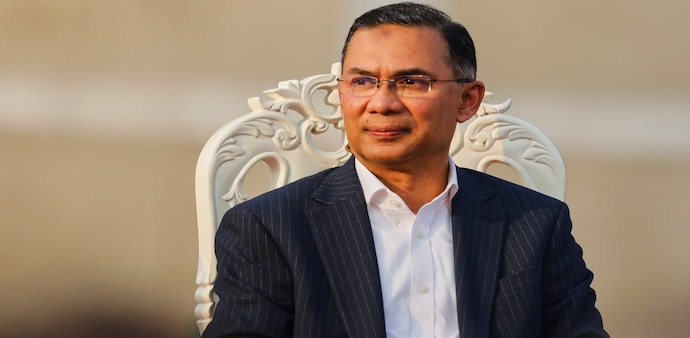
- Aug 24, 2026,
- Updated Aug 24, 2026 9:44 PM IST
Bangladesh's foreign policy under Prime Minister Tarique Rahman appears to be moving back toward the Islamist orientation traditionally associated with his Bangladesh Nationalist Party (BNP), geostrategist Brahma Chellaney warned on Monday.
Chellaney, a professor of strategic studies at the Centre for Policy Research, pointed to Dhaka's growing ties with Pakistan, Turkey, and Saudi Arabia - and its stated interest in the Mecca defence pact signed by the three countries earlier this month.
Must Read: Bangladesh-Pakistan ties: What Dhaka’s interest in Saudi-Türkiye defence pact means for India
Bangladesh's newly appointed state minister for foreign affairs, Humayun Kabir, said the government has a "very positive" view of the Mecca pact. Kabir also linked the pact to Bangladesh's plans to strengthen ties with "Muslim-majority nations".
Chellaney said this was the first time a sitting Bangladeshi official had formally signalled interest in joining the Mecca alliance. He described the emerging alignment as "A Sunni Quad?"
The Mecca pact brings Pakistan, Saudi Arabia, and Turkey into a mutual-defence arrangement.
According to the geostrategist, a formal alignment between Bangladesh and the three countries would represent a "fundamental structural shift" in Dhaka's diplomatic, security, and economic relationship with India.
Such a move, he said, could raise concerns in New Delhi about strategic encirclement.
China Also In The Mix
The possible shift comes as Rahman's government is also moving closer to China.
Rahman visited Beijing in June, where he described China as Bangladesh's "most valued and trusted partner".
Chellaney said the combination of closer ties with Pakistan, Turkey, and Saudi Arabia, and the China pivot should be viewed against the BNP's traditional political orientation.
"The ruling Bangladesh Nationalist Party (BNP) has long maintained close institutional ties with Islamist forces and has frequently leveraged anti-India messaging to mobilize its political base," he said.
"Viewed through that lens, Rahman's foreign policy appears less a departure than a return to the BNP's traditional strategic orientation."
India-Bangladesh Ties
India-Bangladesh ties have remained strained since the ouster of Sheikh Hasina
Rahman became Bangladesh's prime minister in February 2026. Dhaka is yet to decide whether he will make his first visit to India. New Delhi has extended an invitation twice, but Rahman has yet to respond.
Relations between Bangladesh and Pakistan have also moved rapidly toward normalisation since the exit of Hasina.
Sajeeb Wazed, Hasina's son, has warned India about the shift.
Speaking virtually at an event in New Delhi, Wazed earlier this month said that foreign intelligence agencies, particularly Pakistan's ISI, had been given a "free rein" in Bangladesh.
"What should concern India most is that Bangladesh has become another Pakistan on its eastern front," he said, calling Bangladesh a "failed state".
Wazed also warned that terrorists could enter India from Bangladesh instead of Pakistan in the coming decades. "Hizb-ut-Tahrir marches openly. Al-Qaida operatives speak at public rallies," he said.
Bangladesh's foreign policy under Prime Minister Tarique Rahman appears to be moving back toward the Islamist orientation traditionally associated with his Bangladesh Nationalist Party (BNP), geostrategist Brahma Chellaney warned on Monday.
Chellaney, a professor of strategic studies at the Centre for Policy Research, pointed to Dhaka's growing ties with Pakistan, Turkey, and Saudi Arabia - and its stated interest in the Mecca defence pact signed by the three countries earlier this month.
Must Read: Bangladesh-Pakistan ties: What Dhaka’s interest in Saudi-Türkiye defence pact means for India
Bangladesh's newly appointed state minister for foreign affairs, Humayun Kabir, said the government has a "very positive" view of the Mecca pact. Kabir also linked the pact to Bangladesh's plans to strengthen ties with "Muslim-majority nations".
Chellaney said this was the first time a sitting Bangladeshi official had formally signalled interest in joining the Mecca alliance. He described the emerging alignment as "A Sunni Quad?"
The Mecca pact brings Pakistan, Saudi Arabia, and Turkey into a mutual-defence arrangement.
According to the geostrategist, a formal alignment between Bangladesh and the three countries would represent a "fundamental structural shift" in Dhaka's diplomatic, security, and economic relationship with India.
Such a move, he said, could raise concerns in New Delhi about strategic encirclement.
China Also In The Mix
The possible shift comes as Rahman's government is also moving closer to China.
Rahman visited Beijing in June, where he described China as Bangladesh's "most valued and trusted partner".
Chellaney said the combination of closer ties with Pakistan, Turkey, and Saudi Arabia, and the China pivot should be viewed against the BNP's traditional political orientation.
"The ruling Bangladesh Nationalist Party (BNP) has long maintained close institutional ties with Islamist forces and has frequently leveraged anti-India messaging to mobilize its political base," he said.
"Viewed through that lens, Rahman's foreign policy appears less a departure than a return to the BNP's traditional strategic orientation."
India-Bangladesh Ties
India-Bangladesh ties have remained strained since the ouster of Sheikh Hasina
Rahman became Bangladesh's prime minister in February 2026. Dhaka is yet to decide whether he will make his first visit to India. New Delhi has extended an invitation twice, but Rahman has yet to respond.
Relations between Bangladesh and Pakistan have also moved rapidly toward normalisation since the exit of Hasina.
Sajeeb Wazed, Hasina's son, has warned India about the shift.
Speaking virtually at an event in New Delhi, Wazed earlier this month said that foreign intelligence agencies, particularly Pakistan's ISI, had been given a "free rein" in Bangladesh.
"What should concern India most is that Bangladesh has become another Pakistan on its eastern front," he said, calling Bangladesh a "failed state".
Wazed also warned that terrorists could enter India from Bangladesh instead of Pakistan in the coming decades. "Hizb-ut-Tahrir marches openly. Al-Qaida operatives speak at public rallies," he said.