
‘There are no free waters…’: Iran chief negotiator says Hormuz will never return to its pre-war status
Mohammad Bagher Ghalibaf said Iran had conveyed its response to Washington through Qatar, which is mediating between the two sides, and was awaiting an official reply.
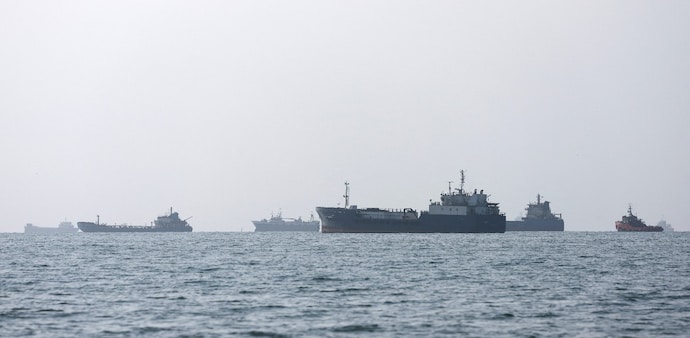
- Nov 12, 2026,
- Updated Nov 12, 2026 8:42 AM IST
The Strait of Hormuz will never return to its pre-war status, Iran’s parliament speaker and chief negotiator Mohammad Bagher Ghalibaf said. He stated that Tehran and Oman have reached an understanding to oversee the strategically important waterway as part of Iran’s proposal to end the eight-month conflict with the US.
In an interview with Al Jazeera, Ghalibaf rejected the idea of unrestricted international access to the strait. He argued that its regulations fall under the jurisdiction of the countries bordering it. He said, “There are no ‘free waters’ [international waters] there, and the 1982 [UN Convention on the Law of the Sea] does not apply to the strait. The regulations within the Strait of Hormuz are governed by the laws of the two littoral states that border it.”
The understanding with Oman is part of Tehran’s seven-point proposal for peace. Ghalibaf said Iran had conveyed its response to Washington through Qatar, which is mediating between the two sides, and was awaiting an official reply. He added, “The ball is now in the American court.”
MUST READ | Iran allows Indian ships through Hormuz, exempts 3 other countries
Iran’s conditions include lifting the US naval blockade and sanctions, releasing frozen Iranian funds, ending hostilities on all fronts, and explicitly announcing an end to the war. Ghalibaf said these demands were part of the memorandum of understanding signed in June and must be implemented before negotiations can begin.
He indicated that an agreement remained possible if Washington adhered to the understandings already reached and avoided additional demands. However, he identified the lack of trust in the US as the main obstacle to a breakthrough.
Ghalibaf also claimed that US officials had asked Russian President Vladimir Putin to facilitate direct negotiations with Tehran during a visit to Moscow.
DON'T MISS | Iran offers to reopen Strait of Hormuz in 2 days, resume nuclear talks with US
Warning against renewed US attacks, he said President Donald Trump would face another defeat and political pressure from the new Congress, which takes office in January.
Iran, he added, wanted to move beyond a prolonged state of “no war and no peace” and build sustainable deterrence, including military capabilities.