
'They said - no thanks!': Trump cuts US-South Korea military drills after Seoul rejects Iran denuclearisation call
In a post on Truth Social on Sunday, Trump said he had asked South Korea's president whether Seoul wanted to join the United States in the "Denuclearisation of the Islamic Republic of Iran." The answer, Trump said, was blunt: "No thanks!"
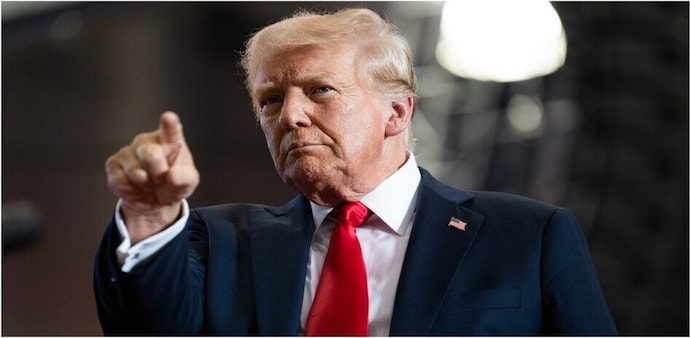
- Aug 17, 2026,
- Updated Aug 17, 2026 8:16 AM IST
South Korea said no, and Donald Trump responded by ordering the Pentagon to scale back their joint military exercises.
In a post on Truth Social on Sunday, Trump said he had asked South Korea's president whether Seoul wanted to join the United States in the "Denuclearisation of the Islamic Republic of Iran." The answer, Trump said, was blunt: "No thanks!"
Trump directly linked Seoul's refusal to his decision to instruct Defence Secretary Pete Hegseth to substantially reduce the annual Ulchi Freedom Shield exercises, which are scheduled to run from August 17 to 27. He acknowledged that it was too late to cancel the drills entirely, but said participation would be meaningfully curtailed.
The North Korea dimension
Trump's frustration with the exercises extended beyond the Iran question. He also cited his "very good relationship" with North Korean leader Kim Jong Un as a reason for his discomfort with the drills, describing them as costly and saying they sent an "inappropriate and hostile" signal to Pyongyang.
He noted that North Korea had remained "unthreatening and respectful" during his presidency, framing the joint exercises as an unnecessary provocation against a country he has been careful to keep on diplomatic terms with.
The broader context
The remarks come as the United States continues its military campaign against Iran and works to build international support for pressure on Tehran over its nuclear programme. South Korea's decision to stay out of that effort — and Trump's pointed public response- signals a notable strain in a security alliance that has been central to US strategy in the Indo-Pacific for decades.
South Korea said no, and Donald Trump responded by ordering the Pentagon to scale back their joint military exercises.
In a post on Truth Social on Sunday, Trump said he had asked South Korea's president whether Seoul wanted to join the United States in the "Denuclearisation of the Islamic Republic of Iran." The answer, Trump said, was blunt: "No thanks!"
Trump directly linked Seoul's refusal to his decision to instruct Defence Secretary Pete Hegseth to substantially reduce the annual Ulchi Freedom Shield exercises, which are scheduled to run from August 17 to 27. He acknowledged that it was too late to cancel the drills entirely, but said participation would be meaningfully curtailed.
The North Korea dimension
Trump's frustration with the exercises extended beyond the Iran question. He also cited his "very good relationship" with North Korean leader Kim Jong Un as a reason for his discomfort with the drills, describing them as costly and saying they sent an "inappropriate and hostile" signal to Pyongyang.
He noted that North Korea had remained "unthreatening and respectful" during his presidency, framing the joint exercises as an unnecessary provocation against a country he has been careful to keep on diplomatic terms with.
The broader context
The remarks come as the United States continues its military campaign against Iran and works to build international support for pressure on Tehran over its nuclear programme. South Korea's decision to stay out of that effort — and Trump's pointed public response- signals a notable strain in a security alliance that has been central to US strategy in the Indo-Pacific for decades.