
Tibet-Nepal floods: Limited footage in China as videos of devastation spread across the world
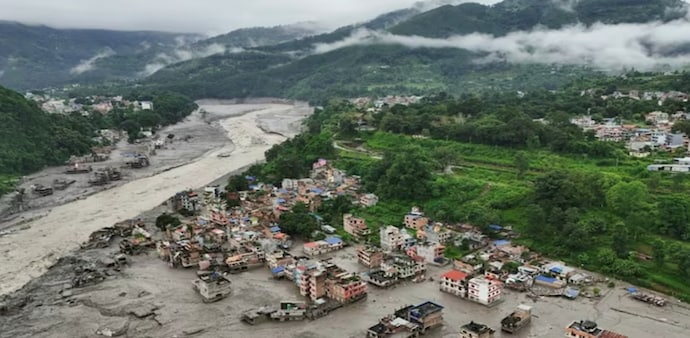
The floods and landslides have claimed hundreds of lives, while a similar number of people remain unaccounted for since Wednesday.
- Aug 30, 2026,
- Updated Aug 30, 2026 1:09 PM IST
Flood devastation in Tibet and near the Nepal border has been widely seen outside China, but people inside the country have had far less access to footage and first-hand accounts of what happened, according to a report by BBC.
CCTV footage from Gyirong Port, a key crossing between Nepal and Tibet, showed a powerful surge of water and mud sweeping through the area as people ran to safety.
The footage quickly spread on social media and was seen around the world. In China, however, only a single still image from the scene has been broadcast by the country's state-run flagship news bulletin.
Full flood footage hard to find in China
As per the report, full video has also been difficult to find on China's heavily censored internet, even as authorities continue to release updates about rescue operations and the risks posed by a barrier lake that could overflow.
The floods and landslides have claimed hundreds of lives, while a similar number of people remain unaccounted for since Wednesday. Yet there has been little first-hand information from survivors in Tibet or user-generated footage showing the destruction and its aftermath.
China has launched a major rescue operation involving hundreds of emergency workers. President Xi Jinping chaired an emergency meeting with officials to coordinate the response, while Premier Li Qiang was sent to the region and seen inspecting debris removal.
Don't Miss: Nepal issues fresh flood alert as Bhote Koshi river flow increases further
State media has released images and videos of rescue teams working in difficult conditions, including teams crossing rivers and searching mountains and cliffs for people who may be trapped.
But details about those affected remain limited.
Little information about victims and missing people
There have been daily official updates on deaths and missing people, but accounts from survivors and families remain largely absent.
Foreign journalists cannot travel to Tibet without government permission, making independent reporting from the affected areas extremely difficult. The BBC said contacting people in Tibet can be harder than contacting interviewees in Pyongyang, North Korea.
The lack of information has also raised concerns among Tibetans living outside the region who are trying to find out what happened to relatives.
The International Campaign for Tibet, while praising first responders, said Beijing had been removing videos and other first-hand information from social media. It called on Chinese authorities to "disclose complete and verifiable information about the damage and casualties".
Focus on stability after disaster
The limited flow of information comes against the backdrop of Beijing's long-standing sensitivity over Tibet.
The region has faced tight restrictions and heavy government control for decades. Tibetan groups abroad have also raised concerns about increasing Chinese control, including new education laws that they say weaken the role of monasteries and the Buddhist faith.
Soon after the disaster, the local Communist Party office called on members to assist with relief work and provide emotional and psychological support to residents.
The notice also told party members to "make every effort to maintain social order and ensure stability and public confidence in the disaster areas". It said those who performed well would be rewarded, while those who did badly "would be held accountable".
Rights activists say Tibetans can face detention or arrest for speaking to journalists or posting material online that contradicts the government's narrative.
Must Read: Sadhguru returns to Nepal; Isha says 'no encouraging indication of survivors at immigration office'
State media highlights rescue efforts
China's state media has largely focused on the scale of the rescue operation.
New footage released on Saturday showed rescue workers moving through areas covered in mud and rocks while calling out for anyone who might be trapped.
On Thursday night, as international media led with reports of the devastation, China's state broadcaster opened its main bulletin with the launch of a new book by Xi Jinping, described as a collection of his "most important and fundamental works".
Beijing has not appeared unconcerned by the disaster. The rapid deployment of Li Qiang and the large-scale rescue operation show that authorities are treating the situation seriously.
However, the limited access to independent information means that much remains unclear about the people affected, the full scale of the destruction and what survivors experienced during the floods.
For people in China, especially those outside Tibet, there may be little information available beyond the official account of the disaster.
Flood devastation in Tibet and near the Nepal border has been widely seen outside China, but people inside the country have had far less access to footage and first-hand accounts of what happened, according to a report by BBC.
CCTV footage from Gyirong Port, a key crossing between Nepal and Tibet, showed a powerful surge of water and mud sweeping through the area as people ran to safety.
The footage quickly spread on social media and was seen around the world. In China, however, only a single still image from the scene has been broadcast by the country's state-run flagship news bulletin.
Full flood footage hard to find in China
As per the report, full video has also been difficult to find on China's heavily censored internet, even as authorities continue to release updates about rescue operations and the risks posed by a barrier lake that could overflow.
The floods and landslides have claimed hundreds of lives, while a similar number of people remain unaccounted for since Wednesday. Yet there has been little first-hand information from survivors in Tibet or user-generated footage showing the destruction and its aftermath.
China has launched a major rescue operation involving hundreds of emergency workers. President Xi Jinping chaired an emergency meeting with officials to coordinate the response, while Premier Li Qiang was sent to the region and seen inspecting debris removal.
Don't Miss: Nepal issues fresh flood alert as Bhote Koshi river flow increases further
State media has released images and videos of rescue teams working in difficult conditions, including teams crossing rivers and searching mountains and cliffs for people who may be trapped.
But details about those affected remain limited.
Little information about victims and missing people
There have been daily official updates on deaths and missing people, but accounts from survivors and families remain largely absent.
Foreign journalists cannot travel to Tibet without government permission, making independent reporting from the affected areas extremely difficult. The BBC said contacting people in Tibet can be harder than contacting interviewees in Pyongyang, North Korea.
The lack of information has also raised concerns among Tibetans living outside the region who are trying to find out what happened to relatives.
The International Campaign for Tibet, while praising first responders, said Beijing had been removing videos and other first-hand information from social media. It called on Chinese authorities to "disclose complete and verifiable information about the damage and casualties".
Focus on stability after disaster
The limited flow of information comes against the backdrop of Beijing's long-standing sensitivity over Tibet.
The region has faced tight restrictions and heavy government control for decades. Tibetan groups abroad have also raised concerns about increasing Chinese control, including new education laws that they say weaken the role of monasteries and the Buddhist faith.
Soon after the disaster, the local Communist Party office called on members to assist with relief work and provide emotional and psychological support to residents.
The notice also told party members to "make every effort to maintain social order and ensure stability and public confidence in the disaster areas". It said those who performed well would be rewarded, while those who did badly "would be held accountable".
Rights activists say Tibetans can face detention or arrest for speaking to journalists or posting material online that contradicts the government's narrative.
Must Read: Sadhguru returns to Nepal; Isha says 'no encouraging indication of survivors at immigration office'
State media highlights rescue efforts
China's state media has largely focused on the scale of the rescue operation.
New footage released on Saturday showed rescue workers moving through areas covered in mud and rocks while calling out for anyone who might be trapped.
On Thursday night, as international media led with reports of the devastation, China's state broadcaster opened its main bulletin with the launch of a new book by Xi Jinping, described as a collection of his "most important and fundamental works".
Beijing has not appeared unconcerned by the disaster. The rapid deployment of Li Qiang and the large-scale rescue operation show that authorities are treating the situation seriously.
However, the limited access to independent information means that much remains unclear about the people affected, the full scale of the destruction and what survivors experienced during the floods.
For people in China, especially those outside Tibet, there may be little information available beyond the official account of the disaster.