
US-China conflict over Taiwan: Why markets may be unprepared for the next big shock
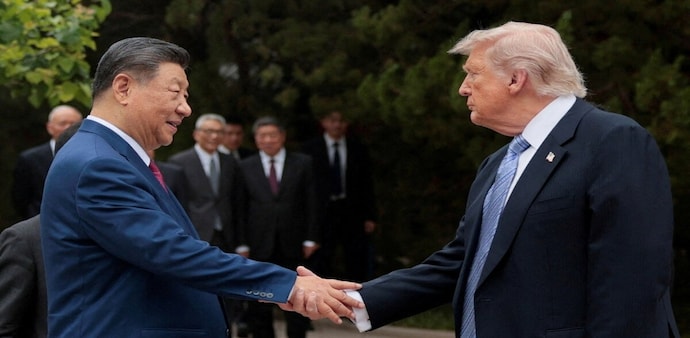
A potential US-China military conflict over Taiwan could trigger a market shock that investors are poorly prepared to price, said Johns Hopkins professor Hal Brands. He flagged 2028 as a potentially high-risk period, with Taiwan and the US both heading into elections amid intensifying geopolitical competition.
- Sep 1, 2026,
- Updated Sep 1, 2026 4:05 AM IST
Global markets may be poorly equipped to price the economic consequences of a US-China military conflict over Taiwan, according to Dr Hal Brands, Henry A. Kissinger Distinguished Professor of Global Affairs at Johns Hopkins SAIS. He warned that rising tensions between Washington and Beijing could create a shock far larger than markets currently anticipate.
Speaking at Elara Capital’s Ashwamedh – India Dialogue 2026, Brands said the trajectory of US-China relations is likely to remain one of the most consequential geopolitical risks for businesses and investors.
The rivalry between the two powers, he argued, is structural and cannot be resolved simply through leader-level diplomacy. Brands also highlighted 2028 as a potentially heightened-risk period, with elections scheduled in both Taiwan and the US.
He suggested that Beijing may be preparing not necessarily for an outright invasion of Taiwan but for measures such as a customs quarantine or economic blockade.
Such a scenario could have significant implications for global trade and technology supply chains, making it particularly difficult for investors to assess potential market fallout in advance.
‘No one has a good idea how to price’ a Taiwan conflict
Brands said financial markets have limited experience in pricing low-probability events that could have exceptionally large economic consequences.
“No one has a good idea how to price in the risk of a US–China military conflict over Taiwan,” he said.
MUST READ: US targets nuclear-powered cargo ships by 2028: Will it transform commercial shipping?
The uncertainty is amplified by Taiwan’s importance to global technology supply chains and the strategic significance of trade routes in the region. A conflict or blockade could therefore extend beyond financial markets, affecting companies, supply chains and international trade.
Brands pointed to the Cuban Missile Crisis as an illustration of the difficulty markets face when confronted with extreme geopolitical risks. Despite the severity of that confrontation, he noted that the Dow fell only about 7%.
The comparison underscores his broader warning: market movements may not fully reflect the potential scale of a geopolitical shock before it occurs.
ALSO READ: US plans 7.5% ‘overcapacity’ tariff on Chinese goods, to take overall tariffs to about 20%
From efficiency to geopolitical resilience
Brands said the global economy is moving away from the highly integrated model of the post-Cold War era towards greater fragmentation and strategic competition. Countries and companies are increasingly focused on resilience, diversification and reducing vulnerable dependencies.
He described this emerging environment as one in which economic relationships themselves can become instruments of geopolitical leverage.
For investors, the implication is that conventional economic indicators may no longer be sufficient to assess risk. Geopolitical developments, particularly around US-China relations and Taiwan, could increasingly influence technology, trade and capital flows.
Brands’ broader message was that investors need to incorporate geopolitical analysis into their assessment of markets as the world enters a “much more volatile, complex world” over the next five to ten years.
Global markets may be poorly equipped to price the economic consequences of a US-China military conflict over Taiwan, according to Dr Hal Brands, Henry A. Kissinger Distinguished Professor of Global Affairs at Johns Hopkins SAIS. He warned that rising tensions between Washington and Beijing could create a shock far larger than markets currently anticipate.
Speaking at Elara Capital’s Ashwamedh – India Dialogue 2026, Brands said the trajectory of US-China relations is likely to remain one of the most consequential geopolitical risks for businesses and investors.
The rivalry between the two powers, he argued, is structural and cannot be resolved simply through leader-level diplomacy. Brands also highlighted 2028 as a potentially heightened-risk period, with elections scheduled in both Taiwan and the US.
He suggested that Beijing may be preparing not necessarily for an outright invasion of Taiwan but for measures such as a customs quarantine or economic blockade.
Such a scenario could have significant implications for global trade and technology supply chains, making it particularly difficult for investors to assess potential market fallout in advance.
‘No one has a good idea how to price’ a Taiwan conflict
Brands said financial markets have limited experience in pricing low-probability events that could have exceptionally large economic consequences.
“No one has a good idea how to price in the risk of a US–China military conflict over Taiwan,” he said.
MUST READ: US targets nuclear-powered cargo ships by 2028: Will it transform commercial shipping?
The uncertainty is amplified by Taiwan’s importance to global technology supply chains and the strategic significance of trade routes in the region. A conflict or blockade could therefore extend beyond financial markets, affecting companies, supply chains and international trade.
Brands pointed to the Cuban Missile Crisis as an illustration of the difficulty markets face when confronted with extreme geopolitical risks. Despite the severity of that confrontation, he noted that the Dow fell only about 7%.
The comparison underscores his broader warning: market movements may not fully reflect the potential scale of a geopolitical shock before it occurs.
ALSO READ: US plans 7.5% ‘overcapacity’ tariff on Chinese goods, to take overall tariffs to about 20%
From efficiency to geopolitical resilience
Brands said the global economy is moving away from the highly integrated model of the post-Cold War era towards greater fragmentation and strategic competition. Countries and companies are increasingly focused on resilience, diversification and reducing vulnerable dependencies.
He described this emerging environment as one in which economic relationships themselves can become instruments of geopolitical leverage.
For investors, the implication is that conventional economic indicators may no longer be sufficient to assess risk. Geopolitical developments, particularly around US-China relations and Taiwan, could increasingly influence technology, trade and capital flows.
Brands’ broader message was that investors need to incorporate geopolitical analysis into their assessment of markets as the world enters a “much more volatile, complex world” over the next five to ten years.