
US Fed holds interest rates steady, plans reduced rate-setting meetings by 2027
Fed Chairman Kevin Warsh expressed confidence that inflation can be brought down to the 2% target without disrupting economic expansion or forcing job losses. He added that higher interest rates have impacted the artificial intelligence infrastructure build-out as well.
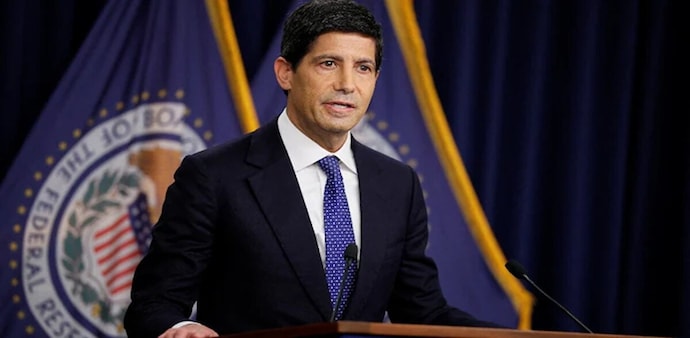
- Oct 29, 2026,
- Updated Oct 29, 2026 8:08 AM IST
The US Federal Reserve held interest rates steady on October 28, opting to delay changes to borrowing costs until after next week's US mid-term elections as policymakers await additional data on inflation, which the central bank noted "remains elevated."
The Federal Open Market Committee (FOMC) voted 10-2 to maintain its benchmark interest rate within the 3.75% to 4.00% target range. Accompanying the decision was an upgraded assessment of the economy, which central bank officials now evaluate as growing at a "strong pace."
Speaking at a press conference, Fed Chairman Kevin Warsh expressed confidence that inflation can be brought down to the 2% target without disrupting economic expansion or forcing job losses. Warsh noted he expects an upcoming third-quarter gross domestic product report to show strong investment, resilient consumer spending, and an acceleration of growth compared to the first half of the year.
Despite the robust backdrop, Warsh stated he does not view the economy as "too hot" or generating demand-side inflation that requires deliberate curbing.
"The economy is pointing in the right direction. Is the economy running too hot? Is the economy running too strong? That isn't the judgment of most of my colleagues," Warsh said, adding that gains in productivity, even those predating the artificial intelligence boom, may allow the US to expand faster without generating inflation. "The goal, in my view ... isn't to throw sand in the gears of the economy and throw people out of work. I don't think we have to do that."
Warsh pointed out that higher policy rates are already tightening credit conditions, which could moderate business investment and contributed to recent stock market declines — a potential source of disinflation if it curtails spending among higher-income households. He added that higher interest rates have impacted the artificial intelligence infrastructure build-out as well.
"Interest rates have had an effect," Warsh said. "You see market participants that are discriminating between the kinds of investments they want to make. You’ve seen credit spreads for certain assets widen out, gap out. For others, you’ve seen some tightening in financial conditions, but not significantly. I don’t believe that they’re somehow divorced from the rest of the economy."
In comments to CNBC, US Treasury Secretary Scott Bessent affirmed that the administration retains faith in Warsh to "find the right balance" between achieving the 2% inflation target and supporting ongoing economic growth.
However, the latest FOMC statement hinted that future rate increases may still be required, as some central bank officials harbor concerns that demand fueled by AI investment and healthy consumer spending is putting upward pressure on prices.
Separately, Warsh announced structural changes to the central bank's calendar. Starting in 2027, the Fed will reduce its number of traditional policy-setting sessions. While maintaining eight total FOMC meetings per year, one session in 2027 will focus exclusively on broad monetary policy strategy. In 2028, two meetings will be devoted to strategy discussions, leaving six focused on rate setting.