
'We will go to war against India if...': Pakistan's Khwaja Asif threatens over Indus Waters Treaty
He went further, suggesting that Pakistan, already facing a crippling water crisis, could act if there were signs that India was moving rapidly to restrict or alter water flows under the river-sharing arrangement
- Jun 22, 2026,
- Updated Jun 22, 2026 11:06 AM IST
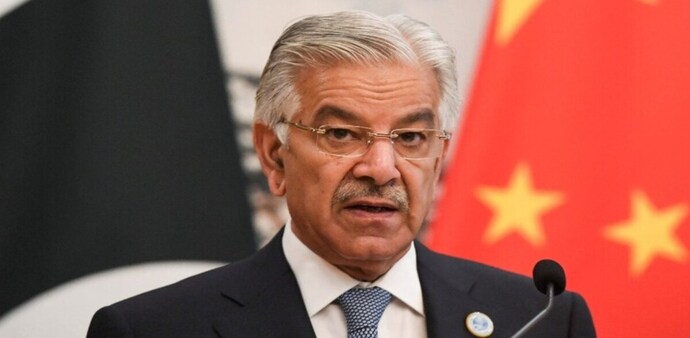
Pakistan's Defence Minister, Khawaja Asif, said on Sunday that Islamabad could go to war with India if it believes New Delhi's moves on the Indus river system threaten Pakistan's water security, the sharpest escalation yet in a dispute that has simmered since India suspended the Indus Waters Treaty last year.
'We will go to war against India. Definitely.'
Speaking to ARY News, Asif described water as a core national security issue for Pakistan. "The moment we feel that our national security — and water is part of our national security — is being threatened, we will go to war against India. Definitely," he said.
He went further, suggesting that Pakistan, already facing a crippling water crisis, could act if there were signs that India was moving rapidly to restrict or alter water flows under the river-sharing arrangement.
What triggered the latest warning
Asif's comments followed a video clip of India's Jal Shakti Minister CR Patil indicating that the flow of Indus waters to Pakistan could be completely stopped by June 2028.
The treaty at the centre of it all
Tensions over the Indus Waters Treaty have remained elevated since India suspended the 1960 agreement following the April 2025 terror attack in Pahalgam, Jammu and Kashmir, which killed 26 people. New Delhi blamed Pakistan-backed terrorists for the attack and placed the treaty in abeyance, saying it would stay suspended until Islamabad takes credible and irreversible action against cross-border terrorism.
The World Bank-brokered treaty governs the sharing of the Indus river system's waters and allocates roughly 80% of the basin's waters to Pakistan — water that is critical to the country's agriculture, irrigation network, and broader economy.
Pakistan's escalating response
Pakistan has repeatedly objected to India's suspension, arguing that any disruption to water flows would have serious consequences for the millions of people who depend on the river system. Deputy Prime Minister Ishaq Dar sought UN Security Council intervention last week over what he described as India's violations of the treaty.
Earlier this month, Pakistan also alleged that India intends to build a river-linking project to reroute water from the Chenab, calling it a serious breach of the Indus Waters Treaty and other international obligations.
Pakistan's Defence Minister, Khawaja Asif, said on Sunday that Islamabad could go to war with India if it believes New Delhi's moves on the Indus river system threaten Pakistan's water security, the sharpest escalation yet in a dispute that has simmered since India suspended the Indus Waters Treaty last year.
'We will go to war against India. Definitely.'
Speaking to ARY News, Asif described water as a core national security issue for Pakistan. "The moment we feel that our national security — and water is part of our national security — is being threatened, we will go to war against India. Definitely," he said.
He went further, suggesting that Pakistan, already facing a crippling water crisis, could act if there were signs that India was moving rapidly to restrict or alter water flows under the river-sharing arrangement.
What triggered the latest warning
Asif's comments followed a video clip of India's Jal Shakti Minister CR Patil indicating that the flow of Indus waters to Pakistan could be completely stopped by June 2028.
The treaty at the centre of it all
Tensions over the Indus Waters Treaty have remained elevated since India suspended the 1960 agreement following the April 2025 terror attack in Pahalgam, Jammu and Kashmir, which killed 26 people. New Delhi blamed Pakistan-backed terrorists for the attack and placed the treaty in abeyance, saying it would stay suspended until Islamabad takes credible and irreversible action against cross-border terrorism.
The World Bank-brokered treaty governs the sharing of the Indus river system's waters and allocates roughly 80% of the basin's waters to Pakistan — water that is critical to the country's agriculture, irrigation network, and broader economy.
Pakistan's escalating response
Pakistan has repeatedly objected to India's suspension, arguing that any disruption to water flows would have serious consequences for the millions of people who depend on the river system. Deputy Prime Minister Ishaq Dar sought UN Security Council intervention last week over what he described as India's violations of the treaty.
Earlier this month, Pakistan also alleged that India intends to build a river-linking project to reroute water from the Chenab, calling it a serious breach of the Indus Waters Treaty and other international obligations.