
West Asia tensions: Crude climbs past $102 a barrel as US deploys third aircraft carrier strike group
The movement of heavy naval assets comes on the heels of multiple maritime strikes, including attacks on at least three commercial tankers passing through the strategic Strait of Hormuz.
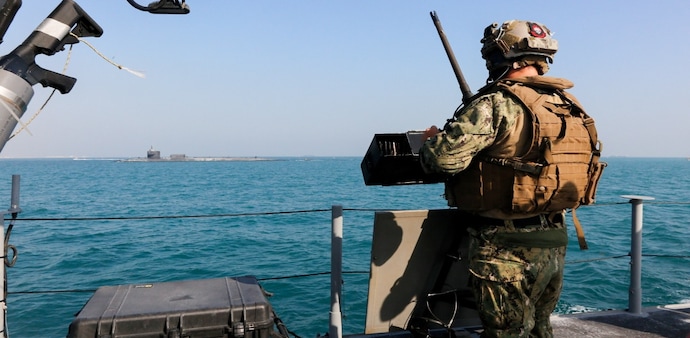
- Oct 2, 2026,
- Updated Oct 2, 2026 7:31 AM IST
The United States has deployed a third aircraft carrier strike group to the Middle East, signaling a significant military escalation following renewed attacks on commercial shipping routes across the region.
The rapid military buildup has reignited fears of a broader conflict with Tehran, sending immediate shockwaves through global energy markets. Brent crude jumped 4.4% to close at $102.31 per barrel on October 1, while US West Texas Intermediate rose 2.7% to settle at $92.87.
The deployment, reported by The Wall Street Journal, will be accompanied by Marine Corps amphibious vessels and up to 10,000 additional troops expected to arrive by November. A third US aircraft carrier strike group is heading toward the Middle East, joining the USS George HW Bush and USS George Washington in a significant expansion of American naval power across the region.
Energy market anxieties have been further compounding due to concurrent global supply disruptions, including Chinese fuel export cancellations and diesel export bans from Moscow following Ukrainian strikes on Russian refining facilities.
Alongside the military surge, Washington is intensifying its economic stranglehold on the Islamic Republic. The US Treasury rolled out fresh sanctions aimed directly at Iran’s automotive and rail industries. The financial package also targeted the A7 Network, a Russia-linked shadow banking operation that federal officials say Tehran relies on to move funds and circumvent international sanctions.
The movement of heavy naval assets comes on the heels of multiple maritime strikes, including attacks on at least three commercial tankers passing through the strategic Strait of Hormuz.
Regional energy infrastructure has also faced deliberate targeting from Iranian forces and affiliated Houthi militants. The buildup signals potential preparations for expanded US military action against Tehran, with reports indicating American officials expect the pressure campaign to intensify.
The sudden military deployment coincides with fragile diplomatic maneuvering. Mediators recently facilitated indirect discussions during the UN General Assembly, but formal progress between Washington and Tehran remains elusive. While regional crude flows had largely stabilized near pre-war levels, the sharp escalation in maritime violence and naval posture threatens to severely constrain critical global energy supply lines once again.
The United States has deployed a third aircraft carrier strike group to the Middle East, signaling a significant military escalation following renewed attacks on commercial shipping routes across the region.
The rapid military buildup has reignited fears of a broader conflict with Tehran, sending immediate shockwaves through global energy markets. Brent crude jumped 4.4% to close at $102.31 per barrel on October 1, while US West Texas Intermediate rose 2.7% to settle at $92.87.
The deployment, reported by The Wall Street Journal, will be accompanied by Marine Corps amphibious vessels and up to 10,000 additional troops expected to arrive by November. A third US aircraft carrier strike group is heading toward the Middle East, joining the USS George HW Bush and USS George Washington in a significant expansion of American naval power across the region.
Energy market anxieties have been further compounding due to concurrent global supply disruptions, including Chinese fuel export cancellations and diesel export bans from Moscow following Ukrainian strikes on Russian refining facilities.
Alongside the military surge, Washington is intensifying its economic stranglehold on the Islamic Republic. The US Treasury rolled out fresh sanctions aimed directly at Iran’s automotive and rail industries. The financial package also targeted the A7 Network, a Russia-linked shadow banking operation that federal officials say Tehran relies on to move funds and circumvent international sanctions.
The movement of heavy naval assets comes on the heels of multiple maritime strikes, including attacks on at least three commercial tankers passing through the strategic Strait of Hormuz.
Regional energy infrastructure has also faced deliberate targeting from Iranian forces and affiliated Houthi militants. The buildup signals potential preparations for expanded US military action against Tehran, with reports indicating American officials expect the pressure campaign to intensify.
The sudden military deployment coincides with fragile diplomatic maneuvering. Mediators recently facilitated indirect discussions during the UN General Assembly, but formal progress between Washington and Tehran remains elusive. While regional crude flows had largely stabilized near pre-war levels, the sharp escalation in maritime violence and naval posture threatens to severely constrain critical global energy supply lines once again.