
West Asia tensions: Oil prices up 1% following US strike on Iranian launch sites in Hormuz
Tehran responded swiftly to the attack. Within hours, Iran fired ballistic missiles at a US airbase in Jordan, with the IRGC declaring further retaliation as the broader Middle East conflict entered its sixth month.
- Aug 31, 2026,
- Updated Aug 31, 2026 7:28 AM IST
Oil prices surged over 1% on August 31 as escalating military action in the Strait of Hormuz sparked fresh fears over global energy security.
The friction reverberated immediately through trading floors. Brent crude futures gained $1.08, or 1.23%, to reach $89.18 a barrel, while US West Texas Intermediate crude increased by 92 cents, or 1.10%, to hit $84.32.
The move followed a direct military intervention on Sunday, marking the first known U.S. strike in Iran since late July. US forces targeted two rocket positions on Larak Island after spotting Islamic Revolutionary Guard Corps (IRGC) units setting up to deploy sea-mine-laden rockets into the narrow shipping passage.
“I can confirm that earlier today U.S. forces struck two Iranian launchers on Larak Island. Islamic Revolutionary Guard Corps forces were observed preparing to launch rockets with sea mines into the Strait of Hormuz,” Navy Capt. Tim Hawkins, a US Central Command spokesperson, said in a statement.
Tehran responded swiftly to the attack. Within hours, Iran fired ballistic missiles at a U.S. airbase in Jordan, with the IRGC declaring further retaliation as the broader Middle East conflict entered its sixth month.
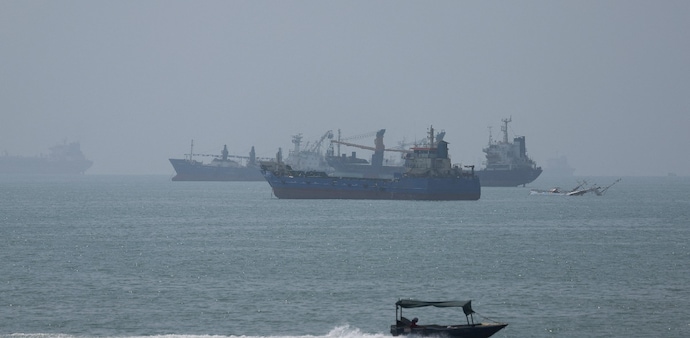
The clash has severely threatened commercial operations through the Strait of Hormuz, a critical artery for international fuel supplies. Shipping registers showed that visible commodity vessels navigating the route dropped to just five a day over the weekend, underscoring deep anxiety among maritime operators. The pullback follows an incident on Saturday in which a tanker heading inbound through the strait was hit by a projectile, according to reports from the United Kingdom Maritime Trade Operations.
Amid the volatility, U.S. President Donald Trump said Sunday that crude secured under a recent deal with Venezuela will be routed to refill the US Strategic Petroleum Reserve, which has hovered near a 44-year low.
Oil prices surged over 1% on August 31 as escalating military action in the Strait of Hormuz sparked fresh fears over global energy security.
The friction reverberated immediately through trading floors. Brent crude futures gained $1.08, or 1.23%, to reach $89.18 a barrel, while US West Texas Intermediate crude increased by 92 cents, or 1.10%, to hit $84.32.
The move followed a direct military intervention on Sunday, marking the first known U.S. strike in Iran since late July. US forces targeted two rocket positions on Larak Island after spotting Islamic Revolutionary Guard Corps (IRGC) units setting up to deploy sea-mine-laden rockets into the narrow shipping passage.
“I can confirm that earlier today U.S. forces struck two Iranian launchers on Larak Island. Islamic Revolutionary Guard Corps forces were observed preparing to launch rockets with sea mines into the Strait of Hormuz,” Navy Capt. Tim Hawkins, a US Central Command spokesperson, said in a statement.
Tehran responded swiftly to the attack. Within hours, Iran fired ballistic missiles at a U.S. airbase in Jordan, with the IRGC declaring further retaliation as the broader Middle East conflict entered its sixth month.
The clash has severely threatened commercial operations through the Strait of Hormuz, a critical artery for international fuel supplies. Shipping registers showed that visible commodity vessels navigating the route dropped to just five a day over the weekend, underscoring deep anxiety among maritime operators. The pullback follows an incident on Saturday in which a tanker heading inbound through the strait was hit by a projectile, according to reports from the United Kingdom Maritime Trade Operations.
Amid the volatility, U.S. President Donald Trump said Sunday that crude secured under a recent deal with Venezuela will be routed to refill the US Strategic Petroleum Reserve, which has hovered near a 44-year low.