
What is panda diplomacy? How China uses giant pandas to build global ties
China has used pandas as diplomatic symbols for centuries, but the practice became especially prominent after the founding of the People’s Republic of China in 1949.
- Sep 25, 2026,
- Updated Sep 25, 2026 8:34 AM IST
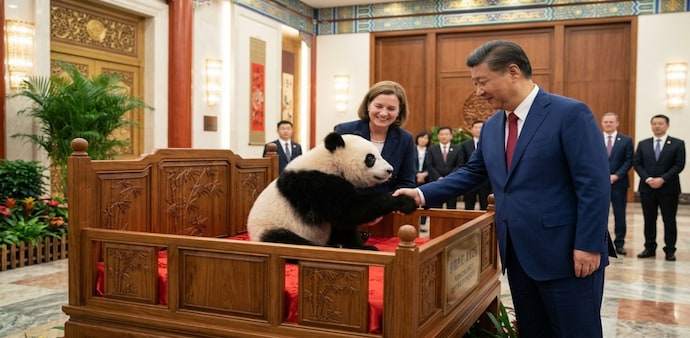
Chinese President Xi Jinping promised two giant pandas to Zoo Atlanta on the opening day of his first state visit to the US in over a decade, signaling a return of Beijing’s long-standing diplomatic gesture.
Two giant pandas, Ping Ping and Fu Shuang, will travel from a Chengdu research base to the Georgia zoo "in the coming days," Xi said. Their arrival brings giant pandas back to Zoo Atlanta for the first time since its previous four bears returned to China in November 2024, an exit that had left the US without any pandas.
Panda gift diplomacy refers to China’s long-running practice of using giant pandas as diplomatic gifts or symbolic gestures to strengthen relations with other countries.
How panda diplomacy works
China has used pandas as diplomatic symbols for centuries, but the practice became especially prominent after the founding of the People’s Republic of China in 1949.
A famous modern example came in 1972, when Chinese Premier Zhou Enlai gifted two giant pandas, Ling-Ling and Hsing-Hsing, to the United States following President Richard Nixon’s historic visit to China. The gesture became a symbol of the diplomatic thaw between Washington and Beijing.
From gifts to loans
From 1941 until 1982, China gifted pandas outright to strategic political allies like the Soviet Union and North Korea. A famous turning point occurred in 1972 when Beijing gifted two pandas to the United States following President Richard Nixon's historic visit.
China largely shifted away from permanently giving pandas to foreign countries in the 1980s. Today, pandas sent abroad are generally loaned to zoos under agreements with Chinese institutions.
Typically:
- China retains ownership of the pandas.
- Foreign zoos pay substantial fees under panda-cooperation agreements.
- Any cubs born overseas are generally considered part of China's panda population and eventually return to China.
- The agreements often include conservation, scientific research and breeding cooperation.
Why pandas?
Pandas are native to China and are strongly associated with Chinese culture and national identity. Because they are widely viewed internationally as an attractive and non-threatening symbol, sending pandas can create goodwill while also opening channels for broader cooperation.
That is why the term "panda diplomacy" is often used to describe the intersection of soft power, conservation and international relations.
Why it matters politically
Panda agreements can sometimes coincide with periods of improved or strategically important relations between China and another country. Conversely, changes in panda arrangements can attract attention when diplomatic relations deteriorate.
For example, the US-China panda relationship has periodically become a symbolic indicator of the broader state of bilateral ties. The return of several pandas from US zoos to China in 2023-24 generated considerable media attention amid tensions between Beijing and Washington.
Chinese President Xi Jinping promised two giant pandas to Zoo Atlanta on the opening day of his first state visit to the US in over a decade, signaling a return of Beijing’s long-standing diplomatic gesture.
Two giant pandas, Ping Ping and Fu Shuang, will travel from a Chengdu research base to the Georgia zoo "in the coming days," Xi said. Their arrival brings giant pandas back to Zoo Atlanta for the first time since its previous four bears returned to China in November 2024, an exit that had left the US without any pandas.
Panda gift diplomacy refers to China’s long-running practice of using giant pandas as diplomatic gifts or symbolic gestures to strengthen relations with other countries.
How panda diplomacy works
China has used pandas as diplomatic symbols for centuries, but the practice became especially prominent after the founding of the People’s Republic of China in 1949.
A famous modern example came in 1972, when Chinese Premier Zhou Enlai gifted two giant pandas, Ling-Ling and Hsing-Hsing, to the United States following President Richard Nixon’s historic visit to China. The gesture became a symbol of the diplomatic thaw between Washington and Beijing.
From gifts to loans
From 1941 until 1982, China gifted pandas outright to strategic political allies like the Soviet Union and North Korea. A famous turning point occurred in 1972 when Beijing gifted two pandas to the United States following President Richard Nixon's historic visit.
China largely shifted away from permanently giving pandas to foreign countries in the 1980s. Today, pandas sent abroad are generally loaned to zoos under agreements with Chinese institutions.
Typically:
- China retains ownership of the pandas.
- Foreign zoos pay substantial fees under panda-cooperation agreements.
- Any cubs born overseas are generally considered part of China's panda population and eventually return to China.
- The agreements often include conservation, scientific research and breeding cooperation.
Why pandas?
Pandas are native to China and are strongly associated with Chinese culture and national identity. Because they are widely viewed internationally as an attractive and non-threatening symbol, sending pandas can create goodwill while also opening channels for broader cooperation.
That is why the term "panda diplomacy" is often used to describe the intersection of soft power, conservation and international relations.
Why it matters politically
Panda agreements can sometimes coincide with periods of improved or strategically important relations between China and another country. Conversely, changes in panda arrangements can attract attention when diplomatic relations deteriorate.
For example, the US-China panda relationship has periodically become a symbolic indicator of the broader state of bilateral ties. The return of several pandas from US zoos to China in 2023-24 generated considerable media attention amid tensions between Beijing and Washington.