
Why thousands of Moroccan migrants are risking the sea route to Spain’s Ceuta enclave?
The immediate trigger for the latest surge appears to be a mix of legal changes in Spain, hopes of reaching European territory, and the perception that crossing into Ceuta may now offer a better chance of remaining in Spain
- Jul 31, 2026,
- Updated Jul 31, 2026 1:01 PM IST
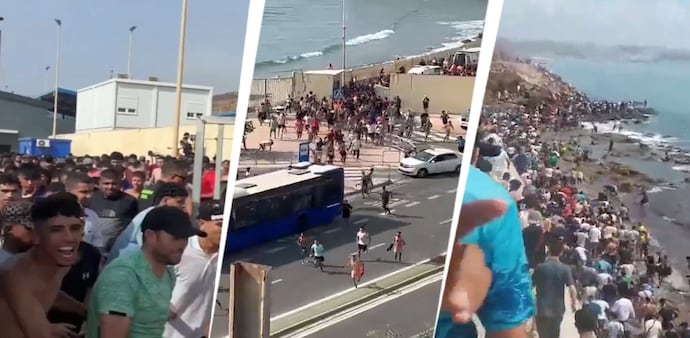
Thousands of Moroccans crossing into Spain’s North African enclave of Ceuta has once again brought attention to a long-running migration route between Africa and Europe. But behind the dramatic scenes of people swimming across the Strait of Gibraltar lies a larger question: what is pushing so many migrants to attempt the dangerous journey?
The immediate trigger for the latest surge appears to be a mix of legal changes in Spain, hopes of reaching European territory, and the perception that crossing into Ceuta may now offer a better chance of remaining in Spain.
Ceuta, though located on Africa’s northern coast, is controlled by Spain and is considered European territory. Its location makes it one of the few land borders between the European Union and Africa, turning it into a major destination for migrants seeking entry into Europe.
A border route with a long history
Migration attempts from Morocco into Ceuta and Spain’s other North African enclave, Melilla, are not new. In 2021, around 10,000 people crossed into Ceuta from Morocco and other African countries in one of the biggest migration events recorded there.
The latest movement is the largest since then, with thousands reportedly arriving by sea using inflatable tubes and other makeshift methods. Some also entered through the land border after breaking through barriers.
Spain’s court ruling fuels expectations
According to Reuters, one factor behind the latest influx could be a recent Spanish Supreme Court ruling on migrant returns.
Ceuta and Melilla had operated under a special "border rejection" system that allowed authorities to immediately return migrants who entered illegally. However, Spain’s Supreme Court recently ruled that migrants arriving in these enclaves cannot automatically be sent back under the provision.
The ruling has raised expectations among migrants that reaching Spanish territory could provide a greater opportunity to remain in Europe.
Spain’s Socialist government backed the decision, arguing that the previous system was being misused by "mafias and criminal organizations."
Why Ceuta remains a magnet
For many migrants from Morocco and other parts of Africa, Ceuta represents a gateway to the European Union. Once inside Spanish territory, migrants may seek asylum, legal status, or opportunities to move further into Europe.
The journey, however, carries significant risks. Many attempt the crossing by sea despite strong currents and dangerous conditions. At least 60 people have died while trying to cross the border by sea, according to Reuters.
Spain increases security after latest arrivals
Following the latest arrivals, Spanish authorities deployed additional security personnel, including 200 specialised police officers and 60 troops from mainland Spain.
Several shops in Ceuta reportedly closed amid concerns over possible unrest. Spanish Prime Minister Pedro Sanchez is scheduled to visit the enclave with Interior Minister Fernando Grande-Marlaska to discuss security arrangements.
Moroccan authorities have not issued a public statement on the latest movement.
Thousands of Moroccans crossing into Spain’s North African enclave of Ceuta has once again brought attention to a long-running migration route between Africa and Europe. But behind the dramatic scenes of people swimming across the Strait of Gibraltar lies a larger question: what is pushing so many migrants to attempt the dangerous journey?
The immediate trigger for the latest surge appears to be a mix of legal changes in Spain, hopes of reaching European territory, and the perception that crossing into Ceuta may now offer a better chance of remaining in Spain.
Ceuta, though located on Africa’s northern coast, is controlled by Spain and is considered European territory. Its location makes it one of the few land borders between the European Union and Africa, turning it into a major destination for migrants seeking entry into Europe.
A border route with a long history
Migration attempts from Morocco into Ceuta and Spain’s other North African enclave, Melilla, are not new. In 2021, around 10,000 people crossed into Ceuta from Morocco and other African countries in one of the biggest migration events recorded there.
The latest movement is the largest since then, with thousands reportedly arriving by sea using inflatable tubes and other makeshift methods. Some also entered through the land border after breaking through barriers.
Spain’s court ruling fuels expectations
According to Reuters, one factor behind the latest influx could be a recent Spanish Supreme Court ruling on migrant returns.
Ceuta and Melilla had operated under a special "border rejection" system that allowed authorities to immediately return migrants who entered illegally. However, Spain’s Supreme Court recently ruled that migrants arriving in these enclaves cannot automatically be sent back under the provision.
The ruling has raised expectations among migrants that reaching Spanish territory could provide a greater opportunity to remain in Europe.
Spain’s Socialist government backed the decision, arguing that the previous system was being misused by "mafias and criminal organizations."
Why Ceuta remains a magnet
For many migrants from Morocco and other parts of Africa, Ceuta represents a gateway to the European Union. Once inside Spanish territory, migrants may seek asylum, legal status, or opportunities to move further into Europe.
The journey, however, carries significant risks. Many attempt the crossing by sea despite strong currents and dangerous conditions. At least 60 people have died while trying to cross the border by sea, according to Reuters.
Spain increases security after latest arrivals
Following the latest arrivals, Spanish authorities deployed additional security personnel, including 200 specialised police officers and 60 troops from mainland Spain.
Several shops in Ceuta reportedly closed amid concerns over possible unrest. Spanish Prime Minister Pedro Sanchez is scheduled to visit the enclave with Interior Minister Fernando Grande-Marlaska to discuss security arrangements.
Moroccan authorities have not issued a public statement on the latest movement.