
Explained: How Venezuela’s natural resources turn it into a geopolitical prize for US
Beyond politics and personalities, the core driver is Venezuela’s vast concentration of energy, minerals, metals, and freshwater — resources that can reshape global supply chains and power balances if brought under US influence.
- Jan 4, 2026,
- Updated Jan 4, 2026 3:29 PM IST
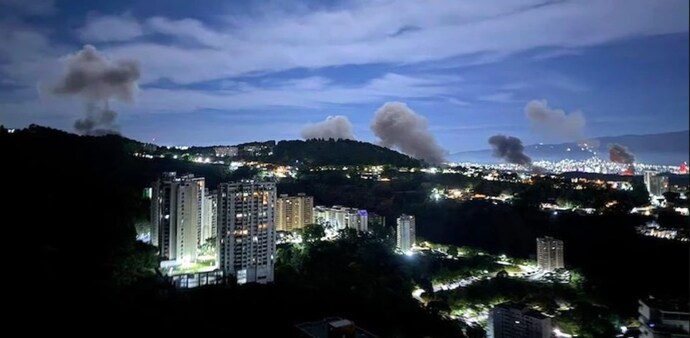
The recent US operation in Venezuela has pushed the country from a long-running regional crisis into the centre of global strategic calculations. Beyond politics and personalities, the core driver is Venezuela’s vast concentration of energy, minerals, metals, and freshwater — resources that can reshape global supply chains and power balances if brought under US influence.
This is why Venezuela is increasingly viewed not just as a foreign policy challenge, but as a geopolitical prize.
1. Oil: Energy scale leverage
Venezuela holds the largest proven crude oil reserves in the world — more than 300 billion barrels, surpassing Saudi Arabia.
Why it matters to the US:
- Acts as a pressure valve against OPEC supply manipulation
- Enables price stabilisation — or disruption — during global crises
- Offers leverage over global inflation via energy markets
- Strengthens US control over Western Hemisphere energy flows
With US capital, technology, and logistics, Venezuelan oil could be rapidly integrated into global supply systems on Washington’s terms.
2. Natural Gas: Strategic hedge against global volatility
Venezuela’s 200 trillion cubic feet of natural gas give it latent power in a world marked by energy shocks.
Strategic value post-operation:
- Reduces exposure to EU-Russia gas volatility
- Creates future LNG export leverage if infrastructure scales
- Strengthens US bargaining power in transatlantic energy diplomacy
Gas is not just fuel — it is geopolitical insurance.
3. Iron Ore & Coal: Industrial & military backbone
Venezuela has billions of tonnes of iron ore and hundreds of millions of tonnes of coal, essential for industrial production.
Why Washington cares:
- Steel supply underpins military manufacturing
- Critical for rail, ports, and logistics infrastructure
- Becomes strategic stock in war-preparation cycles
In geopolitical competition, heavy industry resources function like strategic reserves.
4. Gold: Strategic collateral in a shifting financial order
With more than 8,000 tonnes of gold resources, Venezuela holds one of the largest gold endowments in the world.
Post-operation significance:
- Provides sovereign collateral amid rising debt stress
- Gains importance as trust in fiat currencies weakens
- Positions the US favorably in a potential commodity-backed financial reset
Gold is no longer just wealth — it is credibility.
5. Freshwater: Overlooked strategic asset
Venezuela controls about 2% of the world’s renewable freshwater, a critical resource in a climate-constrained future.
Why it matters geopolitically:
- Anchors long-term food and agricultural security
- Enables population resilience and internal stability
- Enhances soft power through agricultural exports
Water is emerging as a strategic resource on par with oil.
6. Strategic minerals: Countering China’s supply chain dominance
Venezuela has largely untapped deposits of nickel, copper, and phosphates—key inputs for modern technology.
US strategic upside:
- Supports battery, EV, and semiconductor supply chains
- Reduces dependence on China-controlled mineral flows
- Secures inputs for defense and advanced manufacturing
This is the long-game advantage embedded in Venezuela’s soil.
After the US operation, Venezuela is no longer just a regional flashpoint — it is a strategic node in the global contest over energy, supply chains, and economic power.
The recent US operation in Venezuela has pushed the country from a long-running regional crisis into the centre of global strategic calculations. Beyond politics and personalities, the core driver is Venezuela’s vast concentration of energy, minerals, metals, and freshwater — resources that can reshape global supply chains and power balances if brought under US influence.
This is why Venezuela is increasingly viewed not just as a foreign policy challenge, but as a geopolitical prize.
1. Oil: Energy scale leverage
Venezuela holds the largest proven crude oil reserves in the world — more than 300 billion barrels, surpassing Saudi Arabia.
Why it matters to the US:
- Acts as a pressure valve against OPEC supply manipulation
- Enables price stabilisation — or disruption — during global crises
- Offers leverage over global inflation via energy markets
- Strengthens US control over Western Hemisphere energy flows
With US capital, technology, and logistics, Venezuelan oil could be rapidly integrated into global supply systems on Washington’s terms.
2. Natural Gas: Strategic hedge against global volatility
Venezuela’s 200 trillion cubic feet of natural gas give it latent power in a world marked by energy shocks.
Strategic value post-operation:
- Reduces exposure to EU-Russia gas volatility
- Creates future LNG export leverage if infrastructure scales
- Strengthens US bargaining power in transatlantic energy diplomacy
Gas is not just fuel — it is geopolitical insurance.
3. Iron Ore & Coal: Industrial & military backbone
Venezuela has billions of tonnes of iron ore and hundreds of millions of tonnes of coal, essential for industrial production.
Why Washington cares:
- Steel supply underpins military manufacturing
- Critical for rail, ports, and logistics infrastructure
- Becomes strategic stock in war-preparation cycles
In geopolitical competition, heavy industry resources function like strategic reserves.
4. Gold: Strategic collateral in a shifting financial order
With more than 8,000 tonnes of gold resources, Venezuela holds one of the largest gold endowments in the world.
Post-operation significance:
- Provides sovereign collateral amid rising debt stress
- Gains importance as trust in fiat currencies weakens
- Positions the US favorably in a potential commodity-backed financial reset
Gold is no longer just wealth — it is credibility.
5. Freshwater: Overlooked strategic asset
Venezuela controls about 2% of the world’s renewable freshwater, a critical resource in a climate-constrained future.
Why it matters geopolitically:
- Anchors long-term food and agricultural security
- Enables population resilience and internal stability
- Enhances soft power through agricultural exports
Water is emerging as a strategic resource on par with oil.
6. Strategic minerals: Countering China’s supply chain dominance
Venezuela has largely untapped deposits of nickel, copper, and phosphates—key inputs for modern technology.
US strategic upside:
- Supports battery, EV, and semiconductor supply chains
- Reduces dependence on China-controlled mineral flows
- Secures inputs for defense and advanced manufacturing
This is the long-game advantage embedded in Venezuela’s soil.
After the US operation, Venezuela is no longer just a regional flashpoint — it is a strategic node in the global contest over energy, supply chains, and economic power.