
Salman Rushdie stabbing case: US jury convicts Hadi Matar on terrorism charges, prosecutors cite Hezbollah links
The 28-year-old New Jersey resident was found guilty of attempting to provide material support to Hezbollah, a designated foreign terrorist organisation, along with other federal terrorism offences
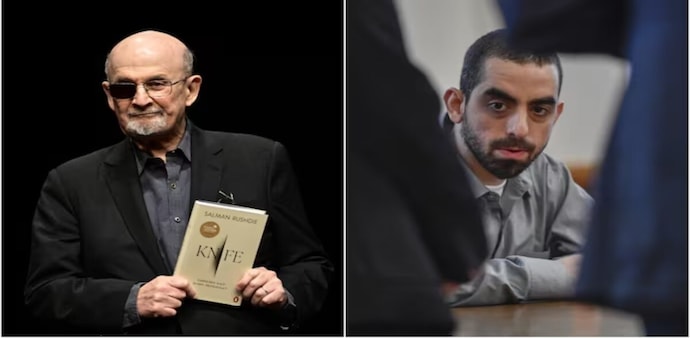
- Jul 30, 2026,
- Updated Jul 30, 2026 9:49 AM IST
A US federal jury has convicted Hadi Matar, the man accused of attacking author Salman Rushdie during a 2022 speaking event in New York, on terrorism-related charges. The 28-year-old New Jersey resident was found guilty of attempting to provide material support to Hezbollah, a designated foreign terrorist organisation, along with other federal terrorism offences.
The verdict was delivered by a jury in Buffalo on Wednesday after prosecutors argued that Matar had spent months planning the attack and was motivated by a fatwa issued against Rushdie over his 1988 novel The Satanic Verses.
“Hadi Matar, who was born and raised in the United States, chose to align his values with the terroristic values of the leaders of Iran, which often promote violence, and in this case, the call for murder,” said US Attorney Michael DiGiacomo for the Western District of New York.
Prosecutors say attack was planned, not impulsive
According to prosecutors, Matar spent more than a year researching the fatwa and preparing for the attack before targeting Rushdie at the Chautauqua Institution in Mayville, New York, on August 12, 2022.
Officials said Matar had studied whether the fatwa remained active and communicated about it, as well as Hezbollah’s support for it, with individuals in Iran, Australia and Canada.
He also allegedly created videos referencing the fatwa, including titles such as “Rushdie_Fatwa 2.0” and “Rushdie_Fatwa 1.6”, which featured material related to the religious decree and statements by Hezbollah leader Hassan Nasrallah.
“Matar spent more than a year immersing himself in Hezbollah’s violent ideology and preparing to act on a fatwa issued by Iran’s Ayatollahs calling for Rushdie’s murder,” Assistant Attorney General for National Security John A. Eisenberg said.
“His brutal attack on Rushdie during a peaceful speaking event is a chilling reminder of the global reach of Iranian terrorism. With today’s verdict, justice has been done, and Matar will pay for his crimes,” Eisenberg added.
Attack at Chautauqua Institution
Matar attacked Rushdie while the author was preparing to deliver a lecture at the Chautauqua Institution. Prosecutors said the assault was an attempt to carry out the call for Rushdie’s murder.
“He spent months planning and preparing to carry out what he hoped would be the execution of Salman Rushdie and possibly follow in the footsteps of martyrs he admired,” DiGiacomo said.
“Instead, his attempted act of terror failed, and Salman Rushdie survived, thanks to courageous members of the public and law enforcement, who saved Rushdie and captured Matar,” he added.
FBI officials said evidence showed the attack was planned in support of Hezbollah rather than an act carried out spontaneously.
“This was not an impulsive act; Matar conducted a violent attack in support of a designated foreign terrorist organisation and wanted to carry out a fatwa against the victim,” Assistant Director Jarod Brown of the FBI’s Counterterrorism Division said.
Matar faces life imprisonment
Investigators said Matar travelled to the venue using the name “Hassan Mughniyeh” and carried a fake driving licence with that identity. Prosecutors said the name combined references to Hezbollah figures Hassan Nasrallah and Imad Mughniyeh.
Before the attack, Matar also visited Hezbollah-related websites and viewed material about members of the organisation who had been designated as martyrs, according to evidence presented by the government.
Matar now faces a maximum sentence of life imprisonment. He is scheduled to be sentenced on November 3 before US District Judge Richard J. Arcara, who presided over the trial.
The case was investigated by the FBI’s Buffalo office and the New York State Police.
(With inputs from PTI)
A US federal jury has convicted Hadi Matar, the man accused of attacking author Salman Rushdie during a 2022 speaking event in New York, on terrorism-related charges. The 28-year-old New Jersey resident was found guilty of attempting to provide material support to Hezbollah, a designated foreign terrorist organisation, along with other federal terrorism offences.
The verdict was delivered by a jury in Buffalo on Wednesday after prosecutors argued that Matar had spent months planning the attack and was motivated by a fatwa issued against Rushdie over his 1988 novel The Satanic Verses.
“Hadi Matar, who was born and raised in the United States, chose to align his values with the terroristic values of the leaders of Iran, which often promote violence, and in this case, the call for murder,” said US Attorney Michael DiGiacomo for the Western District of New York.
Prosecutors say attack was planned, not impulsive
According to prosecutors, Matar spent more than a year researching the fatwa and preparing for the attack before targeting Rushdie at the Chautauqua Institution in Mayville, New York, on August 12, 2022.
Officials said Matar had studied whether the fatwa remained active and communicated about it, as well as Hezbollah’s support for it, with individuals in Iran, Australia and Canada.
He also allegedly created videos referencing the fatwa, including titles such as “Rushdie_Fatwa 2.0” and “Rushdie_Fatwa 1.6”, which featured material related to the religious decree and statements by Hezbollah leader Hassan Nasrallah.
“Matar spent more than a year immersing himself in Hezbollah’s violent ideology and preparing to act on a fatwa issued by Iran’s Ayatollahs calling for Rushdie’s murder,” Assistant Attorney General for National Security John A. Eisenberg said.
“His brutal attack on Rushdie during a peaceful speaking event is a chilling reminder of the global reach of Iranian terrorism. With today’s verdict, justice has been done, and Matar will pay for his crimes,” Eisenberg added.
Attack at Chautauqua Institution
Matar attacked Rushdie while the author was preparing to deliver a lecture at the Chautauqua Institution. Prosecutors said the assault was an attempt to carry out the call for Rushdie’s murder.
“He spent months planning and preparing to carry out what he hoped would be the execution of Salman Rushdie and possibly follow in the footsteps of martyrs he admired,” DiGiacomo said.
“Instead, his attempted act of terror failed, and Salman Rushdie survived, thanks to courageous members of the public and law enforcement, who saved Rushdie and captured Matar,” he added.
FBI officials said evidence showed the attack was planned in support of Hezbollah rather than an act carried out spontaneously.
“This was not an impulsive act; Matar conducted a violent attack in support of a designated foreign terrorist organisation and wanted to carry out a fatwa against the victim,” Assistant Director Jarod Brown of the FBI’s Counterterrorism Division said.
Matar faces life imprisonment
Investigators said Matar travelled to the venue using the name “Hassan Mughniyeh” and carried a fake driving licence with that identity. Prosecutors said the name combined references to Hezbollah figures Hassan Nasrallah and Imad Mughniyeh.
Before the attack, Matar also visited Hezbollah-related websites and viewed material about members of the organisation who had been designated as martyrs, according to evidence presented by the government.
Matar now faces a maximum sentence of life imprisonment. He is scheduled to be sentenced on November 3 before US District Judge Richard J. Arcara, who presided over the trial.
The case was investigated by the FBI’s Buffalo office and the New York State Police.
(With inputs from PTI)