
Delhi to get 540 new EV chargers at 180 locations: Here’s where they will come up
The expansion comes as Delhi prepares for stricter electrification requirements under the Delhi EV Policy 2026.
- Nov 26, 2026,
- Updated Nov 26, 2026 10:44 AM IST
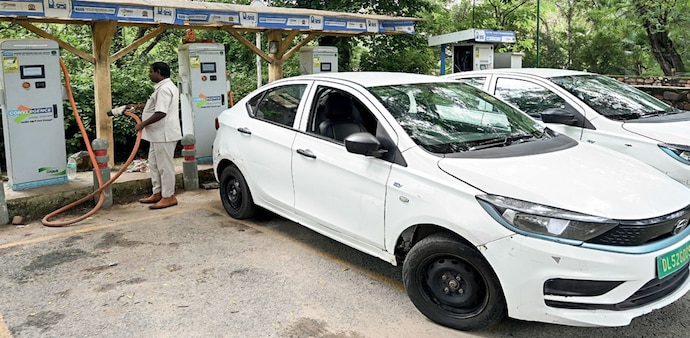
Delhi is gearing up for a major expansion of its electric-vehicle ecosystem, with 540 public EV chargers set to come up at 180 locations across the capital, cited by news agency PTI. Announced on Wednesday, the ₹62-crore initiative is designed to make charging more accessible for commuters, commercial operators and first-time EV buyers as the city prepares for a decisive shift away from petrol and diesel vehicles.
Delhi Transco Limited (DTL), the government’s nodal agency for EV charging infrastructure, has begun appointing operators to set up and run the chargers under the Centre’s PM E-DRIVE scheme. The charging configuration has been approved by the Ministry of Heavy Industries.
Each of the 180 locations will have three charging units: a 12 kW charger with two guns for electric two- and three-wheelers, a 60 kW charger with two guns for electric four-wheelers and N1 goods carriers, and a 120 kW fast charger with two guns.
The 180 sites have been divided into two packages of 90 locations each. Package 1 will primarily cover western and northern Delhi, while Package 2 will cover southern Delhi, New Delhi and eastern Delhi.
In central Delhi, six sites have been identified around Inderlok, Pratap Nagar, Shahi Idgah and Kamla Market/Lok Nayak Jai Prakash Hospital, while two co-located sites have been earmarked at Rajghat.
MUST READ: ₹689 crore approved for EV charging network under PM E-DRIVE, but no funds spent yet
Why it matters
The expansion comes as Delhi prepares for stricter electrification requirements under the Delhi EV Policy 2026. From January 1, 2027, only electric three-wheelers (L5) and electric N1 goods carriers will be eligible for new registration; from April 1, 2028, only electric two-wheelers will qualify.
Officials said these mandates are expected to sharply increase demand for public charging, especially fast charging for commercial and high-use vehicles. The Commission for Air Quality Management has also set a phased target of 32,062 EV charging points in Delhi by December 2029.
Air-quality push
Road transport is a major contributor to Delhi’s persistent air-pollution problem, and electrifying high-usage vehicle segments is central to the government’s clean-air strategy.
The Delhi EV Policy 2026 seeks to accelerate EV adoption through purchase and scrapping incentives, exemptions from road tax and registration fees, phased electrification mandates, and expanded charging and battery-swapping infrastructure.
DON'T MISS: No more EV charging hassle? Govt plans UPI-like system for all stations
Implementation challenge
Officials said the success of the network will depend not only on the number of chargers but also on whether users can easily locate a working charger, complete charging and make payments without difficulty. Additional charging capacity may be added, subject to site and power availability, as demand rises.
Under the PM E-DRIVE scheme, the Union government plans to support 22,100 fast public chargers nationally, including about 18,900 in cities and 3,200 on highways. The scheme has an overall outlay of ₹10,900 crore over two years.
(With agency inputs)