
'E85 fuel has arrived...': Why Hardeep Puri says E20 vehicles aren't going anywhere
The fuel was officially launched on World Environment Day and is initially being rolled out through 48 public-sector fuel stations, with plans to expand to 500 outlets by the end of 2026 and around 5,000 outlets by the end of 2027.
- Jun 6, 2026,
- Updated Jun 6, 2026 4:25 PM IST
India’s biofuel journey entered a new phase on June 5, 2026, when Union Petroleum and Natural Gas Minister Hardeep Singh Puri formally launched E85 fuel at select fuel stations across the country. The announcement immediately sparked a question among millions of vehicle owners: If E85 is the future, what happens to vehicles that are only E20 compatible?
The discussion gained momentum after Union Petroleum and Natural Gas Minister Hardeep Singh Puri wrote on X, "E85 fuel has arrived.......now what will happen to E20 compatible vehicles?" Answering the question himself, the minister clarified that E20 and E85 belong to different fuel categories and are meant for different types of vehicles.
"The arrival of E85 by no means implies that E20 or petrol vehicles will be discontinued," Puri said, adding that E85 fuel is exclusively meant for flex-fuel vehicles and not for regular E20-compatible models.
Drawing parallels with Brazil's long-running ethanol programme, Puri noted that flex-fuel vehicle engines can operate on a wide range of ethanol-petrol blends, from E20 to E100. He said the move would boost farmers' incomes, reduce dependence on crude oil imports and strengthen India's energy security, while advancing the country's goal of building a cleaner and more self-reliant energy future.
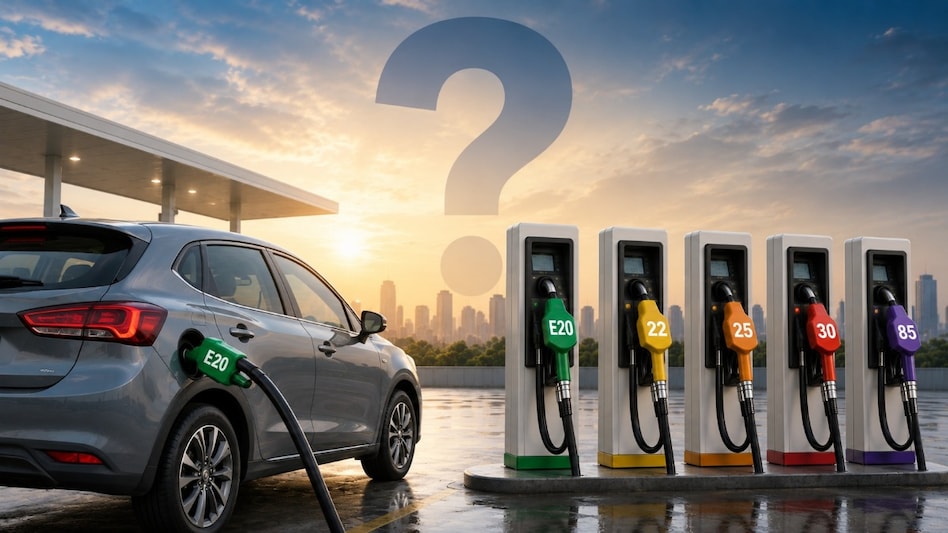
Despite the excitement surrounding E85, the new fuel is not a replacement for E20 petrol. Instead, it is designed for a completely different category of vehicles known as flex-fuel vehicles (FFVs).
What is E85 fuel?
E85 is a fuel blend containing roughly 80-85% ethanol and 15-20% petrol. It is significantly richer in ethanol than E20, which contains 20% ethanol and 80% petrol.
The fuel was officially launched on World Environment Day and is initially being rolled out through 48 public-sector fuel stations, with plans to expand to 500 outlets by the end of 2026 and around 5,000 outlets by the end of 2027.
In Delhi, E85 has been priced at ₹82.12 per litre, about ₹20 cheaper than E20 petrol, which currently sells at ₹102.12 per litre. The government hopes the price advantage will encourage consumers to adopt flex-fuel vehicles over time.
Will E20 vehicles be able to use E85?
No. This is the most important point for vehicle owners. E85 cannot be used in regular petrol vehicles or even most E20-compatible vehicles.
E20 vehicles are engineered to safely handle fuel blends containing up to 20% ethanol. E85, on the other hand, requires specially designed engines, fuel lines, injectors and engine management systems capable of handling much higher ethanol concentrations. The government has repeatedly clarified that E85 is meant exclusively for flex-fuel vehicles.
Using E85 in a standard petrol or E20 vehicle could potentially damage engine components and fuel systems that were not designed for such high ethanol content.
So is E20 becoming obsolete?
Not at all.
In fact, E20 remains India's mainstream fuel strategy. The nationwide rollout of E20 was one of the country's biggest biofuel achievements and continues to be the standard fuel for the vast majority of vehicles on Indian roads.
The arrival of E85 is better understood as an additional option rather than a replacement. Think of it as India creating a parallel pathway for future flex-fuel vehicles while continuing to support the existing E20 ecosystem.
Government officials have also pointed out that since E20 became the national standard, there have been no reported engine failures attributable to ethanol blending, reinforcing confidence in the current programme.
Why is India pushing E85?
The move is about much more than fuel.
India imports roughly 85% of its crude oil requirements, making the economy vulnerable to global oil price shocks and geopolitical disruptions. Higher ethanol usage can reduce dependence on imported crude while creating a domestic market for agricultural produce such as sugarcane and maize.
Hardeep Singh Puri said the expansion of ethanol-based fuels will help boost farmers’ incomes, improve energy security and accelerate India's transition toward cleaner and more self-reliant energy sources. The minister noted that flex-fuel vehicles can operate on a wide range of ethanol-petrol blends, from E20 all the way to E100.
For existing vehicle owners, the launch of E85 changes very little in the immediate future. If your car or bike is E20 compatible, you should continue using E20 fuel as recommended by the manufacturer. E85 is not replacing E20 — it is creating a new category of fuel for a new generation of flex-fuel vehicles.
India’s biofuel journey entered a new phase on June 5, 2026, when Union Petroleum and Natural Gas Minister Hardeep Singh Puri formally launched E85 fuel at select fuel stations across the country. The announcement immediately sparked a question among millions of vehicle owners: If E85 is the future, what happens to vehicles that are only E20 compatible?
The discussion gained momentum after Union Petroleum and Natural Gas Minister Hardeep Singh Puri wrote on X, "E85 fuel has arrived.......now what will happen to E20 compatible vehicles?" Answering the question himself, the minister clarified that E20 and E85 belong to different fuel categories and are meant for different types of vehicles.
"The arrival of E85 by no means implies that E20 or petrol vehicles will be discontinued," Puri said, adding that E85 fuel is exclusively meant for flex-fuel vehicles and not for regular E20-compatible models.
Drawing parallels with Brazil's long-running ethanol programme, Puri noted that flex-fuel vehicle engines can operate on a wide range of ethanol-petrol blends, from E20 to E100. He said the move would boost farmers' incomes, reduce dependence on crude oil imports and strengthen India's energy security, while advancing the country's goal of building a cleaner and more self-reliant energy future.
Despite the excitement surrounding E85, the new fuel is not a replacement for E20 petrol. Instead, it is designed for a completely different category of vehicles known as flex-fuel vehicles (FFVs).
What is E85 fuel?
E85 is a fuel blend containing roughly 80-85% ethanol and 15-20% petrol. It is significantly richer in ethanol than E20, which contains 20% ethanol and 80% petrol.
The fuel was officially launched on World Environment Day and is initially being rolled out through 48 public-sector fuel stations, with plans to expand to 500 outlets by the end of 2026 and around 5,000 outlets by the end of 2027.
In Delhi, E85 has been priced at ₹82.12 per litre, about ₹20 cheaper than E20 petrol, which currently sells at ₹102.12 per litre. The government hopes the price advantage will encourage consumers to adopt flex-fuel vehicles over time.
Will E20 vehicles be able to use E85?
No. This is the most important point for vehicle owners. E85 cannot be used in regular petrol vehicles or even most E20-compatible vehicles.
E20 vehicles are engineered to safely handle fuel blends containing up to 20% ethanol. E85, on the other hand, requires specially designed engines, fuel lines, injectors and engine management systems capable of handling much higher ethanol concentrations. The government has repeatedly clarified that E85 is meant exclusively for flex-fuel vehicles.
Using E85 in a standard petrol or E20 vehicle could potentially damage engine components and fuel systems that were not designed for such high ethanol content.
So is E20 becoming obsolete?
Not at all.
In fact, E20 remains India's mainstream fuel strategy. The nationwide rollout of E20 was one of the country's biggest biofuel achievements and continues to be the standard fuel for the vast majority of vehicles on Indian roads.
The arrival of E85 is better understood as an additional option rather than a replacement. Think of it as India creating a parallel pathway for future flex-fuel vehicles while continuing to support the existing E20 ecosystem.
Government officials have also pointed out that since E20 became the national standard, there have been no reported engine failures attributable to ethanol blending, reinforcing confidence in the current programme.
Why is India pushing E85?
The move is about much more than fuel.
India imports roughly 85% of its crude oil requirements, making the economy vulnerable to global oil price shocks and geopolitical disruptions. Higher ethanol usage can reduce dependence on imported crude while creating a domestic market for agricultural produce such as sugarcane and maize.
Hardeep Singh Puri said the expansion of ethanol-based fuels will help boost farmers’ incomes, improve energy security and accelerate India's transition toward cleaner and more self-reliant energy sources. The minister noted that flex-fuel vehicles can operate on a wide range of ethanol-petrol blends, from E20 all the way to E100.
For existing vehicle owners, the launch of E85 changes very little in the immediate future. If your car or bike is E20 compatible, you should continue using E20 fuel as recommended by the manufacturer. E85 is not replacing E20 — it is creating a new category of fuel for a new generation of flex-fuel vehicles.