
It began with Bijli in 1999: Anand Mahindra traces journey from failed EV to Earthshot Prize
Bijli, India's first electric three-wheeler, was launched in 1999. The vehicle failed to establish a viable business model or gain commercial traction
- Nov 18, 2026,
- Updated Nov 18, 2026 3:29 PM IST
Mahindra Group Chairman Anand Mahindra on Wednesday recalled the company's failed electric three-wheeler venture in 1999, saying the journey from that early setback to winning Prince William's Earthshot Prize 2026 demonstrated how sustainability and profitability could go hand in hand.
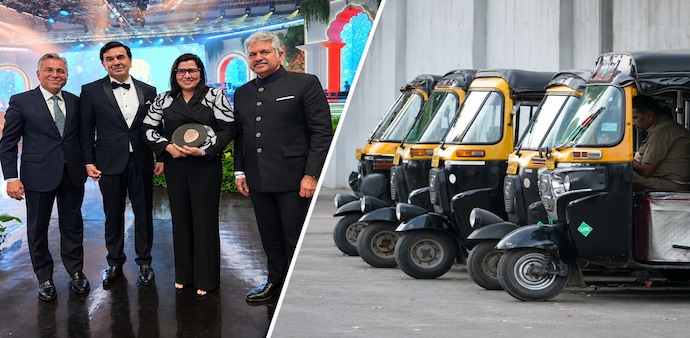
Mahindra Last Mile Mobility won the Earthshot Prize in the 'Clean Our Air' category at an event in Mumbai on Tuesday. The company received recognition for expanding electric last-mile transportation while creating livelihood opportunities, particularly for women.
"Winning the @EarthshotPrize last night in Mumbai was a milestone moment for our Group. In more ways than may be immediately apparent," Mahindra wrote on X.
Don't Miss: Mahindra wins Prince William's Earthshot Prize 2026, bags £1 million for electric mobility push
He traced the achievement to the launch of Bijli, India's first electric three-wheeler, in 1999. The vehicle failed to establish a viable business model or gain commercial traction.
"It was a validation of a journey that began way back in 1999 with the Bijli, India's first electric three-wheeler. A pioneering product that failed to find a viable business model or make its mark. But failure has never deterred us. We’ve always believed in living up to our credo of RISE; of learning, persevering and rising again."
Mahindra said the award reinforced the group's long-held belief that three-wheeler taxis would be among the first automotive segments to adopt electric mobility on a large scale. He also said sustainability should be viewed as a business opportunity rather than merely a regulatory requirement.
"It was a validation of a belief I have articulated for many years: that sustainability is not merely a compliance obligation or a box to be ticked. It is, in fact, one of the greatest growth opportunities for business in the decades ahead," the industrialist said.
He added that sustainability and profitability are not competing objectives. "They can, & must, go hand in hand."
The veteran entrepreneur said encouraging customers to switch to electric vehicles required demonstrating clear financial benefits, particularly for drivers who depend on their vehicles for daily income. "That the economics had to work not just for us as manufacturers, but for the individual earning a livelihood from our vehicles."
Women's livelihoods at the centre
Mahindra highlighted the role of electric three-wheelers in creating employment opportunities for women in a profession traditionally dominated by men.
"Because I suspect one of the factors that resonated with the Earthshot jury was that Mahindra Last Mile Mobility was not simply replacing fossil-fuel powertrains with electric ones. It was also empowering women to, quite literally, take the wheel & build independent livelihoods in a profession traditionally dominated by men."
He also credited Suman Mishra, Managing Director and CEO of Mahindra Last Mile Mobility, for the company's progress. "And I have no doubt that having a woman-led company, with Suman Mishra at the helm, has given this mission an added sense of purpose, energy and conviction."
Mahindra Last Mile Mobility has sold more than 400,000 electric commercial vehicles in India, which have collectively travelled over 9 billion kilometres, according to the company.
The Earthshot Prize includes a £1 million grant, which Mahindra plans to use to train women drivers, improve access to financing and expand EV charging infrastructure in underserved areas.
Concluding his post, Mahindra wrote, "For me, that is what makes this award especially meaningful. It is recognition that profit and purpose can travel the same road."