
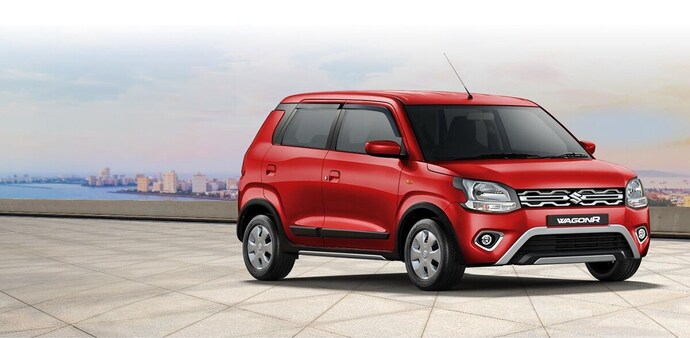
Maruti Suzuki WagonR to be India’s first flex-fuel car
While the flex-fuel WagonR is expected to run on E85, a fuel blend containing 85% ethanol and 15% petrol, it is unclear if it can take pure ethanol.
- May 22, 2026,
- Updated May 22, 2026 5:16 PM IST
Maruti Suzuki India Ltd will launch India's first flex-fuel car in June, a senior company official told newswire The Informist. While the flex-fuel WagonR is expected to run on E85, a fuel blend containing 85% ethanol and 15% petrol, it is unclear if it can take pure ethanol.
Maruti Suzuki, the country’s biggest carmaker by volume, has yet to confirm the development.
This comes after the ministry of road transport and highways in April included E100 (pure ethanol) in automobile testing and certification standards, paving the way for the rollout of pure ethanol vehicles.
“We have the technology, whether it is for ethanol blending increase or for flex-fuel vehicles. We have the technology and we'll support the government whenever the need arises,” Rahul Bharti, Senior Executive Officer, Corporate Affairs, Maruti Suzuki, said during the quarterly earnings call after the company announced its fourth-quarter results. Bharti, however, added that flex-fuel vehicles won't have a meaningful volume by number because of unavailability of such models and also the country needs dispensing pumps that will span the entire network.
“We need more models. We need parity between ethanol and petrol price. So all those factors will take some time for flex-fuels to develop. So it is like a futuristic plan. The volumes will be minimal at this stage. It will grow, say, 5 years to 10 years from now, it will become a meaningful volume, nothing immediately,” he explained during the analyst call.
The cost of upgrading vehicles to support higher ethanol-blended fuels is expected to vary across models and automakers, with industry executives estimating an initial increase of around Rs 40,000-50,000 per vehicle.
The launch of flex-fuel-compatible WagonR marks the first time a carmaker will enter the segment even before fuel is available. While many flex-fuel car prototypes were showcased at the Bharat Mobility Expo 2025, no car has been commercially launch. Though, a few Japanese automakers such as Suzuki and Honda already sell flex-fuel motorcycles in the country. These companies have yet to share any information on whether there are any buyers for such vehicles without E85 and E100 fuel.
The government is also considering raising the mandatory ethanol blending level in petrol beyond the current E20 benchmark, with discussions underway on increasing it gradually to E21, E22 and potentially up to E25, according to industry executives. The proposed move would apply to the broader vehicle population in India, including the country’s annual passenger vehicle sales of around 5 million units as well as the existing cars on the road.
Maruti Suzuki India Ltd will launch India's first flex-fuel car in June, a senior company official told newswire The Informist. While the flex-fuel WagonR is expected to run on E85, a fuel blend containing 85% ethanol and 15% petrol, it is unclear if it can take pure ethanol.
Maruti Suzuki, the country’s biggest carmaker by volume, has yet to confirm the development.
This comes after the ministry of road transport and highways in April included E100 (pure ethanol) in automobile testing and certification standards, paving the way for the rollout of pure ethanol vehicles.
“We have the technology, whether it is for ethanol blending increase or for flex-fuel vehicles. We have the technology and we'll support the government whenever the need arises,” Rahul Bharti, Senior Executive Officer, Corporate Affairs, Maruti Suzuki, said during the quarterly earnings call after the company announced its fourth-quarter results. Bharti, however, added that flex-fuel vehicles won't have a meaningful volume by number because of unavailability of such models and also the country needs dispensing pumps that will span the entire network.
“We need more models. We need parity between ethanol and petrol price. So all those factors will take some time for flex-fuels to develop. So it is like a futuristic plan. The volumes will be minimal at this stage. It will grow, say, 5 years to 10 years from now, it will become a meaningful volume, nothing immediately,” he explained during the analyst call.
The cost of upgrading vehicles to support higher ethanol-blended fuels is expected to vary across models and automakers, with industry executives estimating an initial increase of around Rs 40,000-50,000 per vehicle.
The launch of flex-fuel-compatible WagonR marks the first time a carmaker will enter the segment even before fuel is available. While many flex-fuel car prototypes were showcased at the Bharat Mobility Expo 2025, no car has been commercially launch. Though, a few Japanese automakers such as Suzuki and Honda already sell flex-fuel motorcycles in the country. These companies have yet to share any information on whether there are any buyers for such vehicles without E85 and E100 fuel.
The government is also considering raising the mandatory ethanol blending level in petrol beyond the current E20 benchmark, with discussions underway on increasing it gradually to E21, E22 and potentially up to E25, according to industry executives. The proposed move would apply to the broader vehicle population in India, including the country’s annual passenger vehicle sales of around 5 million units as well as the existing cars on the road.