
M&HCV industry to grow 5–7% in FY27 on fleet replacement, infrastructure push: Ashok Leyland
Exports, which had faced headwinds due to geopolitical developments, have also begun to stabilise, says Ashok Leyland's Sanjeev Kumar
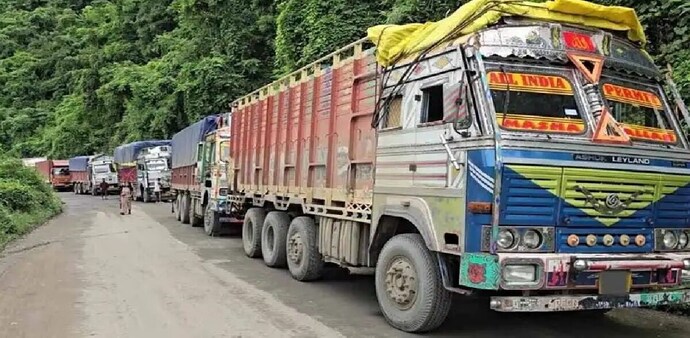
- Jul 22, 2026,
- Updated Jul 22, 2026 4:55 PM IST
India's medium and heavy commercial vehicle (MHCV) industry is expected to register 5–7% growth in FY27, driven primarily by replacement demand, sustained infrastructure spending and improving freight movement, according to a senior Ashok Leyland executive.
"Overall, I feel we are looking at single-digit growth, around 5–7%. It has become a dynamic market, so it's difficult to give an exact number," Sanjeev Kumar, president of M&HCV division at Ashok Leyland, said during the launch of the company's new air suspension truck range.
The market has shown encouraging signs after a slow start to the financial year, said Kumar. "Q1 was really encouraging. We had some initial hiccups, but by June things had settled, and the market picked up well. We are hopeful that the second quarter will be better than the corresponding quarter last year," he said.
Exports, which had faced headwinds due to geopolitical developments, have also begun to stabilise. "There are still a few challenges, but exports have broadly returned to normalcy from June onward. We remain optimistic about Q2," he added.
Ashok Leyland expects fleet replacement to remain the largest demand catalyst for the M&HCV industry over the coming quarters.
The GST rationalisation in 2025 encouraged fleet operators to resume vehicle purchases. "A lot of customers had postponed replacing their fleets. Now they are coming back because the average fleet age has become quite high. Replacement of old fleets will continue to be the major growth driver," said Kumar.
Apart from replacement demand, healthy government spending on infrastructure and increasing private capital expenditure are expected to support truck demand.
"Construction activity is doing well, government spending remains strong, and private capital expenditure is also improving. Overall, these factors support a positive outlook for the industry," he said.
Ashok Leyland’s new air suspension truck range carries a 3–4% price premium over comparable conventional trucks, said Kumar. Besides enabling higher payloads, the air suspension system also improves driver comfort by reducing cabin vibrations during long-haul operations, he added.
India's medium and heavy commercial vehicle (MHCV) industry is expected to register 5–7% growth in FY27, driven primarily by replacement demand, sustained infrastructure spending and improving freight movement, according to a senior Ashok Leyland executive.
"Overall, I feel we are looking at single-digit growth, around 5–7%. It has become a dynamic market, so it's difficult to give an exact number," Sanjeev Kumar, president of M&HCV division at Ashok Leyland, said during the launch of the company's new air suspension truck range.
The market has shown encouraging signs after a slow start to the financial year, said Kumar. "Q1 was really encouraging. We had some initial hiccups, but by June things had settled, and the market picked up well. We are hopeful that the second quarter will be better than the corresponding quarter last year," he said.
Exports, which had faced headwinds due to geopolitical developments, have also begun to stabilise. "There are still a few challenges, but exports have broadly returned to normalcy from June onward. We remain optimistic about Q2," he added.
Ashok Leyland expects fleet replacement to remain the largest demand catalyst for the M&HCV industry over the coming quarters.
The GST rationalisation in 2025 encouraged fleet operators to resume vehicle purchases. "A lot of customers had postponed replacing their fleets. Now they are coming back because the average fleet age has become quite high. Replacement of old fleets will continue to be the major growth driver," said Kumar.
Apart from replacement demand, healthy government spending on infrastructure and increasing private capital expenditure are expected to support truck demand.
"Construction activity is doing well, government spending remains strong, and private capital expenditure is also improving. Overall, these factors support a positive outlook for the industry," he said.
Ashok Leyland’s new air suspension truck range carries a 3–4% price premium over comparable conventional trucks, said Kumar. Besides enabling higher payloads, the air suspension system also improves driver comfort by reducing cabin vibrations during long-haul operations, he added.