
Ola Electric expects 20% cost advantage from in-house battery cells: Bhavish Aggarwal
Industry executives, however, caution that domestic cell manufacturing remains structurally more expensive
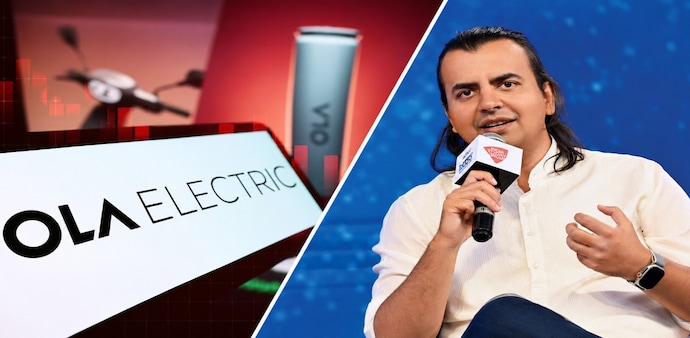
- Nov 18, 2026,
- Updated Nov 18, 2026 5:43 PM IST
Ola Electric expects to achieve a cost advantage of around 20% by using its own indigenously manufactured battery cells, as the electric two-wheeler maker looks to deepen vertical integration and improve the cost economics of its vehicles.
Speaking at the company's Q2FY27 earnings conference call on November 12, Chairman and Managing Director Bhavish Aggarwal said in-house cell manufacturing would provide a meaningful cost benefit once production reaches the right scale.
"If I make my own cells, I will get about a 20% cost advantage at the right scale of production of my cells," Aggarwal said in response to a question on the cost difference between batteries using externally sourced 2170 cells and Ola's in-house LFP cells.
Aggarwal’s comments on cost savings from locally-made cells come at a time when Ola Electric is working towards integrating its own lithium iron phosphate (LFP) cells into its electric scooters by the end of the ongoing financial year.
Read More: Ola Electric expects homegrown LFP cells to match import costs by FY27-end
However, industry executives had earlier told BT that domestic cell manufacturing remains structurally more expensive. Battery cells produced in India are expected to cost roughly 20% more than Chinese imports, Anurag Choudhary, Chairman, Managing Director and CEO of Himadri Speciality Chemical Ltd, a battery cell component maker, told BT earlier in October. But cell producers say mandating localization of cells is critical build an ecosystem in the country. “We have start mandating more localisation...Otherwise, the entire story starts to fall apart,” Vikramadithya Gourineni, executive director of Amara Raja Energy & Mobility, told BT earlier this year.
Gourineni, however, agrees that India is a price-sensitive market and for OEMs cost and pricing will dominate the decision-making. “My customer is only willing to pay so much, and their will already be a premium because I will have to charge a higher cost because my own industrialisation is just starting. If you add domestic materials to that, it all adds up,” he adds. Amara Raja has partnered with Ola Electric’s rival Ather Energy to develop and supply Nickel Manganese Cobalt (NMC) and Lithium Iron Phosphate (LFP) lithium-ion battery cells for Ather's electric two-wheelers.
Meanwhile, Ola Electric is also targeting a gradual increase in cell production and manufacturing yields as it scales operations. Aggarwal said NMC cell yields were already in the mid-70% range, with a roadmap to improve them to the mid-80s over the next few months.
Ola Electric said its LFP technology is ready and that it has begun scaling up production this quarter. The company expects manufacturing yields to reach around 70% by the end of Q4FY27, when it plans to start integrating its in-house LFP cells into its vehicles. Yields are projected to improve further to approximately 90% in Q1FY28.
The company said achieving a 70% yield would make manufacturing its own cells cost-neutral compared with sourcing them from external suppliers. At an 85% yield, in-house production could deliver cost savings of around 10-15% over externally procured cells.
Ola Electric expects its automotive business to consume 2–3 GWh of cell capacity in FY28.