
Suzuki Hayabusa: How a superbike that once changed motorcycling forever sped into tragedy in Hyderabad
Launched in 1999 by Suzuki, the Hayabusa was built with one objective: speed. Its name comes from the Japanese word for peregrine falcon, a bird known for reaching extremely high diving speeds.
- May 12, 2026,
- Updated May 12, 2026 4:36 PM IST
A fatal crash involving a Suzuki Hayabusa on Hyderabad’s Mahabubnagar bypass road has once again brought one of the world’s most recognisable superbikes into public discussion. Police alleged the motorcycle was travelling at around 160 kmph during a street race before colliding with a car, leading to five deaths.
The incident has renewed questions around high-performance motorcycles in India, but it has also drawn attention to the Hayabusa itself, a machine that, for more than two decades, has occupied a near-mythical place in global motorcycling culture.
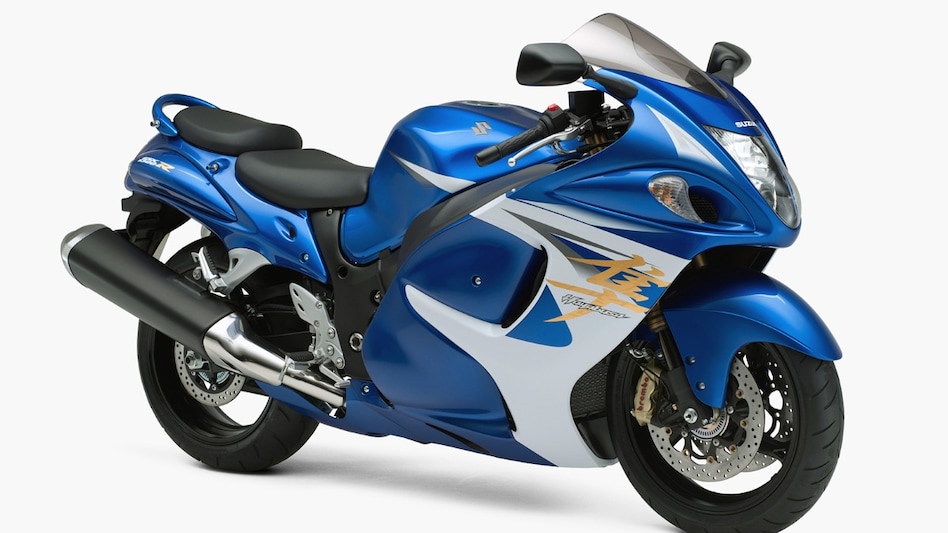
Launched in 1999 by Suzuki, the Hayabusa GSX-1300R was built with one objective: speed. Its name comes from the Japanese word for peregrine falcon, a bird known for reaching extremely high diving speeds. The motorcycle immediately became famous for being the fastest production bike in the world. The name “Hayabusa” itself was also seen as a direct jab at the Honda CBR1100XX Super Blackbird, the motorcycle it was built to dethrone. In nature, the peregrine falcon, or ‘Hayabusa’ in Japanese, preys on blackbirds, a detail widely interpreted by enthusiasts as Suzuki’s symbolic statement in the battle for the world’s fastest production motorcycle.
The first-generation Hayabusa used a 1,299cc inline-four engine and could reach a top speed of roughly 312 kmph under test conditions. At the time, that figure shocked the motorcycle industry.
The bike combined extreme acceleration with long-distance comfort, making it different from track-focused superbikes. Its large fairing, stretched design, and distinctive body shape also made it instantly recognisable.
The Hayabusa’s arrival triggered what many described as a “speed war” among motorcycle manufacturers in the late 1990s. Brands including Honda, Kawasaki and Yamaha were competing to produce increasingly faster motorcycles capable of crossing the 300 kmph mark.
That competition eventually led to what became known as the “gentleman’s agreement”. Around 1999-2000, major Japanese and European manufacturers informally agreed to electronically limit production motorcycles to 299 kmph. The decision was largely driven by safety concerns and fears of stricter government intervention in Europe.
In India, the Hayabusa acquired cult status during the 2000s and early 2010s. Long before premium superbikes became common, the Hayabusa represented wealth, exclusivity and raw performance. Imported units first arrived through private channels before Suzuki officially introduced the motorcycle in the Indian market in November 2008. Since then, it has seen multiple iterations, upgrades and facelifts, with the latest one being launched in 2025.
The bike also gained visibility through films, celebrity ownership and biking communities, turning it into one of the most aspirational motorcycles in the country. The bike was most famously seen in the 2004 Bollywood Film “Dhoom”, where Actor John Abraham was seen riding it.
Actor Salman Khan has also been known to own and ride the Hayabusa, often seen riding it on the streets of Mumbai.
However, the point to note here is that India’s road conditions and traffic environment are fundamentally different from those in Europe or Japan, where such motorcycles are often developed and tested.
Even with electronic restrictions, a machine capable of approaching 300 kmph can reach illegal speeds within seconds. Experts have repeatedly argued that rider training, licensing standards and enforcement in India have not evolved at the same pace as the availability of high-performance motorcycles.
The gentleman’s agreement itself only limits the absolute top speed. It does not restrict rapid acceleration, aggressive riding or street racing. Critics argue that while manufacturers have added rider aids such as traction control, ABS and multiple riding modes, technology alone cannot compensate for reckless riding behaviour.
The latest crash is likely to intensify debate around whether India requires stricter norms for acquiring and operating superbikes. Some road safety experts have suggested advanced licensing systems, mandatory track training and tighter enforcement against illegal racing.
Yet beyond the controversy, the Hayabusa remains a landmark motorcycle, one that reshaped the global superbike industry.
A fatal crash involving a Suzuki Hayabusa on Hyderabad’s Mahabubnagar bypass road has once again brought one of the world’s most recognisable superbikes into public discussion. Police alleged the motorcycle was travelling at around 160 kmph during a street race before colliding with a car, leading to five deaths.
The incident has renewed questions around high-performance motorcycles in India, but it has also drawn attention to the Hayabusa itself, a machine that, for more than two decades, has occupied a near-mythical place in global motorcycling culture.
Launched in 1999 by Suzuki, the Hayabusa GSX-1300R was built with one objective: speed. Its name comes from the Japanese word for peregrine falcon, a bird known for reaching extremely high diving speeds. The motorcycle immediately became famous for being the fastest production bike in the world. The name “Hayabusa” itself was also seen as a direct jab at the Honda CBR1100XX Super Blackbird, the motorcycle it was built to dethrone. In nature, the peregrine falcon, or ‘Hayabusa’ in Japanese, preys on blackbirds, a detail widely interpreted by enthusiasts as Suzuki’s symbolic statement in the battle for the world’s fastest production motorcycle.
The first-generation Hayabusa used a 1,299cc inline-four engine and could reach a top speed of roughly 312 kmph under test conditions. At the time, that figure shocked the motorcycle industry.
The bike combined extreme acceleration with long-distance comfort, making it different from track-focused superbikes. Its large fairing, stretched design, and distinctive body shape also made it instantly recognisable.
The Hayabusa’s arrival triggered what many described as a “speed war” among motorcycle manufacturers in the late 1990s. Brands including Honda, Kawasaki and Yamaha were competing to produce increasingly faster motorcycles capable of crossing the 300 kmph mark.
That competition eventually led to what became known as the “gentleman’s agreement”. Around 1999-2000, major Japanese and European manufacturers informally agreed to electronically limit production motorcycles to 299 kmph. The decision was largely driven by safety concerns and fears of stricter government intervention in Europe.
In India, the Hayabusa acquired cult status during the 2000s and early 2010s. Long before premium superbikes became common, the Hayabusa represented wealth, exclusivity and raw performance. Imported units first arrived through private channels before Suzuki officially introduced the motorcycle in the Indian market in November 2008. Since then, it has seen multiple iterations, upgrades and facelifts, with the latest one being launched in 2025.
The bike also gained visibility through films, celebrity ownership and biking communities, turning it into one of the most aspirational motorcycles in the country. The bike was most famously seen in the 2004 Bollywood Film “Dhoom”, where Actor John Abraham was seen riding it.
Actor Salman Khan has also been known to own and ride the Hayabusa, often seen riding it on the streets of Mumbai.
However, the point to note here is that India’s road conditions and traffic environment are fundamentally different from those in Europe or Japan, where such motorcycles are often developed and tested.
Even with electronic restrictions, a machine capable of approaching 300 kmph can reach illegal speeds within seconds. Experts have repeatedly argued that rider training, licensing standards and enforcement in India have not evolved at the same pace as the availability of high-performance motorcycles.
The gentleman’s agreement itself only limits the absolute top speed. It does not restrict rapid acceleration, aggressive riding or street racing. Critics argue that while manufacturers have added rider aids such as traction control, ABS and multiple riding modes, technology alone cannot compensate for reckless riding behaviour.
The latest crash is likely to intensify debate around whether India requires stricter norms for acquiring and operating superbikes. Some road safety experts have suggested advanced licensing systems, mandatory track training and tighter enforcement against illegal racing.
Yet beyond the controversy, the Hayabusa remains a landmark motorcycle, one that reshaped the global superbike industry.