
Tata Motors cars to cost more from July; second price hike this year announced
Price revision is being undertaken to partially offset the impact of rising input costs and sustained inflationary pressures, says Tata Motors.
- Jun 12, 2026,
- Updated Jun 12, 2026 2:36 PM IST
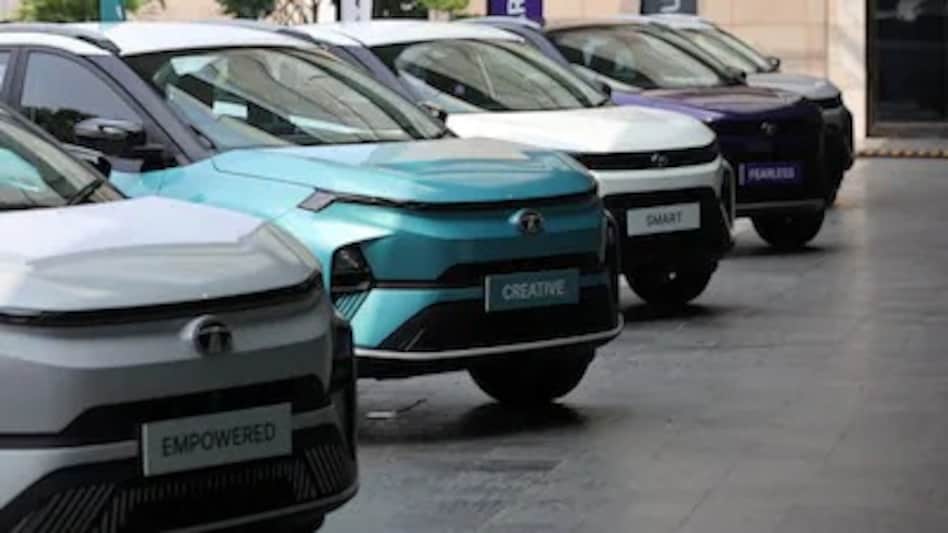
Tata Motors Passenger Vehicles Ltd has announced that it will increase prices of its passenger vehicle portfolio, including both internal combustion engine (ICE) and electric vehicles (EV), by up to 1.5%, effective July 1, 2026.
“This price revision is being undertaken to partially offset the impact of rising input costs and sustained inflationary pressures. While TMPV continues to absorb a significant portion of these increases, a part of the impact is being passed on to customers through this adjustment,” the company said in a statement.
The extent of the price increase will vary across models and variants, ensuring that the overall value proposition of each offering is maintained, the company said.
This is the second price hike taken by India’s third-largest carmaker in 2026. Tata Motors Passenger Vehicles had increased prices across its internal combustion engine (ICE) passenger vehicle portfolio by 0.5% from April 1, 2026.
Meanwhile, Maruti Suzuki India Ltd, the country’s biggest carmaker by volume, took a price hike of up to Rs 30,000 from June after delaying it for several months. Automakers usually announce price hikes at the beginning of every year.
The Japanese automaker said the latest price increase was driven by a continued rise in input costs. “Given the persistent escalation in input costs, the company has decided to raise prices across its model range by up to ₹30,000, effective June 2026,” Maruti Suzuki said.
The company noted that it has been undertaking various cost-optimisation initiatives over the past several months to absorb higher expenses. However, with inflationary pressures remaining elevated and the challenging cost environment showing little sign of easing, it has become necessary to pass on part of the additional burden to customers.
Maruti Suzuki, however, rolled out a price protection programme for its affordable car lineup, allowing customers who book certain models on or before June 14, 2026, to avoid the impact of the price increase taking effect this month. The offer applies to the Alto K10, S-Presso, Celerio and WagonR.
On June 8, German luxury carmaker BMW Group India announced a price increase of up to 2% across its range effective 1 July 2026. The price increase will be applicable across the range for BMW and MINI vehicles.
“Our robust demand and exceptional product range allow BMW Group India to consistently set new benchmarks in the luxury mobility space. To protect our premium standards against macroeconomic headwinds - specifically rupee depreciation and escalating logistics costs - we are introducing a price increase of up to 2% across our portfolio, effective 1 July 2026,” said Hardeep Singh Brar, President and CEO, BMW Group India.
Tata Motors Passenger Vehicles Ltd has announced that it will increase prices of its passenger vehicle portfolio, including both internal combustion engine (ICE) and electric vehicles (EV), by up to 1.5%, effective July 1, 2026.
“This price revision is being undertaken to partially offset the impact of rising input costs and sustained inflationary pressures. While TMPV continues to absorb a significant portion of these increases, a part of the impact is being passed on to customers through this adjustment,” the company said in a statement.
The extent of the price increase will vary across models and variants, ensuring that the overall value proposition of each offering is maintained, the company said.
This is the second price hike taken by India’s third-largest carmaker in 2026. Tata Motors Passenger Vehicles had increased prices across its internal combustion engine (ICE) passenger vehicle portfolio by 0.5% from April 1, 2026.
Meanwhile, Maruti Suzuki India Ltd, the country’s biggest carmaker by volume, took a price hike of up to Rs 30,000 from June after delaying it for several months. Automakers usually announce price hikes at the beginning of every year.
The Japanese automaker said the latest price increase was driven by a continued rise in input costs. “Given the persistent escalation in input costs, the company has decided to raise prices across its model range by up to ₹30,000, effective June 2026,” Maruti Suzuki said.
The company noted that it has been undertaking various cost-optimisation initiatives over the past several months to absorb higher expenses. However, with inflationary pressures remaining elevated and the challenging cost environment showing little sign of easing, it has become necessary to pass on part of the additional burden to customers.
Maruti Suzuki, however, rolled out a price protection programme for its affordable car lineup, allowing customers who book certain models on or before June 14, 2026, to avoid the impact of the price increase taking effect this month. The offer applies to the Alto K10, S-Presso, Celerio and WagonR.
On June 8, German luxury carmaker BMW Group India announced a price increase of up to 2% across its range effective 1 July 2026. The price increase will be applicable across the range for BMW and MINI vehicles.
“Our robust demand and exceptional product range allow BMW Group India to consistently set new benchmarks in the luxury mobility space. To protect our premium standards against macroeconomic headwinds - specifically rupee depreciation and escalating logistics costs - we are introducing a price increase of up to 2% across our portfolio, effective 1 July 2026,” said Hardeep Singh Brar, President and CEO, BMW Group India.