
Under the weather: Why Escorts Kubota expects India's tractor industry to see a slowdown in FY27
After blockbuster growth in FY26, India's tractor industry is expected to record single-digit growth in FY27, as adverse weather conditions, weaker demand in key agricultural markets and a high base weigh on sales.
- Nov 13, 2026,
- Updated Nov 13, 2026 9:47 AM IST
India's tractor industry, which clocked a robust volume growth of 19% in FY26, is staring at a possible contraction in the current financial year as adverse weather conditions and weaker demand in key agricultural markets weigh on sales.
Manish Sharma, the newly appointed President of Agri Business at Escorts Kubota, expects the industry to register a single-digit decline in FY27, with the impact of uneven rainfall, lower reservoir levels and a high base affecting demand in several regions.
"The major reason is the weather (El Niño) conditions," Sharma said, pointing to the significant degrowth witnessed in Maharashtra compared with last year. He also highlighted the impact of lower reservoir levels in southern India, which are currently around 70% of normal levels.
Andhra Pradesh, too, has witnessed a shortfall, adding to the pressure on tractor demand in the region. While Escorts Kubota has a stronger presence in northern markets such as Punjab, Haryana and Madhya Pradesh, southern India remains an important growth opportunity for the company.
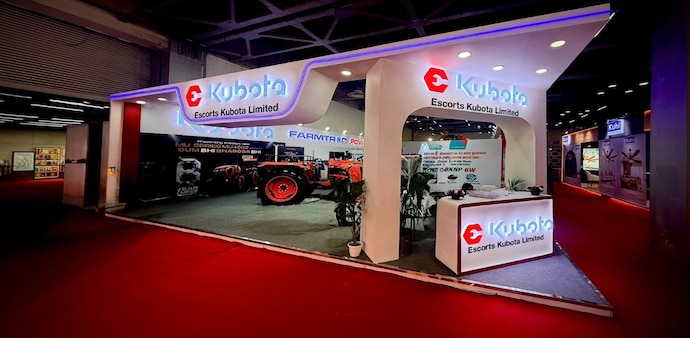
Escorts Kubota, which sells tractors under three brands, Farmtrac, Powertrac and Kubota, holds around 11% of India's tractor market.
Despite strong headwinds such as inflationary pressures and a larger base from last year, even a 1% decline for the industry would be a positive sign, Sharma says.
Price hikes continue
The slowdown coincides with a sharp increase in input costs, particularly steel, aluminium, copper and rubber, putting pressure on tractor manufacturers' profitability. Rubber prices alone have risen by 40–45%, Sharma said, adding to the cost burden for tractor makers.
"There's enough of all these commodity increases on the bill of material for the manufacturers," he said.
According to Sharma, the combined impact of commodity inflation on tractor manufacturers is estimated at around 10-11%. For a tractor with an average selling price of approximately ₹6 lakh, this translates into an additional cost burden of ₹60,000-62,000.
Steel, aluminium and rubber together account for approximately half of a tractor manufacturer's bill of materials, making the industry particularly vulnerable to fluctuations in these commodities.
Manufacturers have so far passed on only part of the cost increases to customers. The industry has implemented two rounds of price hikes, averaging ₹20,000-22,000 per tractor, or around 3.5-4%, Sharma said. This has left a cost burden of approximately ₹40,000 per tractor yet to be recovered through pricing or cost efficiencies.
Manufacturers had initially held back further price increases to avoid affecting consumer sentiment during the festive and harvesting seasons.
With the festive season over, Escorts Kubota has announced another average price increase of around 4%, depending on the model.
The cumulative price increases of around 8% will still leave manufacturers facing some cost pressures of 2-3%, Sharma said. Escorts Kubota will attempt to absorb the remaining impact through value engineering and operational efficiencies rather than immediately resorting to further price increases.
"We will continue to make efforts to value engineer, to build cost efficiencies in the system to absorb the remaining 2 to 3% as much as possible," he said.
Sharma expects it could take a couple of quarters for margins to return to their earlier levels, depending partly on how commodity prices evolve.
Expanding footprint in South and East India
Escorts Kubota is looking to expand its presence in southern and eastern India, traditionally underrepresented markets for the company, by strengthening the distribution networks of its Farmtrac and Powertrac brands.
The company has a stronger presence in northern markets such as Punjab, Haryana and Madhya Pradesh.
"While we will consistently look at expanding our market share in the North, we will look at growing more towards the underrepresented geographies, which include South and East," Sharma said.
The broader opportunity, he said, lies in India's relatively low level of farm mechanisation. Sharma noted that tractor penetration in India remains below 50%, while demand for higher-horsepower tractors and farm implements is expanding.
The share of the 40-50 HP tractor segment has increased by 14-15 percentage points over the past five years, according to Sharma, pointing to a gradual shift towards higher-powered machines despite fragmented landholdings.