
Dust and choked: What is polluting the Delhi air in summer?
Dust and choked: What is polluting the Delhi air in summer?
BusinessToday.In
- Jun 15, 2018,
- Updated Jun 15, 2018 4:33 PM IST
- 1/8
A thick cover of haze, dust and winds have enveloped Delhi past five days bringing down the air quality. A look at what makes Delhi so polluted
- 2/8
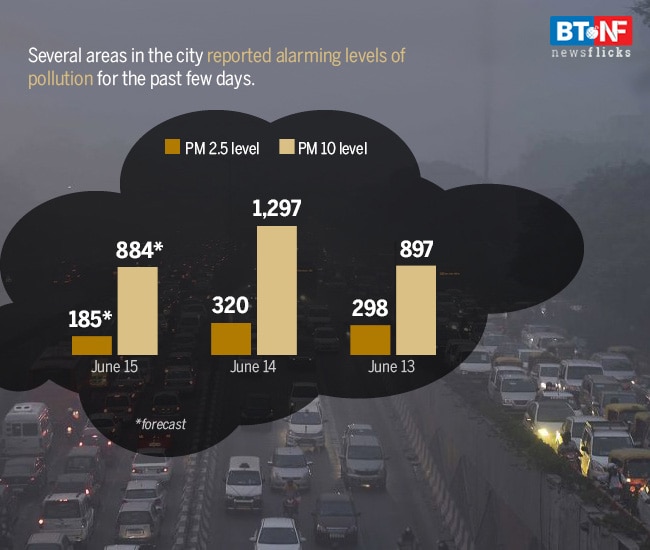
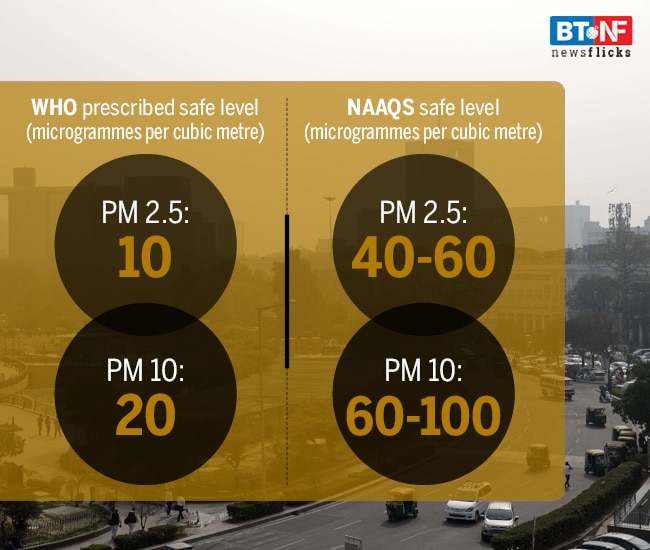
Dust blanketDue to the dust haze cover and wind, there's no release of heat, sending temperatures in Delhi soaring. The annual prescribed standards of PM2.5 & PM10 are 40 & 60 micrograms per cubic metre (ug/m3) in India, but the real levels are always much above. The PM10 level was beyond severe at 830 in Delhi on Wednesday and 1,297 on Thursday. For PM2.5, levels were recorded at 320, which is a "very unhealthy" score.
- 3/8
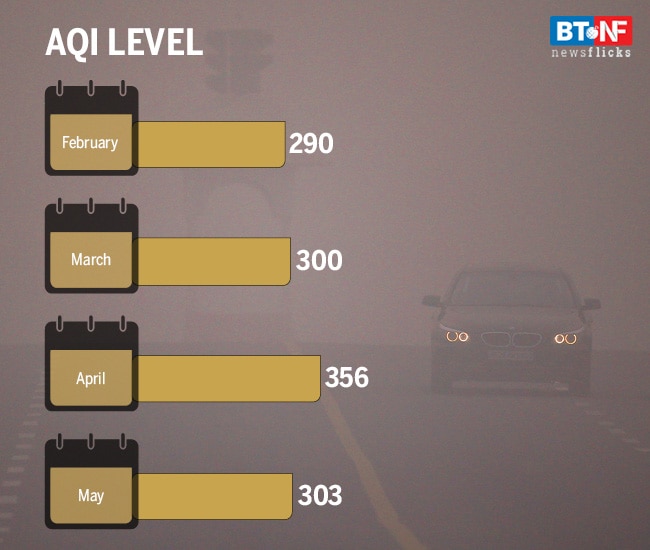
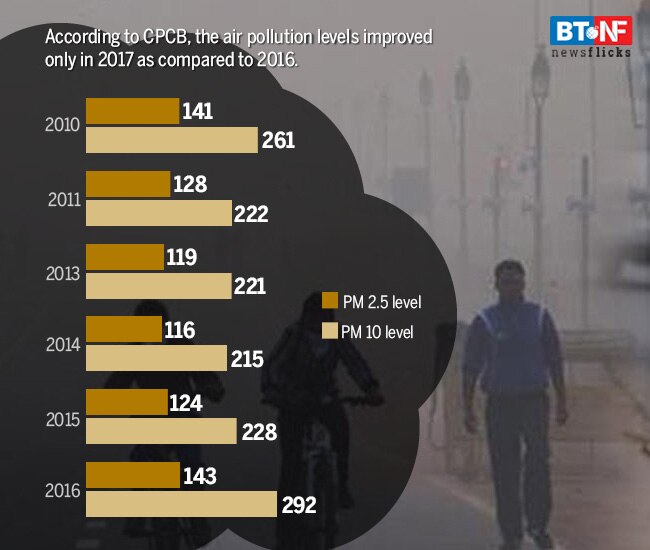
Past few monthsOver the last few months Delhi's air quality has fallen due to various reasons, including dust storms and lack of rains. In 2017, the city's PM 2.5 annual average was 143 micrograms per cubic metre, more than three times the national safe standard, while the PM 10 average was 292 micrograms per cubic metre, more than 4.5 times the national standard.
- 4/8
Safe levelsDespite public outcry over severe air pollution, and both Centre and Delhi government taking up the issue, WHO's database of more than 4,000 cities in 100 countries shows that Delhi's pollution levels improved only marginally between 2010 and 2014 . But they were nowhere near the safe levels.An Air Quality Index or AQI between 0-50 is considered 'Good', 51-100 'Satisfactory', 101-200 'Moderate', 201-300 'Poor', 301-400 'Very Poor', and 401-500 'Severe'.
- 5/8
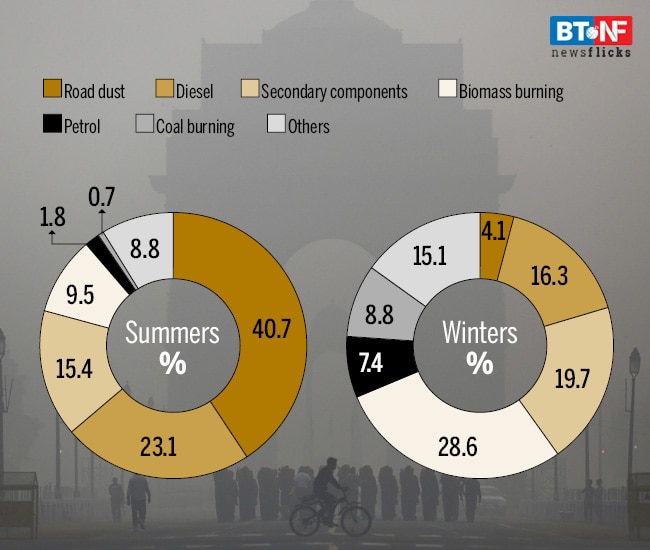
Air pollution reasonsAir pollution has emerged as a major challenge in Delhi and the problem becomes more complex due to multiplicity and complexity of the mix of emission sources, such as, industries, automobiles, generator sets, domestic fuel burning, roadside dusts, construction activities. The hotter months have a positive impact on the pollution in Delhi to some extent as compared to the winter months. This year, extensive dust storms in western India, particularly Rajasthan increased coarser particles in the air.
- 6/8
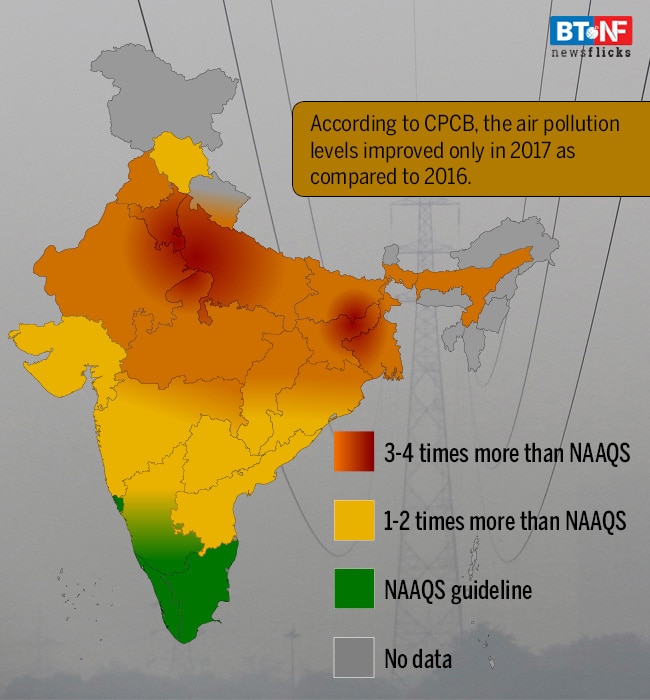
Delhi's tryst with bad airIt is not just Diwali crackers that poison the Delhi air, other factors too contribute to the toxic air we breathe through the year. Delhi and Beijing are often compared due to their high air pollution levels and policies adopted by the government. WHO's recent data shows that Beijing's air pollution levels have been consistently reducing 2013 onwards.According to CPCB, the air pollution levels in Delhi improved only in 2017 as compared to 2016.
- 7/8
Toxic airAccording to SAFAR, besides local sources of pollution, Indo-Gangetic cities get polluted from neighbouring regions, which adds to the total count of the air pollution. During the summer, winds sweep towards the Indo-Gangetic plains through south India and from the north through the Himalayas, converging in the plains. This means the polluted air from south and central India and from the north and Nepal all converge in the plains.
- 8/8
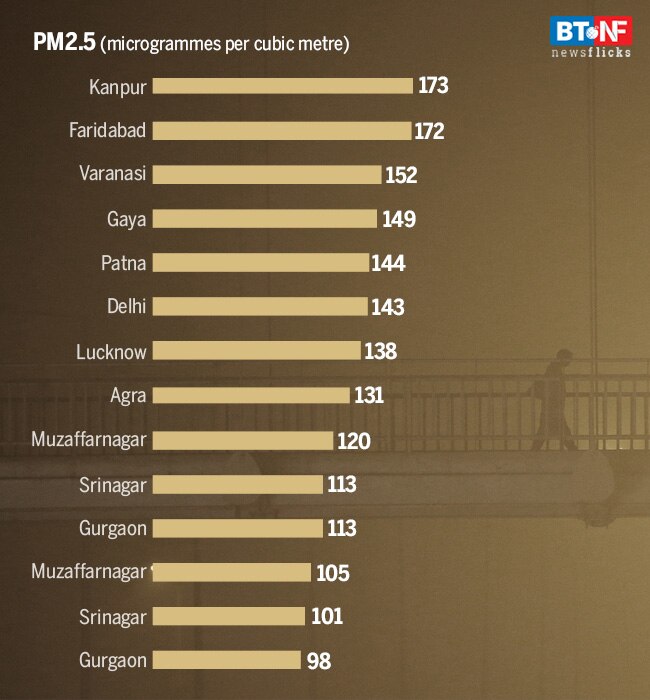
Filth in the airWHO's latest global air pollution database says that India has 14 out of the 15 most polluted cities in the world in terms of PM 2.5 concentrations, with the worst being Kanpur.In 2010, Delhi was the worst polluted city globally followed by Peshawar and Rawalpindi. Agra was the only other Indian city in the top 10 polluted (PM 2.5) cities, in 2011 too Delhi and Agra were the only two Indian cities and Ulaanbaatar was the worst.
But the trend reversed 2012 onwards when 14 of top 20 most polluted cities were in India. In 2013, 2014 and 2015 too, four to seven Indian cities were in top 20. The latest data of 2016-17 says 14 out of 15 most polluted are in India.
Source: WHO, SAFAR, CPCB