
Flipkart-Walmart deal: The story of India's largest e-commerce company
Flipkart-Walmart deal: The story of India's largest e-commerce company
BusinessToday.In
- May 4, 2018,
- Updated May 4, 2018 4:45 PM IST
- 1/8
As the US-based global offline and online retail giants make a beeline for picking up a controlling stake in the homegrown e-tailing major, here's a look at the journey of Indian e-commerce's poster boy.
- 2/8
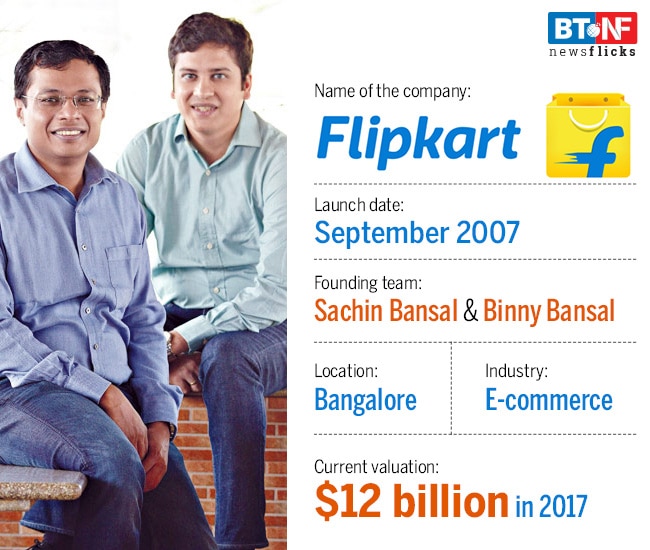
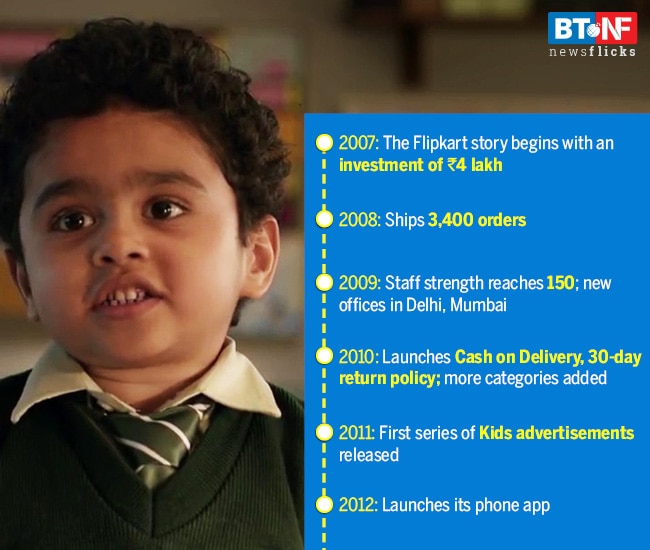
Flipkart's journey from a startup with an investment of just Rs 4 lakh to a $12-billion e-commerce behemoth in 10 years is what dreams are made of. Today, the poster boy for homegrown startups is the ultimate go-to name for e-commerce in India across market segments. As part of its growth strategy it has also picked up several smaller players including Myntra, Jabong and eBay. It also claims to be the leader in India's $38.5 bn e-commerce market, which is expected to touch $200 bn by 2026.
- 3/8
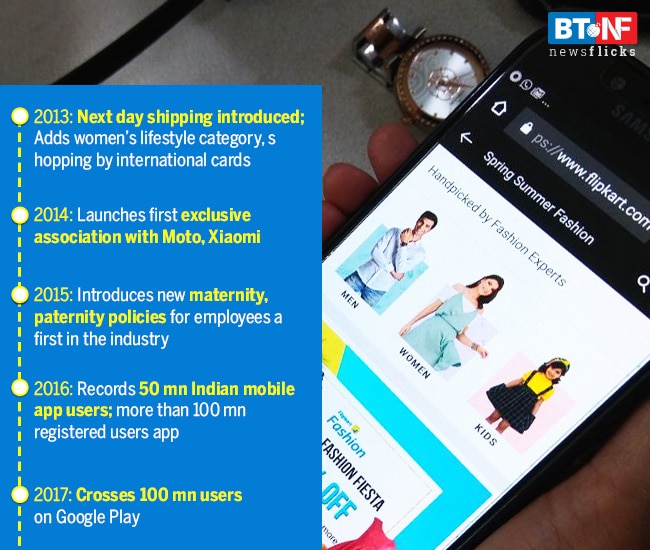
IIT-Delhi graduates and and former Amazon executives Sachin and Binny Bansal had conceived the company as an e-tailer for books. Subsequently, it pivoted to a marketplace model in 2013, adding all categories of merchandise on its platform.
- 4/8
Flipkart, which had been focusing on making online shopping easier on the customer's wallet without giving outright discounts since 2016, went on to launch schemes such as no-cost EMI, buy-now-pay-later, guaranteed buyback and product exchange.

- 5/8
Flipkart's journey was supported by its investors, backing the company at crucial points, especially to take on global rival Amazon and homegrown peers Snapdeal, among others. Its investors include Softbank, the largest stakeholder, besides Tiger Global Management, Naspers, Accel Partners, Dragoneer Investment Group, Sofina, ICONIQ Capital, DST Global, GIC and Morgan Stanley Investment Management.
- 6/8
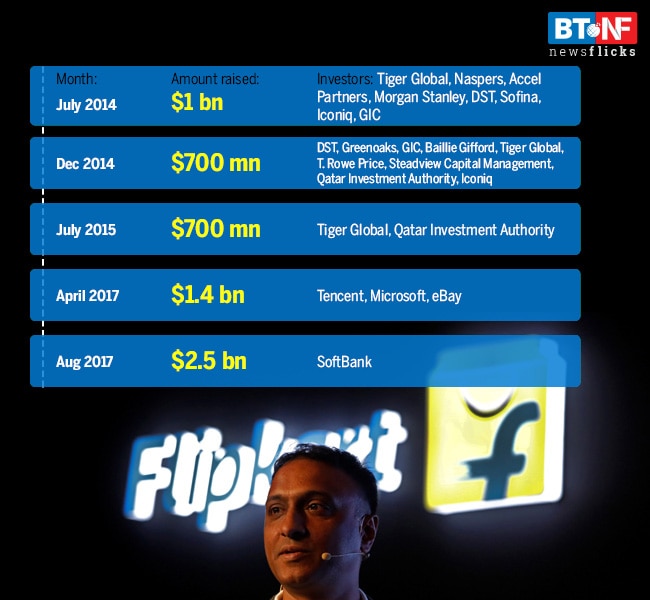
Since 2014, Flipkart has raised several external rounds of funding following the acquisition of Myntra, including the $210 million from DST Global, and a $1-billion round led by Tiger Global, Naspers, Accel Partners, Morgan Stanley, DST, Sofina, Iconiq, GIC.In 2015, Flipkart's valuation touched $15.5 billion during a $700-million round from its existing investors. However, the following year it faced the first big markdown by a Morgan Stanley Mutual Fund, and its valuation shrunk to just about $11billion. Subsequently, in 2016, it fell to a new low of $5.6 billion.The company recovered in 2017 with a $1.4-billion investment from Tencent, Microsoft and eBay, followed by an infusion of $2.5 billion from Japanese conglomerate SoftBank Group.
- 7/8
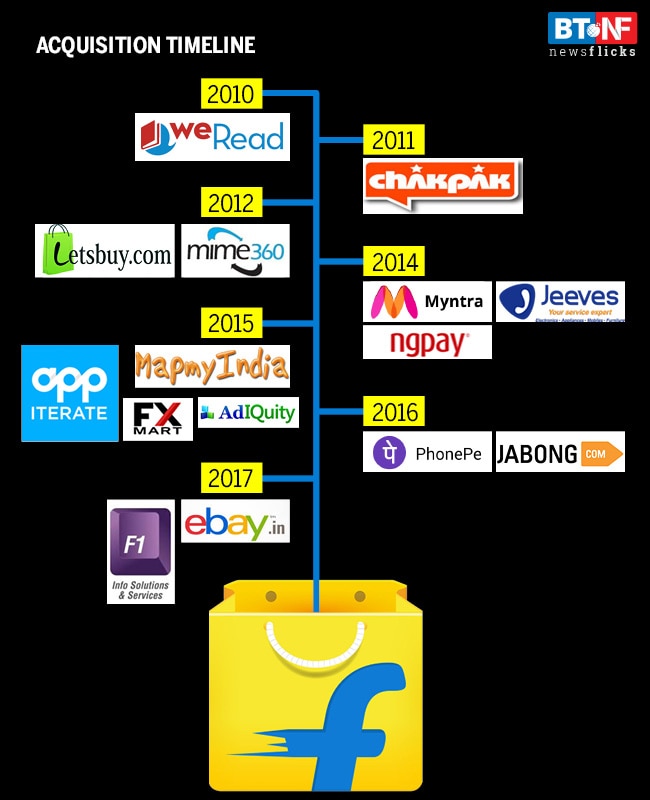
Flipkart has grown organically as well as through a string of acquisitions from WeRead in 2011 to Ebay's India operations in 2017 to gain a market share of 31.9% in the country's e-commerce space.
- 8/8
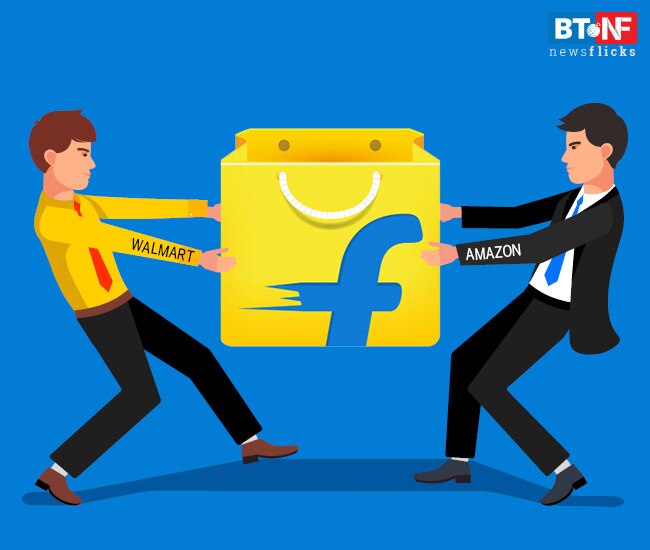
US-based global retailing giant Walmart's India journey never really took off, despite several attempts over the past decade, primarily due to regulatory hurdles. Now, the proposed transaction will see Walmart acquiring a 51% stake in Flipkart, with an option to raise its shareholding to up to 80% through secondary sale of shares from the e-tailers existing investors.Gobbling up Flipkart will help Walmart make inroads into the Indian market and make up for lost time. Besides offering a loyal customer base across sectors, Flipkart will also provide an established logistics network that would benefit Walmart immensely.Amazon.com Inc is also in the race to acquire Flipkart's 60 per cent stake, but is unlikely to crack the deal. Walmart's entry in India through the Flipkart buyout, will also see Amazon feel the intense pricing war and competitive edge that the retailing giant will bring on the table.