
India working to extend genomic surveillance consortium to neighbouring countries: PM Modi
The prime minister said there was a need for building a resilient global supply chain and enabling equitable access to vaccines and medicines.
- May 12, 2022,
- Updated May 12, 2022 9:14 PM IST
The central government will extend the network of Indian SARS-CoV-2 Genomics Consortium (INSACOG) that monitors virus variation of circulating strains of COVID-19 in India to its neighbouring countries, Prime Minister Narendra Modi said on Thursday.
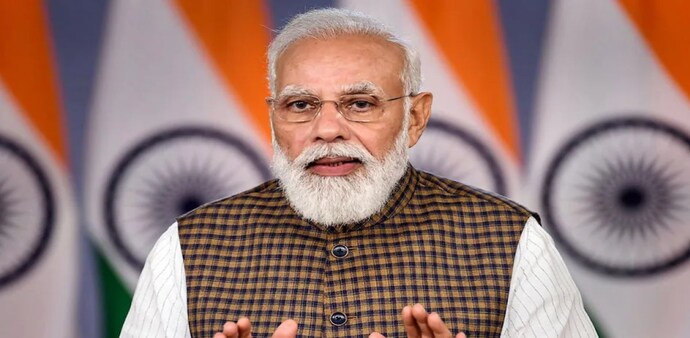
He was delivering his remarks in the Opening Session of the Second Global COVID Virtual Summit having the theme --Preventing Pandemic Fatigue and Prioritizing Preparedness.
“India's Genomics Consortium has contributed significantly to the global database on the virus. I am happy to share that we will extend this network to countries in our neighborhood,” said Modi.
The INSACOG, jointly initiated by the Union Health Ministry of Health, and Department of Biotechnology (DBT) with Council for Scientific & Industrial Research (CSIR) and Indian Council of Medical Research (ICMR), is a consortium of 38 laboratories to monitor the genomic variations in the SARS-CoV-2. INSACOG is a multi-laboratory, multi-agency, Pan-India network to monitor genomic variations in the SARS-CoV-2 by a sentinel sequencing effort which is facilitated by the National Centre for Disease Control (NCDC), Delhi involving the Central Surveillance Unit (CSU) under Integrated Disease Surveillance Programme (IDSP).
The Prime Minister said that the Covid pandemic continues to disrupt lives, supply chains, and tests the resilience of open societies. “In India, we adopted a people-centric strategy against the pandemic. We have made the highest ever allocation to our annual healthcare budget. Our vaccination programme is the largest in the world. We have fully vaccinated almost 90 percent of the adult population, and more than 50 million children. India manufactures four WHO approved vaccines and has the capacity to produce five billion doses this year,” said Modi.
PM Modi also said that India supplied over 200 million doses to 98 countries, bilaterally and through COVAX. India has developed low-cost COVID mitigation technologies for testing, treating and data management. “We have offered these capabilities to other countries. In India, we extensively used our traditional medicines to supplement our fight against COVID and to boost immunity, saving countless lives,” said the prime minister.
Further, he also highlighted that as a responsible member of the global community, India would continue to play an active role by sharing its low cost indigenous COVID mitigation technologies, vaccines and therapeutics with other countries. India has used traditional medicine extensively and has laid the foundation for a WHO Center for Traditional Medicine in India to make this knowledge available to the world. Prime Minister also called for strengthening and reforming the WHO to create a stronger and more resilient global health security architecture.
The central government will extend the network of Indian SARS-CoV-2 Genomics Consortium (INSACOG) that monitors virus variation of circulating strains of COVID-19 in India to its neighbouring countries, Prime Minister Narendra Modi said on Thursday.
He was delivering his remarks in the Opening Session of the Second Global COVID Virtual Summit having the theme --Preventing Pandemic Fatigue and Prioritizing Preparedness.
“India's Genomics Consortium has contributed significantly to the global database on the virus. I am happy to share that we will extend this network to countries in our neighborhood,” said Modi.
The INSACOG, jointly initiated by the Union Health Ministry of Health, and Department of Biotechnology (DBT) with Council for Scientific & Industrial Research (CSIR) and Indian Council of Medical Research (ICMR), is a consortium of 38 laboratories to monitor the genomic variations in the SARS-CoV-2. INSACOG is a multi-laboratory, multi-agency, Pan-India network to monitor genomic variations in the SARS-CoV-2 by a sentinel sequencing effort which is facilitated by the National Centre for Disease Control (NCDC), Delhi involving the Central Surveillance Unit (CSU) under Integrated Disease Surveillance Programme (IDSP).
The Prime Minister said that the Covid pandemic continues to disrupt lives, supply chains, and tests the resilience of open societies. “In India, we adopted a people-centric strategy against the pandemic. We have made the highest ever allocation to our annual healthcare budget. Our vaccination programme is the largest in the world. We have fully vaccinated almost 90 percent of the adult population, and more than 50 million children. India manufactures four WHO approved vaccines and has the capacity to produce five billion doses this year,” said Modi.
PM Modi also said that India supplied over 200 million doses to 98 countries, bilaterally and through COVAX. India has developed low-cost COVID mitigation technologies for testing, treating and data management. “We have offered these capabilities to other countries. In India, we extensively used our traditional medicines to supplement our fight against COVID and to boost immunity, saving countless lives,” said the prime minister.
Further, he also highlighted that as a responsible member of the global community, India would continue to play an active role by sharing its low cost indigenous COVID mitigation technologies, vaccines and therapeutics with other countries. India has used traditional medicine extensively and has laid the foundation for a WHO Center for Traditional Medicine in India to make this knowledge available to the world. Prime Minister also called for strengthening and reforming the WHO to create a stronger and more resilient global health security architecture.