
How did Coempt get CBSE contract over TCS? Vendor faces fresh scrutiny after Kannur University disqualification
At the centre of the controversy is Coempt Eduteck Pvt Ltd, a Hyderabad-based firm that secured the contract to scan and digitally process approximately 9.9 million Class XII answer books under CBSE's newly introduced on-screen marking system
- Jun 3, 2026,
- Updated Jun 3, 2026 2:17 PM IST
A company was disqualified by a Kerala university for suppressing a pending criminal case. A contract was awarded 74 days before one of India's biggest board examinations. Over 1.27 lakh grievance applications filed by students within days of the results. And now, a Delhi High Court petition seeking an independent inquiry.
The scrutiny around CBSE's on-screen marking system is no longer just about blurred answer sheets.
The contract that raised questions
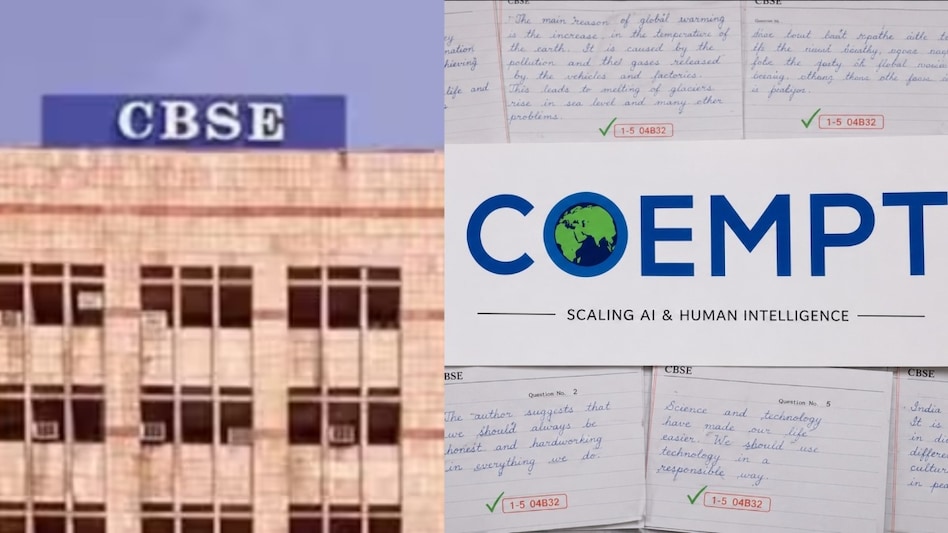
At the centre of the controversy is Coempt Eduteck Pvt Ltd, a Hyderabad-based firm that secured the contract to scan and digitally process approximately 9.9 million Class XII answer books under CBSE's newly introduced on-screen marking system for the 2026 board examinations.
Procurement records reviewed by the Times of India show that Coempt edged past Tata Consultancy Services in the technical evaluation by a narrow margin, 91 points to TCS's 89. The two firms were closely matched across most parameters, including certifications, manpower, security compliance, disaster recovery systems, and solution architecture.
The decisive gap came in a single category: prior experience specifically in scanning and distributing subjective answer scripts for digital evaluation. Coempt received full marks; TCS scored zero, despite scoring higher in the technical presentation and live demonstration segment. TCS received maximum marks under the turnover criterion, reflecting its significantly larger scale and operational capacity.
The financial bids told a starker story. Coempt quoted between approximately Rs 24.8 and Rs 25.7 per answer booklet; TCS quoted between Rs 53 and Rs 65. The evaluated bid value worked out to roughly Rs 384.6 crore for Coempt, compared to nearly Rs 951.3 crore for TCS, a gap of around Rs 566 crore.
Under the Quality and Cost-Based Selection model adopted by CBSE, technical scores carried 70% weightage and financial bids 30%. "A bidder with a slight technical edge and a substantially lower quote gains a major advantage once weighted scores are combined," a former central government procurement official said.
CBSE officials rejected suggestions of any irregularity, maintaining that the evaluation followed prescribed criteria and General Financial Rules governing public procurement.
The declaration that Kannur rejected
The questions around Coempt do not end with the tender scoring. While evaluating bids for a similar answer-book digitisation contract, Kannur University's tender committee in Kerala disqualified the company over what it described as the non-disclosure of a pending criminal proceeding.
Coempt submitted a mandatory declaration claiming a clean track record and certifying that no criminal or civil proceedings were pending against it, according to TOI. The committee found this inconsistent with the status of Criminal Petition No. 696/2019, which remains pending before the Andhra Pradesh High Court.
The committee concluded that the declaration was "not in conformity" with official court records and that the non-disclosure amounted to "suppression of material facts" that affected "the integrity of the procurement process." Coempt was disqualified and not invited to make a technical presentation.
In a clarification dated February 18, 2026, the company itself acknowledged that the matter was "technically shown as pending" before the court. The committee was also unconvinced by the company's reliance on an arbitral award, holding that it arose from separate proceedings and could not be treated as a judicial order disposing of the criminal petition. "No High Court order evidencing disposal or quashing of CRLP No. 696/2019 has been placed before the committee," the findings noted.
The rollout and its fallout
The contract was awarded to Coempt on December 5, just 74 days before the Class XII board examinations began on February 17. Following the declaration of results on May 13, the OSM system came under sustained scrutiny. Students reported blurred scans, evaluation discrepancies, and concerns over data security and transparency.
Nearly 1,27,146 applications relating to 3,87,399 scanned answer books were submitted in a short window after results were declared. CBSE acknowledged technical glitches in the portal for obtaining scanned copies and repeatedly extended deadlines, issuing multiple public clarifications in the process.
The Union education ministry has since sought a detailed report from CBSE on the OSM system's procurement process, amid wider concerns over the pace of the rollout and cybersecurity vulnerabilities in the digital evaluation framework.
The court petition
The National Students' Union of India has now moved the Delhi High Court, filing a petition through president Vinod Jhakhar on behalf of students who appeared for the Class XII examinations under the OSM system. The petition, argued by advocates Rishav Ranjan and Eesha Bakshi, seeks an independent inquiry into alleged irregularities, technical deficiencies, and grievance redressal failures.
It is calling for manual rechecking and physical verification of answer sheets where students dispute the accuracy of scanned copies, an extension of the verification and re-evaluation portal by an additional month, and compensatory marks for students whose answer scripts were allegedly missing, blurred, or incorrectly evaluated.
A company was disqualified by a Kerala university for suppressing a pending criminal case. A contract was awarded 74 days before one of India's biggest board examinations. Over 1.27 lakh grievance applications filed by students within days of the results. And now, a Delhi High Court petition seeking an independent inquiry.
The scrutiny around CBSE's on-screen marking system is no longer just about blurred answer sheets.
The contract that raised questions
At the centre of the controversy is Coempt Eduteck Pvt Ltd, a Hyderabad-based firm that secured the contract to scan and digitally process approximately 9.9 million Class XII answer books under CBSE's newly introduced on-screen marking system for the 2026 board examinations.
Procurement records reviewed by the Times of India show that Coempt edged past Tata Consultancy Services in the technical evaluation by a narrow margin, 91 points to TCS's 89. The two firms were closely matched across most parameters, including certifications, manpower, security compliance, disaster recovery systems, and solution architecture.
The decisive gap came in a single category: prior experience specifically in scanning and distributing subjective answer scripts for digital evaluation. Coempt received full marks; TCS scored zero, despite scoring higher in the technical presentation and live demonstration segment. TCS received maximum marks under the turnover criterion, reflecting its significantly larger scale and operational capacity.
The financial bids told a starker story. Coempt quoted between approximately Rs 24.8 and Rs 25.7 per answer booklet; TCS quoted between Rs 53 and Rs 65. The evaluated bid value worked out to roughly Rs 384.6 crore for Coempt, compared to nearly Rs 951.3 crore for TCS, a gap of around Rs 566 crore.
Under the Quality and Cost-Based Selection model adopted by CBSE, technical scores carried 70% weightage and financial bids 30%. "A bidder with a slight technical edge and a substantially lower quote gains a major advantage once weighted scores are combined," a former central government procurement official said.
CBSE officials rejected suggestions of any irregularity, maintaining that the evaluation followed prescribed criteria and General Financial Rules governing public procurement.
The declaration that Kannur rejected
The questions around Coempt do not end with the tender scoring. While evaluating bids for a similar answer-book digitisation contract, Kannur University's tender committee in Kerala disqualified the company over what it described as the non-disclosure of a pending criminal proceeding.
Coempt submitted a mandatory declaration claiming a clean track record and certifying that no criminal or civil proceedings were pending against it, according to TOI. The committee found this inconsistent with the status of Criminal Petition No. 696/2019, which remains pending before the Andhra Pradesh High Court.
The committee concluded that the declaration was "not in conformity" with official court records and that the non-disclosure amounted to "suppression of material facts" that affected "the integrity of the procurement process." Coempt was disqualified and not invited to make a technical presentation.
In a clarification dated February 18, 2026, the company itself acknowledged that the matter was "technically shown as pending" before the court. The committee was also unconvinced by the company's reliance on an arbitral award, holding that it arose from separate proceedings and could not be treated as a judicial order disposing of the criminal petition. "No High Court order evidencing disposal or quashing of CRLP No. 696/2019 has been placed before the committee," the findings noted.
The rollout and its fallout
The contract was awarded to Coempt on December 5, just 74 days before the Class XII board examinations began on February 17. Following the declaration of results on May 13, the OSM system came under sustained scrutiny. Students reported blurred scans, evaluation discrepancies, and concerns over data security and transparency.
Nearly 1,27,146 applications relating to 3,87,399 scanned answer books were submitted in a short window after results were declared. CBSE acknowledged technical glitches in the portal for obtaining scanned copies and repeatedly extended deadlines, issuing multiple public clarifications in the process.
The Union education ministry has since sought a detailed report from CBSE on the OSM system's procurement process, amid wider concerns over the pace of the rollout and cybersecurity vulnerabilities in the digital evaluation framework.
The court petition
The National Students' Union of India has now moved the Delhi High Court, filing a petition through president Vinod Jhakhar on behalf of students who appeared for the Class XII examinations under the OSM system. The petition, argued by advocates Rishav Ranjan and Eesha Bakshi, seeks an independent inquiry into alleged irregularities, technical deficiencies, and grievance redressal failures.
It is calling for manual rechecking and physical verification of answer sheets where students dispute the accuracy of scanned copies, an extension of the verification and re-evaluation portal by an additional month, and compensatory marks for students whose answer scripts were allegedly missing, blurred, or incorrectly evaluated.