
'Coal economy fades': Can BJP fend off TMC comeback in Asansol Dakshin?
The Asansol Dakshin seat sits within the Raniganj coal belt - once a centre of stable employment, now marked by shrinking formal jobs and the persistence of informal mining networks
- Apr 1, 2026,
- Updated Apr 1, 2026 12:59 PM IST
To win Bengal, the BJP will have to retain its 2021 gains - including Asansol Dakshin, one of the 77 seats it secured. Here, a declining coal economy and identity politics are likely to shape the contest. The BJP is trying to hold on, and the Trinamool Congress (TMC) is seeking a return.
Must Read: Congress goes solo in Bengal: Can it upset Mamata's electoral arithmetic?
The urban-industrial seat in Paschim Bardhaman district, part of the Asansol Lok Sabha constituency, sits within the Raniganj coal belt - once a centre of stable employment, now marked by shrinking formal jobs and the persistence of informal mining networks.
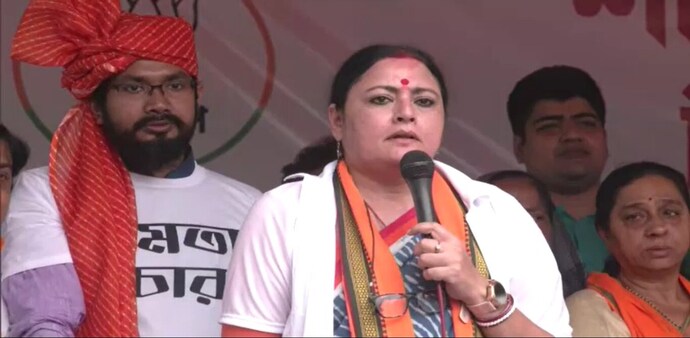
The BJP has renominated sitting MLA Agnimitra Paul, who won the seat in 2021 by 4,487 votes, defeating TMC's Saayoni Ghosh. The TMC has fielded former MLA Tapas Banerjee, who represented the constituency in 2011 and 2016 before moving to neighbouring Raniganj in 2021. The CPI(M) has nominated Shilpi Chakraborty, while the Congress has fielded Souvik Mukherjee.
Must Read: Battle for Bengal: What BJP's candidate lists show so far
For the BJP, the contest is about defending a breakthrough in a region historically inclined towards the TMC. The party is framing the campaign around governance concerns linked to illegal mining, subsidence and allegations of local syndicates.
The TMC, in turn, is working to rebuild its base among Bengali voters and minorities, while highlighting the welfare programmes of the state government.
The political balance in the region shifted after TMC candidate Shatrughan Sinha won the 2022 Asansol Lok Sabha bypoll by a wide margin, indicating a setback to the BJP's organisational strength beyond the assembly segment.
Underlying the contest is the long-term decline of the coal economy. While the Raniganj coalfields once provided steady employment, automation and restructuring have reduced direct job opportunities. Many workers have moved into the informal sector or migrated, while illegal coal extraction continues to provide a livelihood for sections of the population.
This coexistence of shrinking formal employment and informal mining has created a layered socio-economic environment that feeds into voting behaviour, political observers told news agency PTI.
Land subsidence remains another recurring concern. Decades of mining have left underground voids, leading to cracks in buildings and occasional ground collapse in parts of the constituency. Issues of rehabilitation, compensation and safety continue to surface during elections.
"Migrant identity politics, mobilisation of Hindi-speaking voters, subsidence and unregulated mining are not just environmental questions. They affect the livelihoods and safety of thousands of families," Susmita Majumdar, a political science professor in nearby Durgapur College, said while speaking to the news agency.
Hindi-speaking voters, many tracing their origins to Bihar and Jharkhand, are estimated to make up 35 to 40 per cent of the electorate. The BJP is seeking to consolidate Hindu voters across linguistic lines, while the TMC is relying on its traditional coalition of Bengali voters and minorities.
"This is a do-or-die election for us. To save the state from demographic change, we need to dislodge TMC from everywhere. Like the rest of the states, we need consolidation of Hindu votes in Asansol Dakshin. We are for inclusiveness, where all communities can live. But Hindus should not feel threatened, and there should not be any appeasement policy by the government," Paul told PTI.
The constituency includes several wards of the Asansol Municipal Corporation along with Amrasota, Egra, Ballavpur, Jemari and Tiratgram gram panchayats. Counting is scheduled for May 4.
To win Bengal, the BJP will have to retain its 2021 gains - including Asansol Dakshin, one of the 77 seats it secured. Here, a declining coal economy and identity politics are likely to shape the contest. The BJP is trying to hold on, and the Trinamool Congress (TMC) is seeking a return.
Must Read: Congress goes solo in Bengal: Can it upset Mamata's electoral arithmetic?
The urban-industrial seat in Paschim Bardhaman district, part of the Asansol Lok Sabha constituency, sits within the Raniganj coal belt - once a centre of stable employment, now marked by shrinking formal jobs and the persistence of informal mining networks.
The BJP has renominated sitting MLA Agnimitra Paul, who won the seat in 2021 by 4,487 votes, defeating TMC's Saayoni Ghosh. The TMC has fielded former MLA Tapas Banerjee, who represented the constituency in 2011 and 2016 before moving to neighbouring Raniganj in 2021. The CPI(M) has nominated Shilpi Chakraborty, while the Congress has fielded Souvik Mukherjee.
Must Read: Battle for Bengal: What BJP's candidate lists show so far
For the BJP, the contest is about defending a breakthrough in a region historically inclined towards the TMC. The party is framing the campaign around governance concerns linked to illegal mining, subsidence and allegations of local syndicates.
The TMC, in turn, is working to rebuild its base among Bengali voters and minorities, while highlighting the welfare programmes of the state government.
The political balance in the region shifted after TMC candidate Shatrughan Sinha won the 2022 Asansol Lok Sabha bypoll by a wide margin, indicating a setback to the BJP's organisational strength beyond the assembly segment.
Underlying the contest is the long-term decline of the coal economy. While the Raniganj coalfields once provided steady employment, automation and restructuring have reduced direct job opportunities. Many workers have moved into the informal sector or migrated, while illegal coal extraction continues to provide a livelihood for sections of the population.
This coexistence of shrinking formal employment and informal mining has created a layered socio-economic environment that feeds into voting behaviour, political observers told news agency PTI.
Land subsidence remains another recurring concern. Decades of mining have left underground voids, leading to cracks in buildings and occasional ground collapse in parts of the constituency. Issues of rehabilitation, compensation and safety continue to surface during elections.
"Migrant identity politics, mobilisation of Hindi-speaking voters, subsidence and unregulated mining are not just environmental questions. They affect the livelihoods and safety of thousands of families," Susmita Majumdar, a political science professor in nearby Durgapur College, said while speaking to the news agency.
Hindi-speaking voters, many tracing their origins to Bihar and Jharkhand, are estimated to make up 35 to 40 per cent of the electorate. The BJP is seeking to consolidate Hindu voters across linguistic lines, while the TMC is relying on its traditional coalition of Bengali voters and minorities.
"This is a do-or-die election for us. To save the state from demographic change, we need to dislodge TMC from everywhere. Like the rest of the states, we need consolidation of Hindu votes in Asansol Dakshin. We are for inclusiveness, where all communities can live. But Hindus should not feel threatened, and there should not be any appeasement policy by the government," Paul told PTI.
The constituency includes several wards of the Asansol Municipal Corporation along with Amrasota, Egra, Ballavpur, Jemari and Tiratgram gram panchayats. Counting is scheduled for May 4.