
BT Infra Summit 2026: What will power India's next growth spurt?
Industry leaders said India's infrastructure push must now expand beyond highways to smarter logistics, sustainable transport, energy-efficient industries and investor-friendly reforms to sustain long-term economic growth.
- Jul 31, 2026,
- Updated Jul 31, 2026 9:44 PM IST
Powering India’s next growth spurt will require more than record public spending on highways. It will depend on making logistics more efficient, accelerating clean mobility, improving industrial energy efficiency, unlocking long-term infrastructure financing and streamlining regulations, industry leaders said at the Business Today Infrastructure Summit.
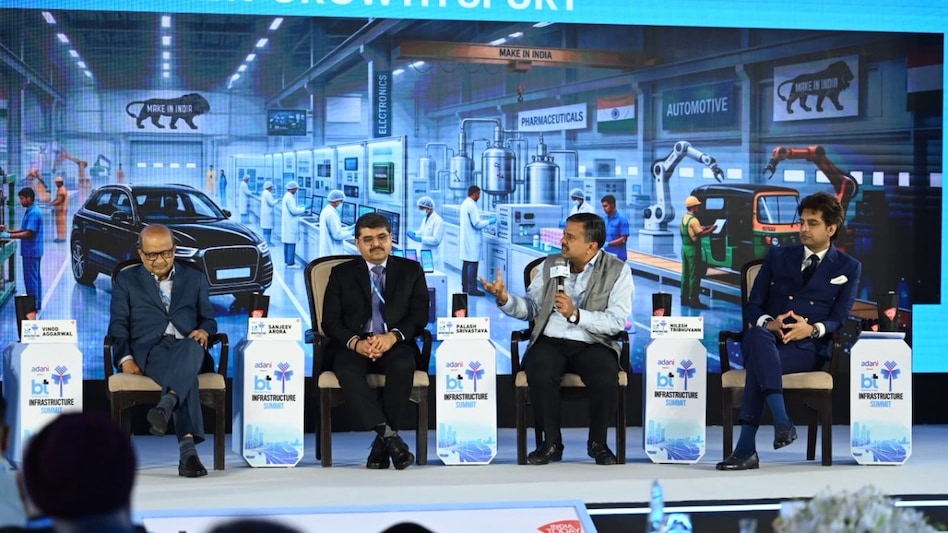
Speaking during a panel discussion at the BT Infrastructure Summit 2026, leaders from the automotive, infrastructure finance, industrial technology and legal sectors said India has laid the foundation for growth through sustained capital expenditure, but the next phase will require building a more competitive and resilient economic ecosystem.
Vinod Aggarwal, Vice Chairman of Eicher Motors and Chairman of VE Commercial Vehicles, said the government's sustained infrastructure spending has transformed India's highway network, but the country still has significant work to do to reduce logistics costs and improve manufacturing competitiveness.
"The government has consistently allocated over Rs 10 lakh crore towards infrastructure in recent years, but logistics costs continue to remain high," Aggarwal said adding that If India has to move from a $4.1-trillion economy to $10 trillion and eventually achieve its 2047 ambitions, manufacturing competitiveness, supply chains, industrial clusters, green energy and digital infrastructure all have to improve.
He said the commercial vehicle industry must evolve alongside modern infrastructure by building safer, more fuel-efficient and digitally connected trucks.
On the transition to cleaner mobility, Aggarwal said electric trucks will see slower adoption than passenger vehicles because of higher upfront costs and financing challenges.
"The capital cost of an electric truck is more than twice that of a conventional truck, while financiers are still assessing the long-term performance of the technology," he said, adding that LNG is already gaining traction while hydrogen-powered internal combustion engines could emerge as the next major technology over the coming decade.
Sanjeev Arora, President, Motion Business, ABB India, said improving industrial energy efficiency presents one of India's biggest opportunities to advance sustainability while reducing energy demand.
He noted that industries account for nearly 40% of the country's energy consumption, with around 60% of that used by motor-driven equipment. Deploying high-efficiency motors, variable frequency drives and digital technologies could lower industrial energy consumption by 30-40%.
"Whatever kilowatt is not consumed is the cleanest form of energy," Arora said, adding that energy savings at scale could free up enough electricity to power millions of homes without creating additional generation capacity.
Palash Srivastava, Deputy Managing Director, India Infrastructure Finance Company Ltd. (IIFCL), said financing is no longer the biggest bottleneck for infrastructure development, provided projects are structured efficiently.
He said infrastructure funding has increasingly shifted from government-led financing towards financial institutions using innovative financing models and outcome-based project evaluation. Looking ahead, sectors such as data centres, intelligent transport systems, shipping and aerospace are likely to attract greater investor interest as India's physical infrastructure matures.
Calling for faster policy execution, Nilesh Tribhuvan, Managing Partner, White & Brief Advocates & Solicitors, said India needs single-window clearances, quicker commercial dispute resolution and dedicated fast-track courts to improve investor confidence and prevent project delays.
The discussion concluded that while India's infrastructure build-out has entered a new phase, sustaining high economic growth will require coordinated progress across financing, technology adoption, regulatory reforms and clean infrastructure.
Watch the full conversation here
Powering India’s next growth spurt will require more than record public spending on highways. It will depend on making logistics more efficient, accelerating clean mobility, improving industrial energy efficiency, unlocking long-term infrastructure financing and streamlining regulations, industry leaders said at the Business Today Infrastructure Summit.
Speaking during a panel discussion at the BT Infrastructure Summit 2026, leaders from the automotive, infrastructure finance, industrial technology and legal sectors said India has laid the foundation for growth through sustained capital expenditure, but the next phase will require building a more competitive and resilient economic ecosystem.
Vinod Aggarwal, Vice Chairman of Eicher Motors and Chairman of VE Commercial Vehicles, said the government's sustained infrastructure spending has transformed India's highway network, but the country still has significant work to do to reduce logistics costs and improve manufacturing competitiveness.
"The government has consistently allocated over Rs 10 lakh crore towards infrastructure in recent years, but logistics costs continue to remain high," Aggarwal said adding that If India has to move from a $4.1-trillion economy to $10 trillion and eventually achieve its 2047 ambitions, manufacturing competitiveness, supply chains, industrial clusters, green energy and digital infrastructure all have to improve.
He said the commercial vehicle industry must evolve alongside modern infrastructure by building safer, more fuel-efficient and digitally connected trucks.
On the transition to cleaner mobility, Aggarwal said electric trucks will see slower adoption than passenger vehicles because of higher upfront costs and financing challenges.
"The capital cost of an electric truck is more than twice that of a conventional truck, while financiers are still assessing the long-term performance of the technology," he said, adding that LNG is already gaining traction while hydrogen-powered internal combustion engines could emerge as the next major technology over the coming decade.
Sanjeev Arora, President, Motion Business, ABB India, said improving industrial energy efficiency presents one of India's biggest opportunities to advance sustainability while reducing energy demand.
He noted that industries account for nearly 40% of the country's energy consumption, with around 60% of that used by motor-driven equipment. Deploying high-efficiency motors, variable frequency drives and digital technologies could lower industrial energy consumption by 30-40%.
"Whatever kilowatt is not consumed is the cleanest form of energy," Arora said, adding that energy savings at scale could free up enough electricity to power millions of homes without creating additional generation capacity.
Palash Srivastava, Deputy Managing Director, India Infrastructure Finance Company Ltd. (IIFCL), said financing is no longer the biggest bottleneck for infrastructure development, provided projects are structured efficiently.
He said infrastructure funding has increasingly shifted from government-led financing towards financial institutions using innovative financing models and outcome-based project evaluation. Looking ahead, sectors such as data centres, intelligent transport systems, shipping and aerospace are likely to attract greater investor interest as India's physical infrastructure matures.
Calling for faster policy execution, Nilesh Tribhuvan, Managing Partner, White & Brief Advocates & Solicitors, said India needs single-window clearances, quicker commercial dispute resolution and dedicated fast-track courts to improve investor confidence and prevent project delays.
The discussion concluded that while India's infrastructure build-out has entered a new phase, sustaining high economic growth will require coordinated progress across financing, technology adoption, regulatory reforms and clean infrastructure.
Watch the full conversation here