
'No More Prayer' at this Gujarat factory. Owner brings in the national anthem instead
Maulik Shah, the founder of Aditya Engimach swapped the routine Hindu prayer for Jana Gana Mana to unite workers across religions.
- Jan 20, 2026,
- Updated Jan 20, 2026 3:56 PM IST
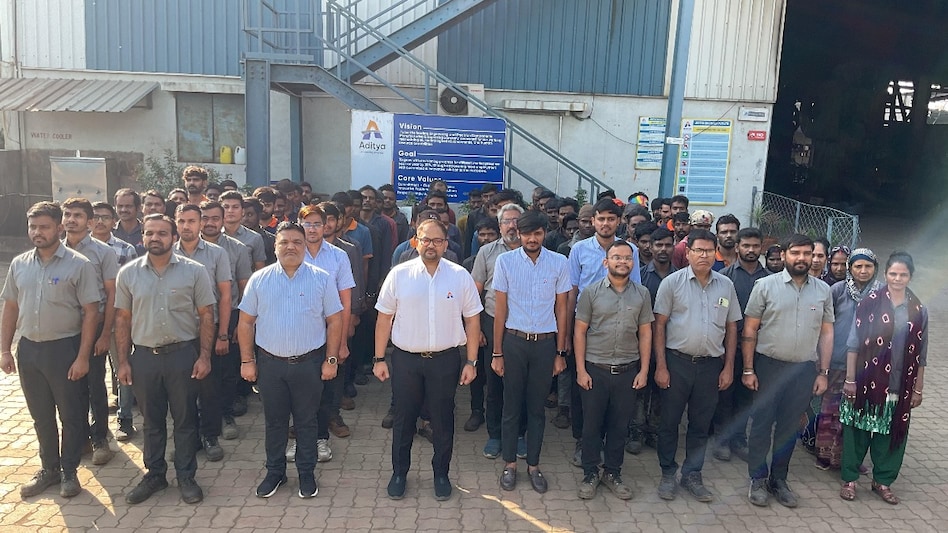
The workday at Aditya Engimach begins the way many Indian shop floors do. Everyone gathers, the noise drops, and the factory pauses for a minute before machines and forklifts take over again.
But there’s one thing you won’t hear anymore. Until a few years ago, the company’s morning routine opened with a short Hindu prayer, a familiar custom across many workplaces.
“It was just the way we began considering industry standards” says Maulik Shah, who founded Aditya Engimach in 2010 and now serves as its managing director.
As the workforce grew more diverse, with employees and workers from different religious
backgrounds, Shah says the ritual started to feel less like a harmless habit and more like a divider. So he made a switch as the prayer was dropped, and India’s national anthem, “Jana Gana Mana,” became the factory’s daily opening note.
The idea, Shah explains, was to keep the discipline of a shared start, without asking anyone to participate in a religious act that wasn’t theirs. The anthem, he felt, offered a “common minimum” that didn’t privilege one faith over another: stand together, start together, get to work.
Shah’s decision to swap out the prayer fits a broader pattern he likes to talk about, resisting default choices.
He says he was offered the more comfortable route early on, joining his family’s established business valued around ₹110 crore. But chose to build something of his own instead.
In 2010, he founded Aditya Engimach in Rajkot, Gujarat—positioning it not as a generic job shop, but as a precision supplier that could play in high-spec, high-accountability sectors.
The workday at Aditya Engimach begins the way many Indian shop floors do. Everyone gathers, the noise drops, and the factory pauses for a minute before machines and forklifts take over again.
But there’s one thing you won’t hear anymore. Until a few years ago, the company’s morning routine opened with a short Hindu prayer, a familiar custom across many workplaces.
“It was just the way we began considering industry standards” says Maulik Shah, who founded Aditya Engimach in 2010 and now serves as its managing director.
As the workforce grew more diverse, with employees and workers from different religious
backgrounds, Shah says the ritual started to feel less like a harmless habit and more like a divider. So he made a switch as the prayer was dropped, and India’s national anthem, “Jana Gana Mana,” became the factory’s daily opening note.
The idea, Shah explains, was to keep the discipline of a shared start, without asking anyone to participate in a religious act that wasn’t theirs. The anthem, he felt, offered a “common minimum” that didn’t privilege one faith over another: stand together, start together, get to work.
Shah’s decision to swap out the prayer fits a broader pattern he likes to talk about, resisting default choices.
He says he was offered the more comfortable route early on, joining his family’s established business valued around ₹110 crore. But chose to build something of his own instead.
In 2010, he founded Aditya Engimach in Rajkot, Gujarat—positioning it not as a generic job shop, but as a precision supplier that could play in high-spec, high-accountability sectors.