
North India's Standalone Venue Industry: Faisal Shareef Khan's Perspective on an Evolving Market
India's standalone venue industry has traditionally been viewed through a real estate lens. Developers built larger halls, invested in finishes and expected demand to follow.
- Jul 1, 2026,
- Updated Jul 1, 2026 1:06 PM IST
India's wedding economy has always been among the largest in the world. What is changing today, however, is not the scale of celebrations but the spaces where they take place.
Across North India, standalone banquet venues are steadily moving beyond their traditional role as event spaces. Where the industry was once dominated by largely indistinguishable banquet halls competing on location, capacity and price, a new generation of venues is beginning to emerge, spaces with a distinct identity, carefully considered design and the ability to command a premium.
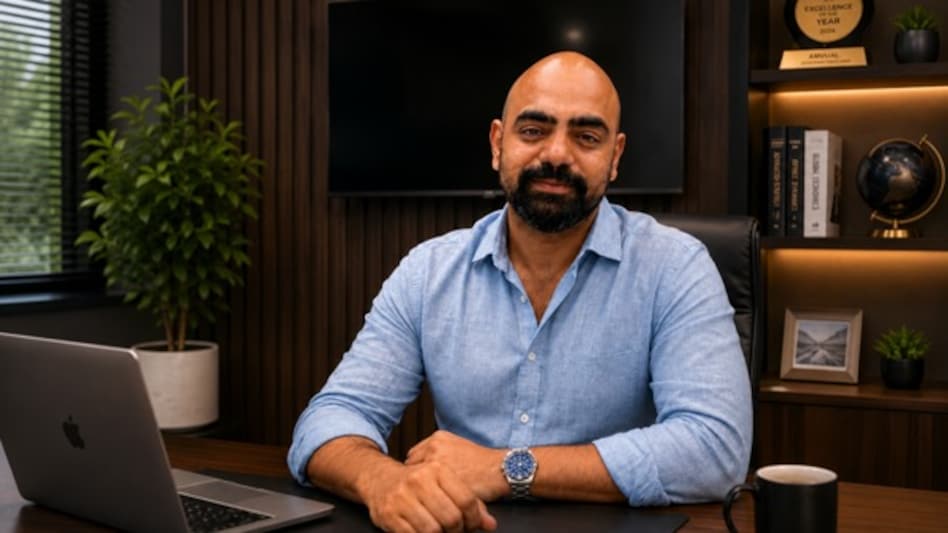
For Faisal Shareef Khan, Founder & CEO of Studio 145 and a wedding venue designer in India, this transition has been years in the making.
Having spent more than fifteen years working as a hospitality design consultant in India, specialising in wedding venue design, Faisal Shareef Khan has witnessed the industry's evolution from close quarters. Through Studio 145 - a premium venue design studio, he has worked on a range of hospitality and venue projects, including destination developments, luxury banquet venues and large-format celebration spaces across North India. Projects such as Ambience Island, collaborations with Tivoli Hospitality Group, Vione Akshardham and Rang Mahal have offered him a front-row view of how customer expectations, and the business itself, have changed.
According to Khan, the industry's biggest shift has little to do with size.
"For years, standalone venues competed largely on capacity and pricing. Today, people remember the venue itself. That changes how families choose, how businesses position themselves and how value is created."
Design Is Becoming a Business Decision
India's standalone venue industry has traditionally been viewed through a real estate lens. Developers built larger halls, invested in finishes and expected demand to follow. While those fundamentals still matter, Khan believes they no longer explain why certain venues consistently outperform others.
"The highest-performing venues are rarely the largest. They are usually the ones where every aspect of the experience has been thought through."
He argues that design should no longer be seen as an aesthetic expense added towards the end of a project. Arrival sequences, landscaping, circulation, lighting, service planning and the overall architectural identity of a venue all contribute to how customers perceive value.
Those choices have commercial consequences.
“Venues with a clear identity are often able to command stronger pricing, generate repeat bookings and build a reputation that extends well beyond paid marketing. Every wedding introduces the venue to hundreds of prospective customers, making each celebration both an event and a live demonstration of the product,” reflects Khan from his experience.
Design isn't simply about how a venue looks. It influences how people remember it, recommend it and ultimately choose it.
A Category Investors Are Beginning to Notice
The industry's evolution is also attracting attention from outside the wedding business.
Increasingly, investors with no prior connection to celebrations are exploring banquet and event-focused developments because they recognise the sector's commercial potential. Unlike many traditional real estate assets, standalone venues combine hospitality economics with recurring social demand, high-value transactions and the ability to build long-term brand equity.
Khan believes this combination makes the category particularly compelling. “A successful venue is no longer just a real estate asset. It becomes a hospitality brand with pricing power and a customer base built largely through referrals."
Delhi NCR has led much of this transformation, and continues to serve as a benchmark for destination venue design in India. Many of India's best-known luxury banquet concepts and destination celebration venues were established here before influencing developments elsewhere.
The Next Opportunity May Lie Elsewhere
While North India has been at the forefront of this evolution, Khan believes the next phase of growth could emerge in cities such as Bangalore and Hyderabad.
He points out, “Both markets already possess many of the conditions that helped drive Delhi NCR's success: growing affluence, expanding business communities, significant wedding expenditure and consumers increasingly willing to invest in premium experiences provided by luxury venue design studios. What remains comparatively limited is the availability of purpose-built, destination-quality celebration venues.”
It is fair to say that the demand already exists. The infrastructure is still catching up.
That gap presents an opportunity for developers willing to think beyond conventional banquet halls or hotel ballrooms. Rather than replicating existing formats, Khan believes the next generation of successful venues will be designed specifically around the experience of modern celebrations.
More Than Real Estate
India's celebration economy continues to evolve, and with it, so does the business of building venues. For Khan, the industry's future will not be defined by who builds the largest properties, but by who creates destinations people actively seek out.
"Standalone celebration venues represent a rare intersection of design, branding, hospitality and real estate. The businesses that recognise that early will be the ones that shape the category."
As customer expectations continue to rise and newer markets begin demanding the same quality of celebration infrastructure seen in established hubs, standalone venue brands may well become one of the most closely watched segments within India's broader hospitality and real estate landscape.
India's wedding economy has always been among the largest in the world. What is changing today, however, is not the scale of celebrations but the spaces where they take place.
Across North India, standalone banquet venues are steadily moving beyond their traditional role as event spaces. Where the industry was once dominated by largely indistinguishable banquet halls competing on location, capacity and price, a new generation of venues is beginning to emerge, spaces with a distinct identity, carefully considered design and the ability to command a premium.
For Faisal Shareef Khan, Founder & CEO of Studio 145 and a wedding venue designer in India, this transition has been years in the making.
Having spent more than fifteen years working as a hospitality design consultant in India, specialising in wedding venue design, Faisal Shareef Khan has witnessed the industry's evolution from close quarters. Through Studio 145 - a premium venue design studio, he has worked on a range of hospitality and venue projects, including destination developments, luxury banquet venues and large-format celebration spaces across North India. Projects such as Ambience Island, collaborations with Tivoli Hospitality Group, Vione Akshardham and Rang Mahal have offered him a front-row view of how customer expectations, and the business itself, have changed.
According to Khan, the industry's biggest shift has little to do with size.
"For years, standalone venues competed largely on capacity and pricing. Today, people remember the venue itself. That changes how families choose, how businesses position themselves and how value is created."
Design Is Becoming a Business Decision
India's standalone venue industry has traditionally been viewed through a real estate lens. Developers built larger halls, invested in finishes and expected demand to follow. While those fundamentals still matter, Khan believes they no longer explain why certain venues consistently outperform others.
"The highest-performing venues are rarely the largest. They are usually the ones where every aspect of the experience has been thought through."
He argues that design should no longer be seen as an aesthetic expense added towards the end of a project. Arrival sequences, landscaping, circulation, lighting, service planning and the overall architectural identity of a venue all contribute to how customers perceive value.
Those choices have commercial consequences.
“Venues with a clear identity are often able to command stronger pricing, generate repeat bookings and build a reputation that extends well beyond paid marketing. Every wedding introduces the venue to hundreds of prospective customers, making each celebration both an event and a live demonstration of the product,” reflects Khan from his experience.
Design isn't simply about how a venue looks. It influences how people remember it, recommend it and ultimately choose it.
A Category Investors Are Beginning to Notice
The industry's evolution is also attracting attention from outside the wedding business.
Increasingly, investors with no prior connection to celebrations are exploring banquet and event-focused developments because they recognise the sector's commercial potential. Unlike many traditional real estate assets, standalone venues combine hospitality economics with recurring social demand, high-value transactions and the ability to build long-term brand equity.
Khan believes this combination makes the category particularly compelling. “A successful venue is no longer just a real estate asset. It becomes a hospitality brand with pricing power and a customer base built largely through referrals."
Delhi NCR has led much of this transformation, and continues to serve as a benchmark for destination venue design in India. Many of India's best-known luxury banquet concepts and destination celebration venues were established here before influencing developments elsewhere.
The Next Opportunity May Lie Elsewhere
While North India has been at the forefront of this evolution, Khan believes the next phase of growth could emerge in cities such as Bangalore and Hyderabad.
He points out, “Both markets already possess many of the conditions that helped drive Delhi NCR's success: growing affluence, expanding business communities, significant wedding expenditure and consumers increasingly willing to invest in premium experiences provided by luxury venue design studios. What remains comparatively limited is the availability of purpose-built, destination-quality celebration venues.”
It is fair to say that the demand already exists. The infrastructure is still catching up.
That gap presents an opportunity for developers willing to think beyond conventional banquet halls or hotel ballrooms. Rather than replicating existing formats, Khan believes the next generation of successful venues will be designed specifically around the experience of modern celebrations.
More Than Real Estate
India's celebration economy continues to evolve, and with it, so does the business of building venues. For Khan, the industry's future will not be defined by who builds the largest properties, but by who creates destinations people actively seek out.
"Standalone celebration venues represent a rare intersection of design, branding, hospitality and real estate. The businesses that recognise that early will be the ones that shape the category."
As customer expectations continue to rise and newer markets begin demanding the same quality of celebration infrastructure seen in established hubs, standalone venue brands may well become one of the most closely watched segments within India's broader hospitality and real estate landscape.