
ZKTOR’s Bigger Bet, Turning India’s District Economy into Digital Opportunity
Through creators, hyperlocal commerce, advertising, AI safety and privacy-first social media, Softa is positioning ZKTOR as infrastructure for jobs, rural enterprise and GDP-linked grassroots digitisation.
- Apr 30, 2026,
- Updated Apr 30, 2026 4:12 PM IST
The larger significance of ZKTOR may lie not only in its rise as an Indian social media platform, but in the economic architecture Softa Technologies is attempting to build around it. At the heart of that architecture is a serious proposition: India’s vast rural and district economy is not small; it is simply fragmented, under-organised and under-digitised. ZKTOR and the wider Softa ecosystem aim to convert that scattered local activity into structured digital participation.
Built for an era shaped by artificial intelligence, deepfakes, cyber insecurity and mistrust of behaviour-tracking platforms, ZKTOR is being positioned as an all-in-one Indian social platform with privacy and data safety by design, Zero Knowledge Server Architecture, No URL Media Architecture, no behaviour tracking and default multi-layer encryption. This matters because meaningful economic participation cannot grow on unsafe digital foundations. For small traders, creators, women-led businesses, home-based enterprises and rural users, trust is not a luxury; it is the condition for visibility.
ZKTOR’s early acceptance among Gen Z and young women across India and South Asia strengthens this economic argument. A cleaner, safer and more predictable platform can allow local creators, youth entrepreneurs and small businesses to participate without the fear of uncontrolled exposure, misuse or reputation risk. In India’s districts, where family comfort, social dignity and local credibility shape adoption, safer design can directly influence economic participation.
This is where Softa’s ecosystem becomes critical. Subkuz is being developed for hyperlocal news and diaspora communities, giving local voices and district stories a digital route. Ezowm focuses on hyperlocal commerce, connecting local demand and supply patterns. Hola AI works as the intelligence and safety layer, while ZHAN is being built as a transparent hyperlocal advertising network. Together, these units aim to link creators, businesses, markets, information and audiences inside one coherent local digital economy.
The advertising layer is especially important. A large part of India’s real advertising economy still moves through newspapers, radio, agencies and district-level networks, particularly in smaller cities and rural regions where language, trust and relationships matter more than broad digital reach. Softa’s view is that this market does not need to be created; it needs to be organised. If ZHAN can structure local campaigns, visibility and nearby audience reach, it could bring thousands of small businesses into manageable digital advertising.
At the centre is Softa founder Sunil Kumar Singh, born in a farmer family in rural Bihar and shaped by over two decades in Finland’s disciplined and rights-conscious design culture. Singh argues that the “I accept” model has failed digitally vulnerable users by forcing them into complex terms, privacy policies and data clauses they often do not understand. For him, privacy by design, No URL Media Architecture and misuse prevention are not just technical features, but economic safeguards for people entering digital markets.
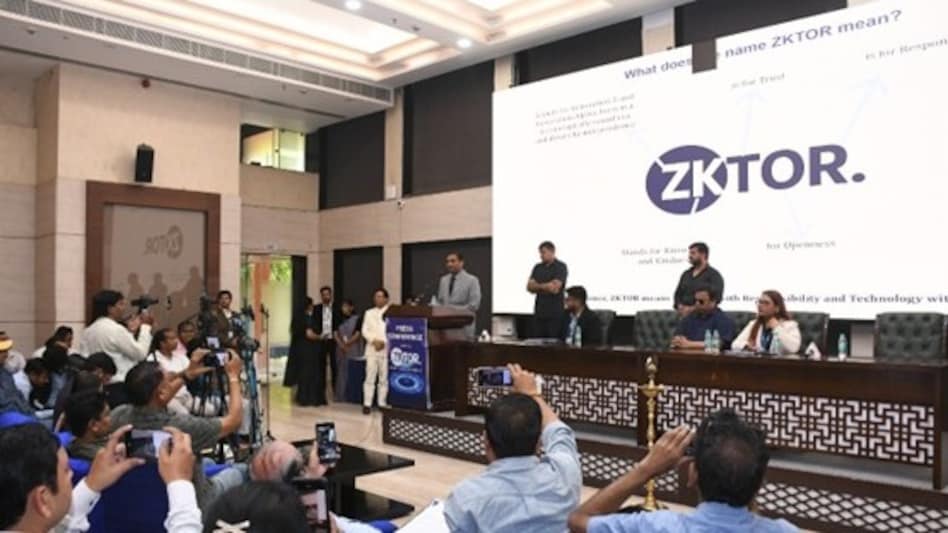
Less than six months after Singh introduced ZKTOR at New Delhi’s Constitution Club of India, the platform expanded into Nepal, Sri Lanka and Bangladesh, crossing half a million beta users, largely Gen Z. Softa now plans beta rollout in Bhutan, Pakistan and Maldives, giving the platform a wider South Asian base.
South Asian media reports have noted Singh’s refusal of foreign VC funding and Finland/EU grants to keep ZKTOR free from outside pressure. Softa claims an ISRO-like model that runs ZKTOR 7–8 times cheaper than big-tech platforms, proving, in its view, that capital efficiency and national ambition can coexist.
Singh’s ultimate vision is district-level digital infrastructure: one national brand with local identities connecting social media, commerce, creators, entertainment, news, governance, civil society, education, police, judiciary and citizens. Softa believes this can create lakhs of direct jobs for local partners, campaign managers and digital operators, reduce migration to big cities, build youth confidence, empower women-led and home-based businesses, digitise India’s vast unstructured rural economy, unlock GDP value and serve Prime Minister Narendra Modi’s Vision 2047 as a technology mission dedicated to India.
The larger significance of ZKTOR may lie not only in its rise as an Indian social media platform, but in the economic architecture Softa Technologies is attempting to build around it. At the heart of that architecture is a serious proposition: India’s vast rural and district economy is not small; it is simply fragmented, under-organised and under-digitised. ZKTOR and the wider Softa ecosystem aim to convert that scattered local activity into structured digital participation.
Built for an era shaped by artificial intelligence, deepfakes, cyber insecurity and mistrust of behaviour-tracking platforms, ZKTOR is being positioned as an all-in-one Indian social platform with privacy and data safety by design, Zero Knowledge Server Architecture, No URL Media Architecture, no behaviour tracking and default multi-layer encryption. This matters because meaningful economic participation cannot grow on unsafe digital foundations. For small traders, creators, women-led businesses, home-based enterprises and rural users, trust is not a luxury; it is the condition for visibility.
ZKTOR’s early acceptance among Gen Z and young women across India and South Asia strengthens this economic argument. A cleaner, safer and more predictable platform can allow local creators, youth entrepreneurs and small businesses to participate without the fear of uncontrolled exposure, misuse or reputation risk. In India’s districts, where family comfort, social dignity and local credibility shape adoption, safer design can directly influence economic participation.
This is where Softa’s ecosystem becomes critical. Subkuz is being developed for hyperlocal news and diaspora communities, giving local voices and district stories a digital route. Ezowm focuses on hyperlocal commerce, connecting local demand and supply patterns. Hola AI works as the intelligence and safety layer, while ZHAN is being built as a transparent hyperlocal advertising network. Together, these units aim to link creators, businesses, markets, information and audiences inside one coherent local digital economy.
The advertising layer is especially important. A large part of India’s real advertising economy still moves through newspapers, radio, agencies and district-level networks, particularly in smaller cities and rural regions where language, trust and relationships matter more than broad digital reach. Softa’s view is that this market does not need to be created; it needs to be organised. If ZHAN can structure local campaigns, visibility and nearby audience reach, it could bring thousands of small businesses into manageable digital advertising.
At the centre is Softa founder Sunil Kumar Singh, born in a farmer family in rural Bihar and shaped by over two decades in Finland’s disciplined and rights-conscious design culture. Singh argues that the “I accept” model has failed digitally vulnerable users by forcing them into complex terms, privacy policies and data clauses they often do not understand. For him, privacy by design, No URL Media Architecture and misuse prevention are not just technical features, but economic safeguards for people entering digital markets.
Less than six months after Singh introduced ZKTOR at New Delhi’s Constitution Club of India, the platform expanded into Nepal, Sri Lanka and Bangladesh, crossing half a million beta users, largely Gen Z. Softa now plans beta rollout in Bhutan, Pakistan and Maldives, giving the platform a wider South Asian base.
South Asian media reports have noted Singh’s refusal of foreign VC funding and Finland/EU grants to keep ZKTOR free from outside pressure. Softa claims an ISRO-like model that runs ZKTOR 7–8 times cheaper than big-tech platforms, proving, in its view, that capital efficiency and national ambition can coexist.
Singh’s ultimate vision is district-level digital infrastructure: one national brand with local identities connecting social media, commerce, creators, entertainment, news, governance, civil society, education, police, judiciary and citizens. Softa believes this can create lakhs of direct jobs for local partners, campaign managers and digital operators, reduce migration to big cities, build youth confidence, empower women-led and home-based businesses, digitise India’s vast unstructured rural economy, unlock GDP value and serve Prime Minister Narendra Modi’s Vision 2047 as a technology mission dedicated to India.